
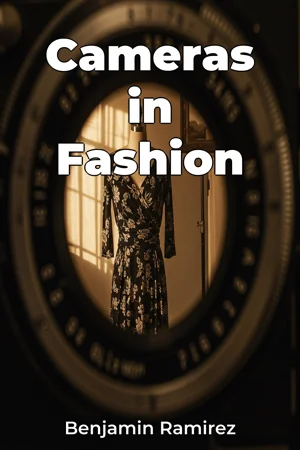
About This Book
How did the click of a shutter revolutionize an entire industry and shape the global perception of style? "Cameras in Fashion" delves into the profound and reciprocal relationship between photography and the fashion industry, examining how photographic innovation not only documented but actively constructed contemporary trends. This book addresses key questions of how photography transformed fashion from an elite craft into a globally disseminated cultural phenomenon. Its significance lies in understanding the power dynamics at play when visual representation intersects with commercial enterprise, an area of increasing relevance in our image-saturated world. The book provides a thorough historical background, tracing the evolution of photography from its inception to the digital age, and it explains the concurrent growth of the fashion industry. Readers will benefit from a basic understanding of photographic techniques and the development of mass media. These historical and technical elements set the stage for understanding photography's impact on fashion. "Cameras in Fashion" argues that photography is not merely a tool for recording fashion but an active agent in defining and disseminating it. This argument is crucial because it shifts the focus from fashion as solely a creative art form to a mediated cultural product. We explore how the rise of fashion photography affected the evolution of design and the rise of aspirational advertising. The book is structured in three main sections. First, we introduce the core technologies and artistic movements in photography that coincided with key periods in fashion history. Second, we examine several crucial periods, detailing how photographic aesthetics influenced what was considered fashionable and showcasing the symbiotic relationship between designers, photographers, and models. This section considers major developments such as the rise of fashion magazines, the impact of celebrity culture, and the democratization of fashion through street style photography. Finally, we analyze the contemporary landscape, addressing ethical considerations and the impact of digital media and social platforms. Throughout, the book applies case studies such as analysis of Vogue covers and the campaigns of leading fashion houses to substantiate its claims. The arguments are substantiated by an extensive analysis of fashion magazines, advertising campaigns, and the work of influential photographers. We draw upon archival materials, including rare prints and correspondence, which offers a unique insight into the creative processes behind iconic images. "Cameras in Fashion" naturally connects to fields such as art history, sociology, women's studies, business, and cultural studies. Each field offers unique perspectives on the intersection of commerce, aesthetics, and society. This book stands out for its comprehensive approach, weaving technical analysis with cultural commentary and examining both the artistic and commercial dimensions of fashion photography. The tone is scholarly yet accessible, designed to engage both academic readers and those with a general interest in fashion and photography. The primary audience consists of students and scholars in fashion studies, photography, art history, and media studies, as well as industry professionals and enthusiasts interested in the historical and cultural context of fashion photography. As a work of non-fiction, "Cameras in Fashion" embraces the genre's conventions of thorough research, clear argumentation, and objective presentation. The scope of the book is broad, encompassing a global perspective on fashion photography, but it is limited to primarily Western fashion traditions, acknowledging that a full exploration of global fashion practices would warrant a separate study. Readers interested in understanding the impact of photography, branding, visual communication, and consumer behavior will find practical value in this book. The implications of these studies will be accessible to a wide audience. Additionally, the book will address ongoing debates about appropriation, representation, and the ethics of image manipulation in fashion photography. "Cameras in Fashion" offers a nuanced and critical exploration of the image creation that underlies the fast-paced and constantly evolving world of fashion.
How did the click of a shutter revolutionize an entire industry and shape the global perception of style? "Cameras in Fashion" delves into the profound and reciprocal relationship between photography and the fashion industry, examining how photographic innovation not only documented but actively constructed contemporary trends. This book addresses key questions of how photography transformed fashion from an elite craft into a globally disseminated cultural phenomenon. Its significance lies in understanding the power dynamics at play when visual representation intersects with commercial enterprise, an area of increasing relevance in our image-saturated world. The book provides a thorough historical background, tracing the evolution of photography from its inception to the digital age, and it explains the concurrent growth of the fashion industry. Readers will benefit from a basic understanding of photographic techniques and the development of mass media. These historical and technical elements set the stage for understanding photography's impact on fashion. "Cameras in Fashion" argues that photography is not merely a tool for recording fashion but an active agent in defining and disseminating it. This argument is crucial because it shifts the focus from fashion as solely a creative art form to a mediated cultural product. We explore how the rise of fashion photography affected the evolution of design and the rise of aspirational advertising. The book is structured in three main sections. First, we introduce the core technologies and artistic movements in photography that coincided with key periods in fashion history. Second, we examine several crucial periods, detailing how photographic aesthetics influenced what was considered fashionable and showcasing the symbiotic relationship between designers, photographers, and models. This section considers major developments such as the rise of fashion magazines, the impact of celebrity culture, and the democratization of fashion through street style photography. Finally, we analyze the contemporary landscape, addressing ethical considerations and the impact of digital media and social platforms. Throughout, the book applies case studies such as analysis of Vogue covers and the campaigns of leading fashion houses to substantiate its claims. The arguments are substantiated by an extensive analysis of fashion magazines, advertising campaigns, and the work of influential photographers. We draw upon archival materials, including rare prints and correspondence, which offers a unique insight into the creative processes behind iconic images. "Cameras in Fashion" naturally connects to fields such as art history, sociology, women's studies, business, and cultural studies. Each field offers unique perspectives on the intersection of commerce, aesthetics, and society. This book stands out for its comprehensive approach, weaving technical analysis with cultural commentary and examining both the artistic and commercial dimensions of fashion photography. The tone is scholarly yet accessible, designed to engage both academic readers and those with a general interest in fashion and photography. The primary audience consists of students and scholars in fashion studies, photography, art history, and media studies, as well as industry professionals and enthusiasts interested in the historical and cultural context of fashion photography. As a work of non-fiction, "Cameras in Fashion" embraces the genre's conventions of thorough research, clear argumentation, and objective presentation. The scope of the book is broad, encompassing a global perspective on fashion photography, but it is limited to primarily Western fashion traditions, acknowledging that a full exploration of global fashion practices would warrant a separate study. Readers interested in understanding the impact of photography, branding, visual communication, and consumer behavior will find practical value in this book. The implications of these studies will be accessible to a wide audience. Additionally, the book will address ongoing debates about appropriation, representation, and the ethics of image manipulation in fashion photography. "Cameras in Fashion" offers a nuanced and critical exploration of the image creation that underlies the fast-paced and constantly evolving world of fashion.
"Cameras in Fashion" explores the dynamic relationship between photography and the fashion industry, revealing how the camera has not just documented trends, but actively shaped them. The book examines how photography transformed fashion into the globally recognized cultural phenomenon it is today. It highlights how the rise of fashion photography influenced design and advertising. The book traces the evolution of photography alongside the fashion industry, detailing key technologies and artistic movements. It delves into how photographic aesthetics have influenced what is considered fashionable, showcasing the symbiotic relationships between designers, photographers, and models. Through case studies, like analyses of Vogue covers, the book substantiates its arguments about the power of visual representation. The book progresses through historical analysis, crucial periods, and finally, the contemporary landscape. It addresses ethical considerations, the impact of digital media, and social platforms, making it valuable for those interested in the history and cultural context of fashion photography.
Book Details
ISBN
9788235218629
Publisher
Publifye AS
Your Licenses
You don't own any licenses for this book
Purchase a license below to unlock this book and download the EPUB.
Purchase License
Select a tier to unlock this book
Need bulk licensing?
Contact us for enterprise agreements.