
About This Book
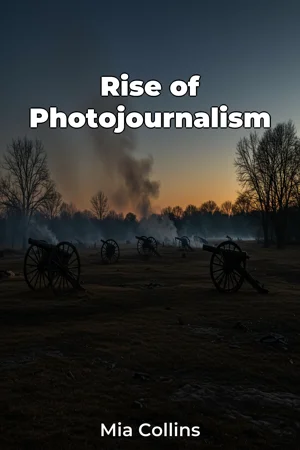
How did a single image transform global understanding and ignite social change? "Rise of Photojournalism" delves into the captivating evolution of photography as a powerful force in shaping public perception and influencing historical events. This book explores the symbiotic relationship between photography, journalism, and society, examining how captured moments transcend mere documentation and become catalysts for profound impact. This exploration pivots on three central themes. First, the development of photographic technology and its increasing accessibility to journalists, allowing for more immediate and widespread dissemination of visual information. Second, the ethical considerations that have arisen alongside photojournalism’s growth, including debates surrounding manipulation, objectivity, and the photographer’s responsibility to their subjects. Third, the role of iconic photographs in shaping public opinion on significant global events, from war and political upheaval to social movements and natural disasters. Understanding the rise of photojournalism requires a grounding in both the history of photography and the evolution of journalism as a profession. The book provides this context, tracing technological advancements from Daguerre’s early experiments to the digital age, and mapping the shifting landscape of news media. It examines how photojournalism has influenced, and been influenced by, concepts of truth, objectivity, and narrative in storytelling. The central argument posits that photojournalism, while often striving for objectivity, inherently possesses the power to frame narratives and mobilize emotions, thus playing a critical role in shaping collective memory and driving social and political action. This argument is crucial because it acknowledges the complex interplay between documented reality and subjective interpretation, highlighting the responsibility of both photographers and consumers of visual information. The book unfolds in a structured narrative. It begins by introducing the nascent stages of photography and its initial applications in documentation. The core of the book is then divided into thematic chapters, each focusing on a specific era or critical juncture in the development of photojournalism. Sections will feature case studies of influential photographs and the stories behind them, with an analysis of their impact. It culminates with an examination of contemporary challenges facing photojournalism in the digital age, including issues of misinformation, copyright, and the changing role of the photographer. To support its claims, the book relies on a combination of primary source analysis, including photographs, newspaper articles, and personal accounts from photojournalists, and secondary scholarship from the fields of photography history, media studies, and journalism ethics. It will also draw upon unique data sources, such as curated collections of historical photographs and archival material from prominent news organizations. The themes explored resonate beyond the specific fields of photography and journalism. The book connects to history by illustrating how visual records augment or challenge traditional written accounts of events. Furthermore, it intersects with sociology by analyzing the impact of visual media on social attitudes and behaviors. It also touches on political science by examining the ways in which photojournalism shapes political discourse and influences policy decisions. What distinguishes this book is its balanced approach to the subject, acknowledging both the power and the limitations of photojournalism. It offers a nuanced perspective on the ethical dilemmas faced by photojournalists, and encourages readers to think critically about the images that shape their understanding of the world. The tone is authoritative yet accessible, blending historical analysis with engaging storytelling to captivate a broad audience. The book is written for students of journalism and photography, media professionals, and anyone interested in the power of images to shape our understanding of the world. It will be especially valuable for those seeking a deeper understanding of the ethical and social implications of visual communication. As a work of non-fiction within the specified genres, "Rise of Photojournalism" adheres to standards of journalistic integrity and academic rigor. It is committed to presenting factual information and diverse perspectives, while also providing insightful analysis and interpretation. The scope of the book is intentionally broad, covering the global development of photojournalism from its earliest roots to the present day. However, it focuses primarily on Western traditions of photojournalism, recognizing the need for further research into non-Western perspectives. The insights offered have practical applications for both creators and consumers of visual media. Readers will develop a more critical eye for evaluating the sources of images they encounter and a deeper appreciation for the ethical responsibilities of those who produce them. The book addresses ongoing debates within the field, such as the tension between objectivity and advocacy, the ethics of photographing suffering, and the impact of digital technologies on the truthfulness of images. By engaging with these controversies, "Rise of Photojournalism" aims to stimulate thoughtful discussion and informed action.
How did a single image transform global understanding and ignite social change? "Rise of Photojournalism" delves into the captivating evolution of photography as a powerful force in shaping public perception and influencing historical events. This book explores the symbiotic relationship between photography, journalism, and society, examining how captured moments transcend mere documentation and become catalysts for profound impact. This exploration pivots on three central themes. First, the development of photographic technology and its increasing accessibility to journalists, allowing for more immediate and widespread dissemination of visual information. Second, the ethical considerations that have arisen alongside photojournalism’s growth, including debates surrounding manipulation, objectivity, and the photographer’s responsibility to their subjects. Third, the role of iconic photographs in shaping public opinion on significant global events, from war and political upheaval to social movements and natural disasters. Understanding the rise of photojournalism requires a grounding in both the history of photography and the evolution of journalism as a profession. The book provides this context, tracing technological advancements from Daguerre’s early experiments to the digital age, and mapping the shifting landscape of news media. It examines how photojournalism has influenced, and been influenced by, concepts of truth, objectivity, and narrative in storytelling. The central argument posits that photojournalism, while often striving for objectivity, inherently possesses the power to frame narratives and mobilize emotions, thus playing a critical role in shaping collective memory and driving social and political action. This argument is crucial because it acknowledges the complex interplay between documented reality and subjective interpretation, highlighting the responsibility of both photographers and consumers of visual information. The book unfolds in a structured narrative. It begins by introducing the nascent stages of photography and its initial applications in documentation. The core of the book is then divided into thematic chapters, each focusing on a specific era or critical juncture in the development of photojournalism. Sections will feature case studies of influential photographs and the stories behind them, with an analysis of their impact. It culminates with an examination of contemporary challenges facing photojournalism in the digital age, including issues of misinformation, copyright, and the changing role of the photographer. To support its claims, the book relies on a combination of primary source analysis, including photographs, newspaper articles, and personal accounts from photojournalists, and secondary scholarship from the fields of photography history, media studies, and journalism ethics. It will also draw upon unique data sources, such as curated collections of historical photographs and archival material from prominent news organizations. The themes explored resonate beyond the specific fields of photography and journalism. The book connects to history by illustrating how visual records augment or challenge traditional written accounts of events. Furthermore, it intersects with sociology by analyzing the impact of visual media on social attitudes and behaviors. It also touches on political science by examining the ways in which photojournalism shapes political discourse and influences policy decisions. What distinguishes this book is its balanced approach to the subject, acknowledging both the power and the limitations of photojournalism. It offers a nuanced perspective on the ethical dilemmas faced by photojournalists, and encourages readers to think critically about the images that shape their understanding of the world. The tone is authoritative yet accessible, blending historical analysis with engaging storytelling to captivate a broad audience. The book is written for students of journalism and photography, media professionals, and anyone interested in the power of images to shape our understanding of the world. It will be especially valuable for those seeking a deeper understanding of the ethical and social implications of visual communication. As a work of non-fiction within the specified genres, "Rise of Photojournalism" adheres to standards of journalistic integrity and academic rigor. It is committed to presenting factual information and diverse perspectives, while also providing insightful analysis and interpretation. The scope of the book is intentionally broad, covering the global development of photojournalism from its earliest roots to the present day. However, it focuses primarily on Western traditions of photojournalism, recognizing the need for further research into non-Western perspectives. The insights offered have practical applications for both creators and consumers of visual media. Readers will develop a more critical eye for evaluating the sources of images they encounter and a deeper appreciation for the ethical responsibilities of those who produce them. The book addresses ongoing debates within the field, such as the tension between objectivity and advocacy, the ethics of photographing suffering, and the impact of digital technologies on the truthfulness of images. By engaging with these controversies, "Rise of Photojournalism" aims to stimulate thoughtful discussion and informed action.
"Rise of Photojournalism" explores the compelling history of photography's influence on journalism and its profound effects on society. The book examines how photojournalism has evolved from early photographic experiments to the digital age, highlighting the symbiotic relationship between visual communication and historical events. Readers will gain insights into how a single image can shape public perception and even ignite social change. The book navigates ethical considerations surrounding objectivity and manipulation, fundamental to photojournalism, and discusses how iconic photographs have shaped opinions on global events. It progresses through thematic chapters, each concentrating on a specific era or pivotal moment in photojournalism's development, using case studies of impactful photographs and their stories. What sets this book apart is its balanced view, acknowledging both the power and limitations of photojournalism. It offers a nuanced perspective on ethical dilemmas and encourages critical thinking about the images that shape our world, and is valuable for anyone seeking a deeper understanding of the ethical and social implications of visual communication.
Book Details
ISBN
9788235218612
Publisher
Publifye AS
Your Licenses
You don't own any licenses for this book
Purchase a license below to unlock this book and download the EPUB.
Purchase License
Select a tier to unlock this book
Need bulk licensing?
Contact us for enterprise agreements.