
About This Book
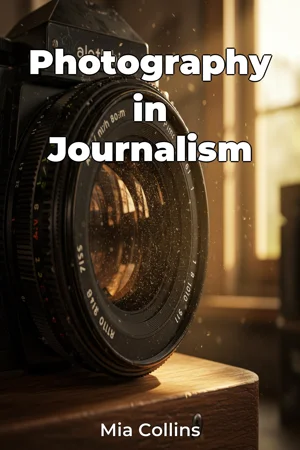
How did the simple act of capturing an image transform the world of news? "Photography in Journalism" explores the profound and lasting impact of press photography on news reporting and consumption. This book delves into the historical evolution, ethical considerations, and evolving technologies that have shaped the relationship between photography and journalism, offering insights into how visual storytelling has redefined our understanding of events and issues. This work examines the core principles of photojournalism, focusing on visual narrative, objectivity, and the public's perception of reality. We explore the importance of visual literacy in a world saturated with images, and the ethical responsibilities borne by photojournalists. The book highlights the shift from text-based news to the incorporation of powerful imagery that can evoke emotion, convey complex information, and shape public opinion more rapidly than written words alone. We will provide historical context, tracing the development of photography from its early technical limitations to its modern digital ubiquity. This historical overview establishes a foundation for understanding how advancements in photographic technology directly influenced the way news was gathered, disseminated, and received. Readers do not need prior expertise in either photography or journalism to grasp the core concepts. The central argument posited by "Photography in Journalism" is that press photography fundamentally altered the nature of news by creating a more immediate, accessible, and emotionally resonant form of communication. This alteration has had both positive and negative consequences, fostering greater public awareness while also raising concerns about manipulation, privacy, and the potential for misinterpretation. Understanding these dynamics is critical in today's media landscape. The book is structured to provide a comprehensive overview of the field. The opening chapters introduce the fundamental concepts of photojournalism and its historical roots. Subsequent sections examine the key elements of visual storytelling, the ethical dilemmas faced by photojournalists, and the impact of digital technologies on the profession. The book culminates by exploring the future of photojournalism in an increasingly visual and interconnected world, complete with examples and case studies. To support its arguments, "Photography in Journalism" draws on a variety of sources, including historical archives of news photography, academic studies of media effects, interviews with leading photojournalists, and legal analyses of privacy and copyright issues. The book analyzes iconic photographs and the controversies surrounding them, providing a critical lens through which to examine the power and responsibility of visual journalism. This book connects to other fields of study, including sociology (the impact of media on society), political science (the role of images in shaping public opinion and policy), and art history (the aesthetic and cultural significance of photography). These interdisciplinary connections enrich the argument and provide a more nuanced understanding of the subject matter. "Photography in Journalism" offers a unique perspective by exploring the ethical challenges and opportunities presented by digital technologies. It will outline how citizen journalism and user-generated content have blurred the lines between professional and amateur photography, and how this shift has complicated the pursuit of objectivity and accuracy. The book aims to provide a balanced and nuanced assessment, acknowledging the benefits of greater access to information while also addressing the risks of misinformation and manipulation. The tone of the writing is academic yet accessible, aimed at engaging readers with clear explanations and compelling examples. This approach is suitable for a broad audience interested in understanding the complexities of photojournalism. The target audience includes students of journalism, photography, and media studies, as well as professional journalists, photographers, and anyone interested in the role of visual media in shaping public perception. This book would be valuable as a textbook, a reference guide, or a general interest read. As a work of non-fiction, "Photography in Journalism" adheres to the genre's expectations of accuracy, objectivity, and thorough research. The book focuses on documented facts and verifiable claims, avoiding speculation or personal opinion. The scope of the book is limited to the impact of still photography on journalism, excluding video and other forms of visual media. This focus allows for a more in-depth exploration of the specific challenges and opportunities presented by photographic images in the news context. The information presented in "Photography in Journalism" can be applied practically by readers in several ways. Aspiring journalists and photographers can benefit from the discussions of ethical considerations and best practices. Media consumers can develop a more critical understanding of the images they encounter in the news. Educators can use the book as a resource for teaching visual literacy and media ethics. The book addresses ongoing debates within the field of photojournalism, such as the ethics of image manipulation, the impact of social media on professional standards, and the role of photography in conflict reporting. By exploring these controversies, "Photography in Journalism" aims to foster a more informed and critical dialogue about the future of visual journalism.
How did the simple act of capturing an image transform the world of news? "Photography in Journalism" explores the profound and lasting impact of press photography on news reporting and consumption. This book delves into the historical evolution, ethical considerations, and evolving technologies that have shaped the relationship between photography and journalism, offering insights into how visual storytelling has redefined our understanding of events and issues. This work examines the core principles of photojournalism, focusing on visual narrative, objectivity, and the public's perception of reality. We explore the importance of visual literacy in a world saturated with images, and the ethical responsibilities borne by photojournalists. The book highlights the shift from text-based news to the incorporation of powerful imagery that can evoke emotion, convey complex information, and shape public opinion more rapidly than written words alone. We will provide historical context, tracing the development of photography from its early technical limitations to its modern digital ubiquity. This historical overview establishes a foundation for understanding how advancements in photographic technology directly influenced the way news was gathered, disseminated, and received. Readers do not need prior expertise in either photography or journalism to grasp the core concepts. The central argument posited by "Photography in Journalism" is that press photography fundamentally altered the nature of news by creating a more immediate, accessible, and emotionally resonant form of communication. This alteration has had both positive and negative consequences, fostering greater public awareness while also raising concerns about manipulation, privacy, and the potential for misinterpretation. Understanding these dynamics is critical in today's media landscape. The book is structured to provide a comprehensive overview of the field. The opening chapters introduce the fundamental concepts of photojournalism and its historical roots. Subsequent sections examine the key elements of visual storytelling, the ethical dilemmas faced by photojournalists, and the impact of digital technologies on the profession. The book culminates by exploring the future of photojournalism in an increasingly visual and interconnected world, complete with examples and case studies. To support its arguments, "Photography in Journalism" draws on a variety of sources, including historical archives of news photography, academic studies of media effects, interviews with leading photojournalists, and legal analyses of privacy and copyright issues. The book analyzes iconic photographs and the controversies surrounding them, providing a critical lens through which to examine the power and responsibility of visual journalism. This book connects to other fields of study, including sociology (the impact of media on society), political science (the role of images in shaping public opinion and policy), and art history (the aesthetic and cultural significance of photography). These interdisciplinary connections enrich the argument and provide a more nuanced understanding of the subject matter. "Photography in Journalism" offers a unique perspective by exploring the ethical challenges and opportunities presented by digital technologies. It will outline how citizen journalism and user-generated content have blurred the lines between professional and amateur photography, and how this shift has complicated the pursuit of objectivity and accuracy. The book aims to provide a balanced and nuanced assessment, acknowledging the benefits of greater access to information while also addressing the risks of misinformation and manipulation. The tone of the writing is academic yet accessible, aimed at engaging readers with clear explanations and compelling examples. This approach is suitable for a broad audience interested in understanding the complexities of photojournalism. The target audience includes students of journalism, photography, and media studies, as well as professional journalists, photographers, and anyone interested in the role of visual media in shaping public perception. This book would be valuable as a textbook, a reference guide, or a general interest read. As a work of non-fiction, "Photography in Journalism" adheres to the genre's expectations of accuracy, objectivity, and thorough research. The book focuses on documented facts and verifiable claims, avoiding speculation or personal opinion. The scope of the book is limited to the impact of still photography on journalism, excluding video and other forms of visual media. This focus allows for a more in-depth exploration of the specific challenges and opportunities presented by photographic images in the news context. The information presented in "Photography in Journalism" can be applied practically by readers in several ways. Aspiring journalists and photographers can benefit from the discussions of ethical considerations and best practices. Media consumers can develop a more critical understanding of the images they encounter in the news. Educators can use the book as a resource for teaching visual literacy and media ethics. The book addresses ongoing debates within the field of photojournalism, such as the ethics of image manipulation, the impact of social media on professional standards, and the role of photography in conflict reporting. By exploring these controversies, "Photography in Journalism" aims to foster a more informed and critical dialogue about the future of visual journalism.
"Photography in Journalism" explores the transformative impact of press photography on news, examining its historical evolution and ethical implications. The book highlights how photography reshaped news consumption, creating a more immediate and emotionally resonant form of communication. It delves into the core principles of photojournalism, such as visual narrative and objectivity, and emphasizes the importance of visual literacy in a world saturated with images. One intriguing aspect is the shift from text-based news to powerful imagery, which can shape public opinion more rapidly than written words. The book traces the development of photography from its technical origins to its current digital ubiquity, showing how advancements directly influenced news gathering and dissemination. Ethical dilemmas are explored through case studies, revealing controversies surrounding iconic photographs. The book also examines how digital technologies and citizen journalism have blurred the lines between professional and amateur photography, complicating objectivity and accuracy. It progresses from foundational concepts and historical roots to the impact of digital technologies, culminating in an exploration of the future of photojournalism.
Book Details
ISBN
9788235218544
Publisher
Publifye AS
Your Licenses
You don't own any licenses for this book
Purchase a license below to unlock this book and download the EPUB.
Purchase License
Select a tier to unlock this book
Need bulk licensing?
Contact us for enterprise agreements.