
About This Book
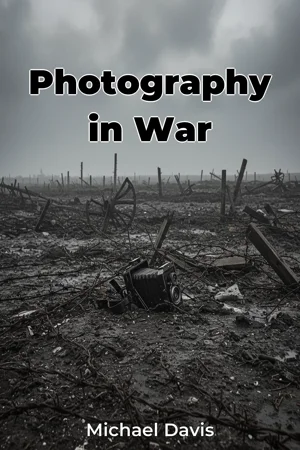
How does witnessing war through a lens shape our understanding of conflict and its consequences? "Photography in War" explores the pivotal role of war photographers in documenting battlefields and influencing public perception throughout history. This book examines the complex interplay between visual representation, historical narrative, and societal impact in times of war. The primary focus rests on understanding the evolution of war photography, tracing its development from early, heavily staged images to the more immediate and visceral depictions of modern conflicts. A core concept will be the ethical considerations faced by war photographers, including the choices they make in capturing and disseminating images of suffering, violence, and death. The influence of these images on public opinion and political discourse represents another key area of focus. Historically, war photography has been shaped by technological advancements, evolving censorship practices, and shifting cultural attitudes towards conflict. Therefore, this work also offers insight into the impact of photographic technology and the power dynamics between military forces and the photographers embedded within their ranks. The book does not assume prior knowledge of photography or military history, but expects that the reader is curious about historical events and their representation. This book argues that war photography is not merely a passive recording of events but an active force in shaping public understanding and engagement with conflict. By analyzing the visual narratives constructed by photographers, we can gain a deeper appreciation for the human cost of war and the ways in which media influences our perceptions of global events. The book is structured chronologically and thematically. Initially, the historical context behind early war photography will be established, looking at the challenges and limitations faced by photographers in nascent practices. Subsequent sections delve into specific conflicts, such as the American Civil War, World Wars I and II, the Vietnam War, and contemporary conflicts, examining how photographers depicted these events and the impact their work had on public consciousness. Furthermore, the ethics surrounding the profession are to be explored, examining the role of censorship and self-regulation. The book concludes by considering the future of war photography in an era of digital media, focusing on the challenges and opportunities presented by citizen journalism and the proliferation of images online. Evidence presented will draw on a range of sources, including published photographs, personal accounts from photographers, archival materials, and scholarly articles. Particular attention is given to analyzing iconic images, deconstructing their visual elements, and examining their historical context. The book also acknowledges the interdisciplinary nature of this field. It intersects with media studies through its examination of visual communication and media influence; political science via its investigation of the relationship between war photography and public policy; plus art history using the analysis of composition and meaning encoded within photographic images. "Photography in War" offers a unique perspective by highlighting stories of individual photographers and the personal risks they undertake to document war. This approach brings a human dimension to the study of media and conflict. Written in a professional and accessible style, the book will appeal to a wide audience, including students and scholars of photography, media studies, military history, and political science, as well as general readers interested in visual culture and the history of armed conflict. While the book aims to provide a broad overview of war photography from its inception to the present day, it acknowledges that it cannot cover every conflict or every photographer in exhaustive detail. Understanding the role of photography in shaping our understanding of war has real-world applications in fields such as journalism, documentary filmmaking, and conflict resolution. By developing critical thinking skills in the analysis of visual media, readers can become more informed and engaged citizens. The role and ethics surrounding depicting human suffering is hotly debated, where this book provides a framework for understanding these complex factors. "Photography in War" navigates these complexities by presenting multiple perspectives and encouraging readers to critically evaluate the ethical dilemmas faced by war photographers.
How does witnessing war through a lens shape our understanding of conflict and its consequences? "Photography in War" explores the pivotal role of war photographers in documenting battlefields and influencing public perception throughout history. This book examines the complex interplay between visual representation, historical narrative, and societal impact in times of war. The primary focus rests on understanding the evolution of war photography, tracing its development from early, heavily staged images to the more immediate and visceral depictions of modern conflicts. A core concept will be the ethical considerations faced by war photographers, including the choices they make in capturing and disseminating images of suffering, violence, and death. The influence of these images on public opinion and political discourse represents another key area of focus. Historically, war photography has been shaped by technological advancements, evolving censorship practices, and shifting cultural attitudes towards conflict. Therefore, this work also offers insight into the impact of photographic technology and the power dynamics between military forces and the photographers embedded within their ranks. The book does not assume prior knowledge of photography or military history, but expects that the reader is curious about historical events and their representation. This book argues that war photography is not merely a passive recording of events but an active force in shaping public understanding and engagement with conflict. By analyzing the visual narratives constructed by photographers, we can gain a deeper appreciation for the human cost of war and the ways in which media influences our perceptions of global events. The book is structured chronologically and thematically. Initially, the historical context behind early war photography will be established, looking at the challenges and limitations faced by photographers in nascent practices. Subsequent sections delve into specific conflicts, such as the American Civil War, World Wars I and II, the Vietnam War, and contemporary conflicts, examining how photographers depicted these events and the impact their work had on public consciousness. Furthermore, the ethics surrounding the profession are to be explored, examining the role of censorship and self-regulation. The book concludes by considering the future of war photography in an era of digital media, focusing on the challenges and opportunities presented by citizen journalism and the proliferation of images online. Evidence presented will draw on a range of sources, including published photographs, personal accounts from photographers, archival materials, and scholarly articles. Particular attention is given to analyzing iconic images, deconstructing their visual elements, and examining their historical context. The book also acknowledges the interdisciplinary nature of this field. It intersects with media studies through its examination of visual communication and media influence; political science via its investigation of the relationship between war photography and public policy; plus art history using the analysis of composition and meaning encoded within photographic images. "Photography in War" offers a unique perspective by highlighting stories of individual photographers and the personal risks they undertake to document war. This approach brings a human dimension to the study of media and conflict. Written in a professional and accessible style, the book will appeal to a wide audience, including students and scholars of photography, media studies, military history, and political science, as well as general readers interested in visual culture and the history of armed conflict. While the book aims to provide a broad overview of war photography from its inception to the present day, it acknowledges that it cannot cover every conflict or every photographer in exhaustive detail. Understanding the role of photography in shaping our understanding of war has real-world applications in fields such as journalism, documentary filmmaking, and conflict resolution. By developing critical thinking skills in the analysis of visual media, readers can become more informed and engaged citizens. The role and ethics surrounding depicting human suffering is hotly debated, where this book provides a framework for understanding these complex factors. "Photography in War" navigates these complexities by presenting multiple perspectives and encouraging readers to critically evaluate the ethical dilemmas faced by war photographers.
"Photography in War" explores the powerful intersection of visual representation, military history, and public perception. It examines how war photographers have shaped our understanding of armed conflict, from early staged scenes to the raw immediacy of modern images. One intriguing aspect is the ethical tightrope these photographers walk, balancing the need to document reality with the potential to exploit suffering. Furthermore, the book highlights how technological advancements, censorship, and evolving cultural attitudes have continuously reshaped war photography. This book traces the evolution of conflict photography chronologically and thematically, starting with the limitations of early war photography and progressing through major conflicts like the American Civil War, the World Wars, and the Vietnam War. The narrative emphasizes the human element, sharing the stories and risks taken by individual photographers to bring the realities of war to the public eye. By analyzing iconic images and their historical context, "Photography in War" provides a deeper appreciation of the human cost and the media's influence on global events.
Book Details
ISBN
9788235218506
Publisher
Publifye AS
Your Licenses
You don't own any licenses for this book
Purchase a license below to unlock this book and download the EPUB.
Purchase License
Select a tier to unlock this book
Need bulk licensing?
Contact us for enterprise agreements.