
About This Book
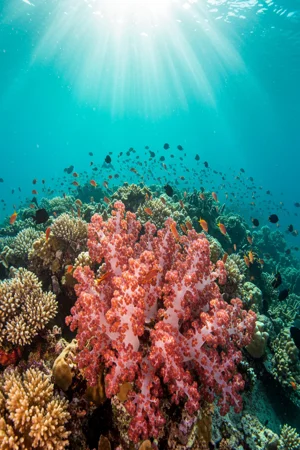
Have you ever wondered how the breathtaking images of coral reefs, deep-sea creatures, and sunken shipwrecks are captured? This book, "Underwater Photography," delves into the fascinating evolution of cameras and techniques that have allowed us to explore and document the hidden world beneath the ocean's surface. It examines the intricate interplay of technology, photographic principles, and the unique challenges presented by the aquatic environment. This book is important because it illuminates not only the technological advancements that have made underwater photography possible but also the crucial role it plays in marine research, conservation efforts, and our understanding of the ocean's delicate ecosystems. Furthermore, the book serves as a practical guide for aspiring underwater photographers, offering insights into the equipment, skills, and considerations necessary to capture stunning images while minimizing environmental impact. The historical context begins with early attempts at underwater photography, highlighting the limitations of cumbersome equipment and long exposure times. We then trace the development of specialized underwater housings, lenses, and lighting systems that have overcome these challenges. Understanding the physics of light underwater is fundamental, as water absorbs and scatters light differently than air, affecting color and visibility. We will explore how photographers compensate for these effects using filters, strobes, and white balance adjustments. The central argument of this book is that underwater photography is not merely a technical pursuit, but rather a powerful tool for scientific discovery, environmental advocacy, and artistic expression. It demonstrates how photographs can reveal hidden behaviors, document environmental changes, and inspire a deeper appreciation for the ocean's beauty and fragility. The book's structure begins with an introduction to the main concepts of underwater photography, including the challenges of light, pressure, and buoyancy. The subsequent chapters develop these ideas with a focus on: a) Equipment: A detailed exploration of underwater camera housings, lenses, strobes, and other essential gear, with an emphasis on their design, functionality, and maintenance. b) Techniques: A comprehensive guide to underwater photographic techniques, covering composition, lighting, focus, and exposure, with specific advice for various underwater environments and subjects. c) Conservation: An examination of the ethical considerations of underwater photography, including guidelines for minimizing environmental impact and promoting responsible diving practices. The culmination of the argument demonstrates how these elements—equipment, technique, and conservation—converge to create impactful underwater images. The book concludes with practical applications and implications, including tips for post-processing, sharing your work, and contributing to marine conservation efforts. The evidence and research presented in this book draw from a variety of sources, including technical manuals, scientific publications, historical archives, and interviews with leading underwater photographers and marine scientists. The book also incorporates practical examples and case studies to illustrate key concepts and techniques. Interdisciplinary connections include: a) Marine Biology: Underwater photography provides valuable visual data for studying marine life, habitats, and ecological processes. b) Oceanography: Photographs can document changes in ocean conditions, such as temperature, salinity, and turbidity. c) Engineering: The design and development of underwater photography equipment relies on principles of engineering and materials science. This book stands out due to its comprehensive approach, blending technical expertise with environmental awareness. It provides a balanced perspective, appealing to both seasoned photographers seeking to expand their skills and environmentally conscious individuals interested in exploring and protecting the underwater world. The tone and writing style are professional yet accessible, aiming to demystify complex concepts and provide practical guidance in a clear and engaging manner. The target audience includes amateur and professional photographers, scuba divers, marine biologists, conservationists, and anyone with a passion for the ocean. This book will be valuable because it provides a comprehensive and up-to-date guide to underwater photography, covering both technical aspects and ethical considerations. A convention of the 'Photography General, Photography, Technology' genres calls for abundant illustrative images, diagrams, and figures, which will be incorporated in the text. The scope of this book covers a wide range of underwater photography topics, from basic principles to advanced techniques. However, it does not delve into the specific details of every camera model or underwater housing, focusing instead on the underlying principles and concepts. Information within this book can be applied practically by readers to improve their underwater photography skills, document marine life, contribute to conservation efforts, and share their passion for the ocean with others. While underwater photography is not without debate, this book specifically addresses the ethical considerations of interacting with marine life and the importance of minimizing environmental impact.
Have you ever wondered how the breathtaking images of coral reefs, deep-sea creatures, and sunken shipwrecks are captured? This book, "Underwater Photography," delves into the fascinating evolution of cameras and techniques that have allowed us to explore and document the hidden world beneath the ocean's surface. It examines the intricate interplay of technology, photographic principles, and the unique challenges presented by the aquatic environment. This book is important because it illuminates not only the technological advancements that have made underwater photography possible but also the crucial role it plays in marine research, conservation efforts, and our understanding of the ocean's delicate ecosystems. Furthermore, the book serves as a practical guide for aspiring underwater photographers, offering insights into the equipment, skills, and considerations necessary to capture stunning images while minimizing environmental impact. The historical context begins with early attempts at underwater photography, highlighting the limitations of cumbersome equipment and long exposure times. We then trace the development of specialized underwater housings, lenses, and lighting systems that have overcome these challenges. Understanding the physics of light underwater is fundamental, as water absorbs and scatters light differently than air, affecting color and visibility. We will explore how photographers compensate for these effects using filters, strobes, and white balance adjustments. The central argument of this book is that underwater photography is not merely a technical pursuit, but rather a powerful tool for scientific discovery, environmental advocacy, and artistic expression. It demonstrates how photographs can reveal hidden behaviors, document environmental changes, and inspire a deeper appreciation for the ocean's beauty and fragility. The book's structure begins with an introduction to the main concepts of underwater photography, including the challenges of light, pressure, and buoyancy. The subsequent chapters develop these ideas with a focus on: a) Equipment: A detailed exploration of underwater camera housings, lenses, strobes, and other essential gear, with an emphasis on their design, functionality, and maintenance. b) Techniques: A comprehensive guide to underwater photographic techniques, covering composition, lighting, focus, and exposure, with specific advice for various underwater environments and subjects. c) Conservation: An examination of the ethical considerations of underwater photography, including guidelines for minimizing environmental impact and promoting responsible diving practices. The culmination of the argument demonstrates how these elements—equipment, technique, and conservation—converge to create impactful underwater images. The book concludes with practical applications and implications, including tips for post-processing, sharing your work, and contributing to marine conservation efforts. The evidence and research presented in this book draw from a variety of sources, including technical manuals, scientific publications, historical archives, and interviews with leading underwater photographers and marine scientists. The book also incorporates practical examples and case studies to illustrate key concepts and techniques. Interdisciplinary connections include: a) Marine Biology: Underwater photography provides valuable visual data for studying marine life, habitats, and ecological processes. b) Oceanography: Photographs can document changes in ocean conditions, such as temperature, salinity, and turbidity. c) Engineering: The design and development of underwater photography equipment relies on principles of engineering and materials science. This book stands out due to its comprehensive approach, blending technical expertise with environmental awareness. It provides a balanced perspective, appealing to both seasoned photographers seeking to expand their skills and environmentally conscious individuals interested in exploring and protecting the underwater world. The tone and writing style are professional yet accessible, aiming to demystify complex concepts and provide practical guidance in a clear and engaging manner. The target audience includes amateur and professional photographers, scuba divers, marine biologists, conservationists, and anyone with a passion for the ocean. This book will be valuable because it provides a comprehensive and up-to-date guide to underwater photography, covering both technical aspects and ethical considerations. A convention of the 'Photography General, Photography, Technology' genres calls for abundant illustrative images, diagrams, and figures, which will be incorporated in the text. The scope of this book covers a wide range of underwater photography topics, from basic principles to advanced techniques. However, it does not delve into the specific details of every camera model or underwater housing, focusing instead on the underlying principles and concepts. Information within this book can be applied practically by readers to improve their underwater photography skills, document marine life, contribute to conservation efforts, and share their passion for the ocean with others. While underwater photography is not without debate, this book specifically addresses the ethical considerations of interacting with marine life and the importance of minimizing environmental impact.
"Underwater Photography" explores the captivating world beneath the waves, revealing how technology and technique combine to capture stunning images of marine life and underwater landscapes. This book highlights the evolution of underwater imaging, from early cumbersome equipment to advanced underwater camera housings and lighting systems, enabling photographers to document the ocean's depths. Understanding the physics of light underwater is crucial, as water affects color and visibility, requiring photographers to employ specialized filters and white balance adjustments. The book progresses from basic principles to advanced underwater techniques, emphasizing the importance of equipment design, functionality, and maintenance. It not only covers photographic techniques like composition and lighting, but also examines the ethical considerations vital for minimizing environmental impact and promoting responsible diving practices. By understanding the interplay of technology, technique, and conservation, "Underwater Photography" argues that underwater photography serves as a powerful tool for scientific discovery, environmental advocacy, and artistic expression. This comprehensive guide uniquely blends technical expertise with environmental awareness, appealing to a broad audience from seasoned photographers to environmentally conscious individuals eager to explore and protect the underwater world. The book incorporates illustrative images and diagrams to demystify complex concepts, providing practical guidance on post-processing, sharing work, and contributing to marine conservation efforts.
Book Details
ISBN
9788235218476
Publisher
Publifye AS
Your Licenses
You don't own any licenses for this book
Purchase a license below to unlock this book and download the EPUB.
Purchase License
Select a tier to unlock this book
Need bulk licensing?
Contact us for enterprise agreements.