
About This Book
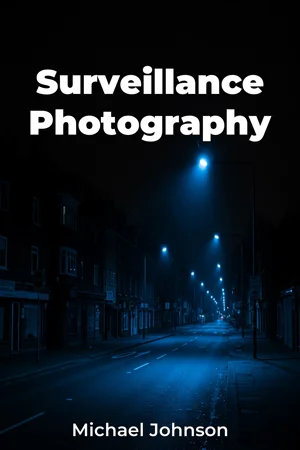
In our increasingly interconnected world, how are cameras reshaping the boundaries of privacy, security, and power? "Surveillance Photography" delves into the multifaceted use of cameras as tools for observation, control, and intelligence gathering, examining their profound impact on individuals, societies, and political landscapes. This book explores three central themes: the evolution of surveillance technologies, the ethical implications of their deployment, and their societal impact on security and governance. Understanding these themes is crucial in an age where cameras are ubiquitous—embedded in smartphones, drones, and public infrastructure—fundamentally altering our expectations of privacy and security. The historical context is essential. From early photographic methods used for criminal identification to the sophisticated digital imaging systems of today, the book traces the technological advancements that have empowered surveillance practices. It also explores the social and political climates that have fueled the demand for increased surveillance, examining historical events like the Cold War and the rise of global terrorism. "Surveillance Photography" argues that while cameras can enhance security and facilitate law enforcement, their unchecked deployment can erode civil liberties and foster a culture of suspicion. This argument is supported by examining legal cases, policy debates, and real-world examples of surveillance misuse. The book is structured to provide a comprehensive understanding of this complex topic. It begins by introducing the core concepts of surveillance, privacy, and visual technologies. It then develops these ideas through three major sections. The first explores the history and technology of surveillance cameras, detailing the transition from analog to digital systems. The second section examines the ethical and legal frameworks surrounding surveillance, analyzing issues such as data privacy, informed consent, and the potential for bias. The final section investigates real-world applications of surveillance photography in law enforcement, counterterrorism, and urban planning. The conclusion synthesizes these discussions, offering insights into the future of surveillance and advocating for responsible and transparent practices. The arguments presented are backed by a diverse range of evidence, including legal documents, policy reports, case studies, and analyses of visual media. The book draws upon original research and data from sources such as government archives, academic studies, and reports from civil liberties organizations. "Surveillance Photography" also connects to various interdisciplinary fields, including law, political science, and sociology. By exploring the legal frameworks governing surveillance, the book provides a deeper understanding of the balance between security and civil liberties. The connections to political science highlight how surveillance technologies can be used to monitor dissent and control populations. The sociological perspective analyzes the impact of surveillance on social behavior, examining how the presence of cameras can shape individual actions and social norms. This book sets itself apart by examining surveillance photography not just as a technological tool but as a social and political force. It offers a nuanced analysis of the complex interplay between technology, power, and privacy in the digital age. The tone is academic yet accessible, aiming to inform and engage a broad audience. The writing style is clear and concise, avoiding jargon and technical language where possible. The target audience includes students, researchers, policymakers, and anyone interested in the social, legal, and ethical implications of surveillance technologies. It will be valuable to those seeking a comprehensive understanding of how cameras are shaping our world and what can be done to ensure their responsible use. As a work in photography and politics, this book provides an overview of the history, technology, and social impact of surveillance photography, adhering to the standards of academic rigor and informed analysis. While the book covers a broad range of surveillance applications, it focuses primarily on the use of cameras in public spaces and by government agencies. It does not delve extensively into the complexities of corporate surveillance or the use of facial recognition technology. Readers will gain practical insights into the challenges and opportunities presented by surveillance technologies. They will be better equipped to critically assess surveillance practices, advocate for responsible policies, and protect their own privacy in an increasingly monitored world. Finally, the book addresses ongoing debates about the balance between security and privacy, the potential for bias in surveillance systems, and the need for greater transparency and accountability in government surveillance practices. These controversies are explored through case studies, policy analyses, and diverse perspectives.
In our increasingly interconnected world, how are cameras reshaping the boundaries of privacy, security, and power? "Surveillance Photography" delves into the multifaceted use of cameras as tools for observation, control, and intelligence gathering, examining their profound impact on individuals, societies, and political landscapes. This book explores three central themes: the evolution of surveillance technologies, the ethical implications of their deployment, and their societal impact on security and governance. Understanding these themes is crucial in an age where cameras are ubiquitous—embedded in smartphones, drones, and public infrastructure—fundamentally altering our expectations of privacy and security. The historical context is essential. From early photographic methods used for criminal identification to the sophisticated digital imaging systems of today, the book traces the technological advancements that have empowered surveillance practices. It also explores the social and political climates that have fueled the demand for increased surveillance, examining historical events like the Cold War and the rise of global terrorism. "Surveillance Photography" argues that while cameras can enhance security and facilitate law enforcement, their unchecked deployment can erode civil liberties and foster a culture of suspicion. This argument is supported by examining legal cases, policy debates, and real-world examples of surveillance misuse. The book is structured to provide a comprehensive understanding of this complex topic. It begins by introducing the core concepts of surveillance, privacy, and visual technologies. It then develops these ideas through three major sections. The first explores the history and technology of surveillance cameras, detailing the transition from analog to digital systems. The second section examines the ethical and legal frameworks surrounding surveillance, analyzing issues such as data privacy, informed consent, and the potential for bias. The final section investigates real-world applications of surveillance photography in law enforcement, counterterrorism, and urban planning. The conclusion synthesizes these discussions, offering insights into the future of surveillance and advocating for responsible and transparent practices. The arguments presented are backed by a diverse range of evidence, including legal documents, policy reports, case studies, and analyses of visual media. The book draws upon original research and data from sources such as government archives, academic studies, and reports from civil liberties organizations. "Surveillance Photography" also connects to various interdisciplinary fields, including law, political science, and sociology. By exploring the legal frameworks governing surveillance, the book provides a deeper understanding of the balance between security and civil liberties. The connections to political science highlight how surveillance technologies can be used to monitor dissent and control populations. The sociological perspective analyzes the impact of surveillance on social behavior, examining how the presence of cameras can shape individual actions and social norms. This book sets itself apart by examining surveillance photography not just as a technological tool but as a social and political force. It offers a nuanced analysis of the complex interplay between technology, power, and privacy in the digital age. The tone is academic yet accessible, aiming to inform and engage a broad audience. The writing style is clear and concise, avoiding jargon and technical language where possible. The target audience includes students, researchers, policymakers, and anyone interested in the social, legal, and ethical implications of surveillance technologies. It will be valuable to those seeking a comprehensive understanding of how cameras are shaping our world and what can be done to ensure their responsible use. As a work in photography and politics, this book provides an overview of the history, technology, and social impact of surveillance photography, adhering to the standards of academic rigor and informed analysis. While the book covers a broad range of surveillance applications, it focuses primarily on the use of cameras in public spaces and by government agencies. It does not delve extensively into the complexities of corporate surveillance or the use of facial recognition technology. Readers will gain practical insights into the challenges and opportunities presented by surveillance technologies. They will be better equipped to critically assess surveillance practices, advocate for responsible policies, and protect their own privacy in an increasingly monitored world. Finally, the book addresses ongoing debates about the balance between security and privacy, the potential for bias in surveillance systems, and the need for greater transparency and accountability in government surveillance practices. These controversies are explored through case studies, policy analyses, and diverse perspectives.
"Surveillance Photography" examines the pervasive use of cameras as tools for observation and control, exploring their impact on privacy, security, and political landscapes. It highlights how advancements in visual technologies, from early criminal identification methods to today's digital systems, have reshaped our expectations of privacy. The book argues that while cameras can enhance security, their unchecked deployment can erode civil liberties. The book approaches this complex topic by first introducing core concepts of surveillance, then progresses through an exploration of the history and technology of surveillance cameras. Ethical and legal frameworks are analyzed, examining issues like data privacy and informed consent. Real-world applications in law enforcement and urban planning are investigated, providing a comprehensive understanding of the social impact of surveillance photography. By connecting to fields like law, political science, and sociology, the book analyzes the balance between security and civil liberties and the potential for bias in surveillance systems. This book sets itself apart by examining surveillance photography not just as a technological tool but as a social and political force, demonstrating the need for transparent and accountable practices.
Book Details
ISBN
9788235218469
Publisher
Publifye AS
Your Licenses
You don't own any licenses for this book
Purchase a license below to unlock this book and download the EPUB.
Purchase License
Select a tier to unlock this book
Need bulk licensing?
Contact us for enterprise agreements.