
About This Book
How did a simple piece of curved glass transform from a mere aid to vision into a sophisticated instrument capable of capturing reality with breathtaking precision? "Evolution of Lenses" explores this technological journey, tracing the advancements in camera lens design and manufacturing and revealing their profound impact on image quality. This book delves into the intricate relationship between lens technology and the art of photography, offering a comprehensive overview for both avid photographers and technology enthusiasts. Two central topics drive our exploration: the evolution of lens materials, from early glass formulations to specialized modern compounds, and the development of optical designs, including single element lenses, achromatic doublets, and complex multi-element systems. Understanding these advancements is crucial because they directly influence image characteristics like sharpness, contrast, color accuracy, and the correction of aberrations. Contextually, the book provides a historical overview, tracing the origins of lensmaking from its early beginnings in the study of optics to its integration into the burgeoning field of photography. Readers will gain insight into the social and scientific factors that drove innovation, such as the need for sharper images in portraiture or the desire to capture distant landscapes. The central argument of "Evolution of Lenses" is that advancements in lens technology have been the primary drivers of image quality improvements throughout the history of photography. The book demonstrates how each generation of lenses has overcome previous limitations, enabling photographers to expand their creative possibilities and document the world with ever-increasing fidelity. The book unfolds systematically: first, it introduces the fundamental principles of optics and lens design, providing essential groundwork for understanding the complexities that follow. Next, it chronicles the development of lens technology chronologically, with major points that include: * Early Lens Designs: Covering single element lenses and the invention of achromatic lenses. * The Rise of Complex Optics: Discussing the incorporation of multiple elements, specialized coatings, and aspherical surfaces. * Modern Lens Technology: Examining advancements in autofocus systems, image stabilization, and specialized lens types (e.g., zoom lenses, macro lenses). The journey culminates with an examination of current trends in lens design and their potential impact on future photographic practices. Practical applications are thoroughly covered, including detailed discussions of how different lens technologies impact image quality and artistic expression. Evidence is drawn from a range of sources, including historical records, technical specifications, patents, and comparative analyses of images produced by different lenses. Where available, data from lens manufacturers and independent testing organizations will be presented to support the book's arguments. The narrative extends beyond the realm of pure photography. Connections are made to materials science, explaining the chemical and physical properties of lens materials, and to mechanical engineering, detailing the design and manufacturing processes involved in creating complex lens assemblies. Furthermore, connections to art history will highlight examples of how specific lenses shaped artistic movements and photographic styles. A unique aspect of "Evolution of Lenses" is its blending of technical detail with practical application. While providing in-depth explanations of optical principles, the book remains accessible to non-experts, clearly illustrating how these principles translate into real-world photographic results. Written in a professional and informative style, the book balances technical accuracy with readability, making it engaging for a diverse audience. The target audience includes photography enthusiasts, students of photography, professional photographers seeking to deepen their understanding of lens technology, and readers with a general interest in the history of technology. This book provides this audience with a valuable understanding of the technology that shapes image creation. As a non-fiction work within the genres of both photography and technology, it adheres to standards of accuracy, objectivity, and well-supported argumentation. The book’s scope encompasses primarily still photography lenses, with limited discussion of cinema lenses. The focus remains on lenses for interchangeable lens cameras, as they offer the greatest diversity in design and technological innovation. The practical benefits of reading this book are manifold. Photographers will gain a deeper understanding of how lenses work and how to choose the right lens for a specific purpose. They will also develop a greater appreciation for the technology that enables them to capture stunning images. While the book aims to present a comprehensive overview, it acknowledges that the field of lens technology is constantly evolving. It also touches upon debates surrounding the relative merits of vintage versus modern lenses and the ongoing quest for the "perfect" lens.
How did a simple piece of curved glass transform from a mere aid to vision into a sophisticated instrument capable of capturing reality with breathtaking precision? "Evolution of Lenses" explores this technological journey, tracing the advancements in camera lens design and manufacturing and revealing their profound impact on image quality. This book delves into the intricate relationship between lens technology and the art of photography, offering a comprehensive overview for both avid photographers and technology enthusiasts. Two central topics drive our exploration: the evolution of lens materials, from early glass formulations to specialized modern compounds, and the development of optical designs, including single element lenses, achromatic doublets, and complex multi-element systems. Understanding these advancements is crucial because they directly influence image characteristics like sharpness, contrast, color accuracy, and the correction of aberrations. Contextually, the book provides a historical overview, tracing the origins of lensmaking from its early beginnings in the study of optics to its integration into the burgeoning field of photography. Readers will gain insight into the social and scientific factors that drove innovation, such as the need for sharper images in portraiture or the desire to capture distant landscapes. The central argument of "Evolution of Lenses" is that advancements in lens technology have been the primary drivers of image quality improvements throughout the history of photography. The book demonstrates how each generation of lenses has overcome previous limitations, enabling photographers to expand their creative possibilities and document the world with ever-increasing fidelity. The book unfolds systematically: first, it introduces the fundamental principles of optics and lens design, providing essential groundwork for understanding the complexities that follow. Next, it chronicles the development of lens technology chronologically, with major points that include: * Early Lens Designs: Covering single element lenses and the invention of achromatic lenses. * The Rise of Complex Optics: Discussing the incorporation of multiple elements, specialized coatings, and aspherical surfaces. * Modern Lens Technology: Examining advancements in autofocus systems, image stabilization, and specialized lens types (e.g., zoom lenses, macro lenses). The journey culminates with an examination of current trends in lens design and their potential impact on future photographic practices. Practical applications are thoroughly covered, including detailed discussions of how different lens technologies impact image quality and artistic expression. Evidence is drawn from a range of sources, including historical records, technical specifications, patents, and comparative analyses of images produced by different lenses. Where available, data from lens manufacturers and independent testing organizations will be presented to support the book's arguments. The narrative extends beyond the realm of pure photography. Connections are made to materials science, explaining the chemical and physical properties of lens materials, and to mechanical engineering, detailing the design and manufacturing processes involved in creating complex lens assemblies. Furthermore, connections to art history will highlight examples of how specific lenses shaped artistic movements and photographic styles. A unique aspect of "Evolution of Lenses" is its blending of technical detail with practical application. While providing in-depth explanations of optical principles, the book remains accessible to non-experts, clearly illustrating how these principles translate into real-world photographic results. Written in a professional and informative style, the book balances technical accuracy with readability, making it engaging for a diverse audience. The target audience includes photography enthusiasts, students of photography, professional photographers seeking to deepen their understanding of lens technology, and readers with a general interest in the history of technology. This book provides this audience with a valuable understanding of the technology that shapes image creation. As a non-fiction work within the genres of both photography and technology, it adheres to standards of accuracy, objectivity, and well-supported argumentation. The book’s scope encompasses primarily still photography lenses, with limited discussion of cinema lenses. The focus remains on lenses for interchangeable lens cameras, as they offer the greatest diversity in design and technological innovation. The practical benefits of reading this book are manifold. Photographers will gain a deeper understanding of how lenses work and how to choose the right lens for a specific purpose. They will also develop a greater appreciation for the technology that enables them to capture stunning images. While the book aims to present a comprehensive overview, it acknowledges that the field of lens technology is constantly evolving. It also touches upon debates surrounding the relative merits of vintage versus modern lenses and the ongoing quest for the "perfect" lens.
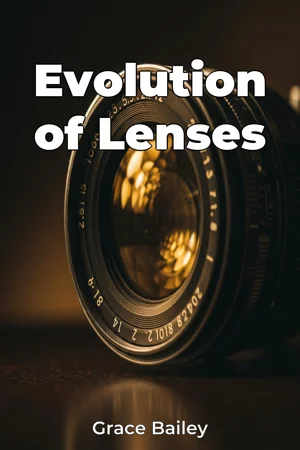
"Evolution of Lenses" explores the fascinating journey of camera lenses, from simple curved glass to sophisticated tools that capture reality with stunning precision. It highlights how advancements in lens materials, like specialized modern compounds, and optical designs, such as achromatic lenses, have revolutionized image quality. Understanding this evolution reveals how lenses directly impact sharpness, contrast, and color accuracy in photographs. The book chronologically unfolds lens technology, starting with early designs and culminating in modern advancements like autofocus and zoom lenses. It blends technical details with practical applications, demonstrating how optical principles affect real-world results and artistic expression. This approach offers photography enthusiasts, students, and professionals a deeper understanding of lens technology and its impact on photographic history and the future of image creation.
Book Details
ISBN
9788235218438
Publisher
Publifye AS
Your Licenses
You don't own any licenses for this book
Purchase a license below to unlock this book and download the EPUB.
Purchase License
Select a tier to unlock this book
Need bulk licensing?
Contact us for enterprise agreements.