
About This Book
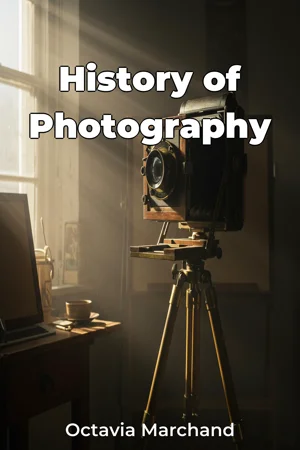
How did a process born from scientific curiosity transform into the ubiquitous visual language of the modern world? "History of Photography" traces this captivating evolution, exploring photography’s technical innovations, artistic achievements, and profound social impact from its inception to the digital age. This volume offers a comprehensive examination of photography as a technological marvel, an art form, and a powerful tool for documenting and shaping our understanding of the world. At the heart of our exploration are three key topics: the pioneering techniques that underpinned early photographic processes, the evolving role of photography in shaping visual culture and collective memory, and the digital revolution that has redefined image creation and dissemination. Understanding these elements is crucial to appreciating photography's lasting influence. The journey begins in the early 19th century, amidst burgeoning scientific inquiry and artistic experimentation. We delve into the crucial context of this era, examining the chemical discoveries, optical advancements, and artistic movements that converged to make photography possible. No specialized knowledge is needed; we build from the ground up, explaining each concept clearly. The central argument is that photography's history is not merely a chronicle of technological advancements but also a reflection of changing social values, artistic sensibilities, and power dynamics. We assert that understanding this complex interplay is essential for critically engaging with the images that constantly surround us. This book unfolds in a chronological narrative: First, we introduce the scientific principles and early experiments that led to the invention of photography, covering figures like Nicéphore Niépce, Louis Daguerre, and William Henry Fox Talbot. We then trace the development of various photographic processes, from daguerreotypes and calotypes to wet collodion and gelatin silver prints. Next, we examine photography's impact on art, journalism, science, and social reform, spotlighting key photographers and their iconic images. Finally, we analyze the digital transformation of photography, exploring the rise of digital cameras, image editing software, and social media platforms, and considering their implications for visual culture and ethics. Our analysis relies on extensive research from primary sources, including historical documents, photographic manuals, and original photographs. We also draw upon secondary scholarship in the fields of art history, media studies, and the history of science and technology. This book connects to diverse fields. It intersects with art history, illuminating photography's relationship with painting, sculpture, and other visual arts. It also engages with media studies, examining photography as a form of communication and representation. Furthermore, it resonates with sociology, exploring photography's role in shaping social identities and documenting cultural practices. What sets this book apart is its integrated approach, weaving technical explanations with art historical analysis and social commentary. We avoid jargon and present complex ideas in an accessible and engaging manner, suitable for both newcomers and seasoned enthusiasts. Written in a clear and engaging style, "History of Photography" is targeted toward students, researchers, photographers, and anyone interested in the history and cultural significance of photography. This book adheres to the conventions of historical non-fiction, presenting factual information in a chronological and analytical framework. While we strive for broad coverage, we acknowledge that a complete account of photography's global history is beyond the scope of a single volume. We primarily focus on the Western tradition but also incorporate examples from other regions to illustrate the diverse applications and interpretations of photography worldwide. The insights in this book have practical applications for photographers, artists, historians, and media consumers alike. By understanding photography's historical trajectory, readers can develop a more critical and informed perspective on the images they create and consume. Throughout photography's history, debates have raged about its status as art, its objectivity, and its ethical implications. We address these controversies head-on, encouraging readers to form their own informed opinions.
How did a process born from scientific curiosity transform into the ubiquitous visual language of the modern world? "History of Photography" traces this captivating evolution, exploring photography’s technical innovations, artistic achievements, and profound social impact from its inception to the digital age. This volume offers a comprehensive examination of photography as a technological marvel, an art form, and a powerful tool for documenting and shaping our understanding of the world. At the heart of our exploration are three key topics: the pioneering techniques that underpinned early photographic processes, the evolving role of photography in shaping visual culture and collective memory, and the digital revolution that has redefined image creation and dissemination. Understanding these elements is crucial to appreciating photography's lasting influence. The journey begins in the early 19th century, amidst burgeoning scientific inquiry and artistic experimentation. We delve into the crucial context of this era, examining the chemical discoveries, optical advancements, and artistic movements that converged to make photography possible. No specialized knowledge is needed; we build from the ground up, explaining each concept clearly. The central argument is that photography's history is not merely a chronicle of technological advancements but also a reflection of changing social values, artistic sensibilities, and power dynamics. We assert that understanding this complex interplay is essential for critically engaging with the images that constantly surround us. This book unfolds in a chronological narrative: First, we introduce the scientific principles and early experiments that led to the invention of photography, covering figures like Nicéphore Niépce, Louis Daguerre, and William Henry Fox Talbot. We then trace the development of various photographic processes, from daguerreotypes and calotypes to wet collodion and gelatin silver prints. Next, we examine photography's impact on art, journalism, science, and social reform, spotlighting key photographers and their iconic images. Finally, we analyze the digital transformation of photography, exploring the rise of digital cameras, image editing software, and social media platforms, and considering their implications for visual culture and ethics. Our analysis relies on extensive research from primary sources, including historical documents, photographic manuals, and original photographs. We also draw upon secondary scholarship in the fields of art history, media studies, and the history of science and technology. This book connects to diverse fields. It intersects with art history, illuminating photography's relationship with painting, sculpture, and other visual arts. It also engages with media studies, examining photography as a form of communication and representation. Furthermore, it resonates with sociology, exploring photography's role in shaping social identities and documenting cultural practices. What sets this book apart is its integrated approach, weaving technical explanations with art historical analysis and social commentary. We avoid jargon and present complex ideas in an accessible and engaging manner, suitable for both newcomers and seasoned enthusiasts. Written in a clear and engaging style, "History of Photography" is targeted toward students, researchers, photographers, and anyone interested in the history and cultural significance of photography. This book adheres to the conventions of historical non-fiction, presenting factual information in a chronological and analytical framework. While we strive for broad coverage, we acknowledge that a complete account of photography's global history is beyond the scope of a single volume. We primarily focus on the Western tradition but also incorporate examples from other regions to illustrate the diverse applications and interpretations of photography worldwide. The insights in this book have practical applications for photographers, artists, historians, and media consumers alike. By understanding photography's historical trajectory, readers can develop a more critical and informed perspective on the images they create and consume. Throughout photography's history, debates have raged about its status as art, its objectivity, and its ethical implications. We address these controversies head-on, encouraging readers to form their own informed opinions.
"History of Photography" explores the captivating journey of photography from a scientific curiosity to a dominant force in visual culture. The book traces the evolution of photographic processes, delving into the pioneering techniques that allowed early photographers to capture and preserve images. It reveals how photography shaped our collective memory and transformed visual communication across various fields. The book examines photography's impact on art, journalism, and social reform, spotlighting photographers and their iconic images. One intriguing fact is how photography challenged traditional art forms, sparking debates about its artistic merit. Another is the role photography played in documenting and driving social change. The narrative unfolds chronologically, beginning with the early experiments and concluding with the digital revolution. The analysis considers the rise of digital cameras, image editing software, and social media platforms, and their implications for visual culture and ethics. What sets this book apart is its integrated approach, weaving technical explanations with art historical analysis and social commentary. It's a valuable resource for anyone interested in the history of photography, its technological advancements, and its profound social impact.
Book Details
ISBN
9788235218353
Publisher
Publifye AS
Your Licenses
You don't own any licenses for this book
Purchase a license below to unlock this book and download the EPUB.
Purchase License
Select a tier to unlock this book
Need bulk licensing?
Contact us for enterprise agreements.