
About This Book
Have you ever wondered if that iconic photograph you admire is entirely what it seems? This book, "Photography Myths," delves into the captivating, often distorted, world of famous photographs, separating fact from fiction and uncovering the surprising truths behind some of history's most recognizable images. We explore how misconceptions, urban legends, and outright exaggerations have shaped our understanding of these powerful visual moments. This book addresses three key themes: the impact of retouched or manipulated images, the misattribution of context and meaning, and the propagation of inaccurate historical narratives through photography. These areas are critical because they highlight how easily our perceptions can be swayed and our collective memory can be altered, especially in the digital age where image manipulation is commonplace. Understanding the social and historical backdrop of these photographs is essential. We examine the eras in which these images were created, the prevailing cultural attitudes, and the technological limitations (or advancements) that influenced photographic practices. While no prior expertise in photography or history is needed, an open mind and a willingness to question established narratives will greatly enhance the reading experience. The central argument is that a critical examination of famous photographs reveals a significant gap between the perceived reality and the often-complex truth. By understanding this disparity, we can become more discerning viewers, less susceptible to manipulation, and better equipped to appreciate the genuine power and nuance of photographic art. The book is structured to guide you through this process. First, we introduce the core concepts of photographic manipulation and the evolving ethics surrounding it. Then, we analyze specific case studies, dividing them into thematic chapters. One section focuses on photographs distorted for political gain, revealing how images have been intentionally altered or presented out of context to sway public opinion. Another chapter explores images whose meanings have been gradually reinterpreted over time, often diverging from the original intent of the photographer or the historical reality of the scene. The final case-study chapter highlights the tall tales that attach themselves to images over time. Finally, we discuss the implications of these myths focusing on the importance of media literacy and critical thinking and providing practical tools for analyzing visual information. The evidence presented is drawn from a combination of primary sources, including photographers' notes, historical documents, and contemporary news reports, as well as secondary analyses from photographic historians and media scholars. We also draw on digital forensic techniques to examine images for signs of manipulation. The book connects to several other disciplines, including history, sociology, and media studies. History provides the factual background for the photographs; sociology helps us understand the cultural context in which they were created and received; and media studies offers tools for analyzing the visual language and persuasive power of images. "Photography Myths" offers a unique perspective by not simply debunking myths but also exploring why these myths persist. We examine the psychological and social factors that make us susceptible to believing certain narratives, even in the face of contradictory evidence. This approach distinguishes the book from purely factual accounts and elevates it to a more engaging and thought-provoking exploration of visual perception and collective memory. The tone is professional but accessible, aiming to inform and engage a broad readership. While grounded in research, the writing style avoids academic jargon, favoring clear and concise explanations. The target readership includes photography enthusiasts, history buffs, students of media and visual culture, and anyone interested in learning how to critically assess visual information. This book is valuable because it provides the tools and knowledge necessary to navigate the increasingly complex world of visual media with greater awareness and discernment. As a work in the 'Photography General, History, Photography' genres, "Photography Myths" adheres to the conventions of thorough research, accurate representation of facts, and engaging storytelling. However, it also challenges traditional historical narratives and encourages readers to question established interpretations of famous photographs. The scope of the book is limited to a selection of widely recognized and historically significant photographs. While we acknowledge the vastness of photographic history, we focus on images that have had a lasting impact on public perception and cultural memory. The information presented in this book has real-world applications in fields such as journalism, education, and law. By understanding how photographs can be manipulated and misinterpreted, professionals in these fields can become more effective communicators, educators, and advocates for truth and accuracy. The book also addresses ongoing debates in the photographic community, such as the ethics of digital manipulation but attempts to present a neutral and balanced viewpoint fostering a more informed discussion.
Have you ever wondered if that iconic photograph you admire is entirely what it seems? This book, "Photography Myths," delves into the captivating, often distorted, world of famous photographs, separating fact from fiction and uncovering the surprising truths behind some of history's most recognizable images. We explore how misconceptions, urban legends, and outright exaggerations have shaped our understanding of these powerful visual moments. This book addresses three key themes: the impact of retouched or manipulated images, the misattribution of context and meaning, and the propagation of inaccurate historical narratives through photography. These areas are critical because they highlight how easily our perceptions can be swayed and our collective memory can be altered, especially in the digital age where image manipulation is commonplace. Understanding the social and historical backdrop of these photographs is essential. We examine the eras in which these images were created, the prevailing cultural attitudes, and the technological limitations (or advancements) that influenced photographic practices. While no prior expertise in photography or history is needed, an open mind and a willingness to question established narratives will greatly enhance the reading experience. The central argument is that a critical examination of famous photographs reveals a significant gap between the perceived reality and the often-complex truth. By understanding this disparity, we can become more discerning viewers, less susceptible to manipulation, and better equipped to appreciate the genuine power and nuance of photographic art. The book is structured to guide you through this process. First, we introduce the core concepts of photographic manipulation and the evolving ethics surrounding it. Then, we analyze specific case studies, dividing them into thematic chapters. One section focuses on photographs distorted for political gain, revealing how images have been intentionally altered or presented out of context to sway public opinion. Another chapter explores images whose meanings have been gradually reinterpreted over time, often diverging from the original intent of the photographer or the historical reality of the scene. The final case-study chapter highlights the tall tales that attach themselves to images over time. Finally, we discuss the implications of these myths focusing on the importance of media literacy and critical thinking and providing practical tools for analyzing visual information. The evidence presented is drawn from a combination of primary sources, including photographers' notes, historical documents, and contemporary news reports, as well as secondary analyses from photographic historians and media scholars. We also draw on digital forensic techniques to examine images for signs of manipulation. The book connects to several other disciplines, including history, sociology, and media studies. History provides the factual background for the photographs; sociology helps us understand the cultural context in which they were created and received; and media studies offers tools for analyzing the visual language and persuasive power of images. "Photography Myths" offers a unique perspective by not simply debunking myths but also exploring why these myths persist. We examine the psychological and social factors that make us susceptible to believing certain narratives, even in the face of contradictory evidence. This approach distinguishes the book from purely factual accounts and elevates it to a more engaging and thought-provoking exploration of visual perception and collective memory. The tone is professional but accessible, aiming to inform and engage a broad readership. While grounded in research, the writing style avoids academic jargon, favoring clear and concise explanations. The target readership includes photography enthusiasts, history buffs, students of media and visual culture, and anyone interested in learning how to critically assess visual information. This book is valuable because it provides the tools and knowledge necessary to navigate the increasingly complex world of visual media with greater awareness and discernment. As a work in the 'Photography General, History, Photography' genres, "Photography Myths" adheres to the conventions of thorough research, accurate representation of facts, and engaging storytelling. However, it also challenges traditional historical narratives and encourages readers to question established interpretations of famous photographs. The scope of the book is limited to a selection of widely recognized and historically significant photographs. While we acknowledge the vastness of photographic history, we focus on images that have had a lasting impact on public perception and cultural memory. The information presented in this book has real-world applications in fields such as journalism, education, and law. By understanding how photographs can be manipulated and misinterpreted, professionals in these fields can become more effective communicators, educators, and advocates for truth and accuracy. The book also addresses ongoing debates in the photographic community, such as the ethics of digital manipulation but attempts to present a neutral and balanced viewpoint fostering a more informed discussion.
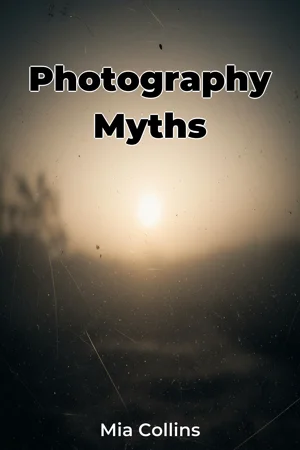
"Photography Myths" explores the fascinating stories behind famous photographs, revealing how myths and misconceptions can distort our understanding of visual history. The book examines how images are manipulated, either through retouching or by presenting them out of their original context, and how these alterations impact our collective memory. For example, a photograph's meaning can shift dramatically over time, diverging from the photographer's initial intent or the historical reality it captured. The book progresses through thematic chapters, starting with an introduction to photographic manipulation and its ethical implications. It then delves into case studies, such as photographs used for political gain or those subject to evolving interpretations over time. By analyzing these examples, "Photography Myths" encourages media literacy and critical thinking, providing readers with the tools to analyze visual information more effectively. It uniquely explores why these myths persist, examining the psychological and social factors that make us susceptible to believing certain narratives. By drawing on primary sources, historical documents, and digital forensic techniques, the book separates fact from fiction, challenging traditional historical narratives. It’s a valuable resource for photography enthusiasts, history buffs, and anyone seeking to navigate the complexities of visual media with greater awareness. The book emphasizes the importance of questioning established narratives and understanding the social context in which photographs are created and received.
Book Details
ISBN
9788235218346
Publisher
Publifye AS
Your Licenses
You don't own any licenses for this book
Purchase a license below to unlock this book and download the EPUB.
Purchase License
Select a tier to unlock this book
Need bulk licensing?
Contact us for enterprise agreements.