
About This Book
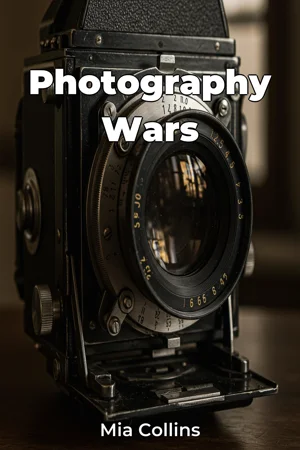
Have you ever considered that the history of photography is not just a series of technical advancements and artistic breakthroughs, but a battleground of egos, aesthetics, and fiercely defended ideologies? "Photography Wars" delves into the captivating rivalries that have shaped the world of photography, exploring the contentious relationships between iconic photographers and the competing photographic styles they championed. This book examines how these conflicts, both personal and professional, fueled innovation and redefined the boundaries of the art form. Two key topics explored are the clash between pictorialism and straight photography, and the tension between documentary photography and staged photography. The pictorialists, with their emphasis on artistic manipulation and subjective interpretation, stood in stark contrast to the straight photographers, who advocated for unvarnished realism and objective representation. Similarly, the debate over documentary versus staged photography raises fundamental questions about truth, ethics, and the photographer's role in shaping narratives. Understanding these conflicts is vital because they illuminate the evolving definition of photography itself, and the ever-shifting power dynamics within the photographic community. The book provides historical context by examining the socio-cultural milieu in which these rivalries unfolded. Technological advancements, shifting artistic movements, and evolving social attitudes all played a role in shaping the perspectives and priorities of photographers. No prior knowledge is required, as the book offers clear explanations of key photographic concepts and movements. The central argument of "Photography Wars" is that these rivalries, far from being mere personality clashes, were essential drivers of photographic evolution. By challenging established norms and pushing the boundaries of the medium, competing photographers and styles forced a constant reevaluation of photography's purpose, potential, and ethical responsibilities. This argument is important because it provides a nuanced understanding of photographic history, moving beyond a simple chronological account to reveal the complex interplay of ideas and personalities. The book begins by introducing the main concepts of photographic style and rivalry, setting the stage for a detailed examination of specific conflicts. Major sections will explore the rivalry between Alfred Stieglitz and his contemporaries in the Photo-Secession movement, the contrasting approaches of Henri Cartier-Bresson and Robert Frank, and the debates surrounding the work of figures such as Jeff Wall and Cindy Sherman. The book culminates by examining the legacy of these conflicts and their continued relevance in contemporary photography. It analyzes how these historical debates inform current discussions about authenticity, representation, and the role of the photographer in a digital age. To support its arguments, "Photography Wars" draws on a range of sources, including primary documents such as photographers' letters, journals, and manifestos, as well as critical analyses and historical accounts. Methodologically, the book employs a comparative approach, analyzing the work of competing photographers and styles to identify key differences and commonalities. The book connects to other fields, such as art history, sociology, and media studies. Its exploration of artistic rivalries sheds light on broader dynamics within the art world, while its analysis of photographic representation contributes to sociological debates about power, identity, and visual culture. Furthermore, its examination of the ethics of documentary photography has relevance to discussions about journalism and media ethics. "Photography Wars" offers a unique perspective by framing the history of photography through the lens of rivalry and conflict. This approach reveals the often-overlooked human element in photographic innovation, highlighting the passions, prejudices, and personal ambitions that have shaped the medium. Written in an accessible and engaging style, "Photography Wars" is aimed at a broad audience, including photography enthusiasts, students, art historians, and anyone interested in the history of visual culture. It offers valuable insights into the creative process, the dynamics of artistic movements, and the ethical challenges facing photographers. As a genre work of photography and biography, "Photography Wars" adheres to accepted standards of historical accuracy and scholarly research. The book's scope is confined to a selection of prominent rivalries that have significantly impacted the development of photography. It does not attempt to provide an exhaustive account of every conflict in photographic history, choosing to focus instead on those that offer the most compelling insights. The information in the book can be applied practically by photographers seeking to develop their own artistic vision and navigate the complex ethical landscape of the profession. It also provides valuable context for understanding and appreciating the diverse range of photographic styles and approaches. "Photography Wars" addresses ongoing debates about the role of technology in photography, the commercialization of the art form, and the ethics of representation, offering a fresh perspective on these complex issues.
Have you ever considered that the history of photography is not just a series of technical advancements and artistic breakthroughs, but a battleground of egos, aesthetics, and fiercely defended ideologies? "Photography Wars" delves into the captivating rivalries that have shaped the world of photography, exploring the contentious relationships between iconic photographers and the competing photographic styles they championed. This book examines how these conflicts, both personal and professional, fueled innovation and redefined the boundaries of the art form. Two key topics explored are the clash between pictorialism and straight photography, and the tension between documentary photography and staged photography. The pictorialists, with their emphasis on artistic manipulation and subjective interpretation, stood in stark contrast to the straight photographers, who advocated for unvarnished realism and objective representation. Similarly, the debate over documentary versus staged photography raises fundamental questions about truth, ethics, and the photographer's role in shaping narratives. Understanding these conflicts is vital because they illuminate the evolving definition of photography itself, and the ever-shifting power dynamics within the photographic community. The book provides historical context by examining the socio-cultural milieu in which these rivalries unfolded. Technological advancements, shifting artistic movements, and evolving social attitudes all played a role in shaping the perspectives and priorities of photographers. No prior knowledge is required, as the book offers clear explanations of key photographic concepts and movements. The central argument of "Photography Wars" is that these rivalries, far from being mere personality clashes, were essential drivers of photographic evolution. By challenging established norms and pushing the boundaries of the medium, competing photographers and styles forced a constant reevaluation of photography's purpose, potential, and ethical responsibilities. This argument is important because it provides a nuanced understanding of photographic history, moving beyond a simple chronological account to reveal the complex interplay of ideas and personalities. The book begins by introducing the main concepts of photographic style and rivalry, setting the stage for a detailed examination of specific conflicts. Major sections will explore the rivalry between Alfred Stieglitz and his contemporaries in the Photo-Secession movement, the contrasting approaches of Henri Cartier-Bresson and Robert Frank, and the debates surrounding the work of figures such as Jeff Wall and Cindy Sherman. The book culminates by examining the legacy of these conflicts and their continued relevance in contemporary photography. It analyzes how these historical debates inform current discussions about authenticity, representation, and the role of the photographer in a digital age. To support its arguments, "Photography Wars" draws on a range of sources, including primary documents such as photographers' letters, journals, and manifestos, as well as critical analyses and historical accounts. Methodologically, the book employs a comparative approach, analyzing the work of competing photographers and styles to identify key differences and commonalities. The book connects to other fields, such as art history, sociology, and media studies. Its exploration of artistic rivalries sheds light on broader dynamics within the art world, while its analysis of photographic representation contributes to sociological debates about power, identity, and visual culture. Furthermore, its examination of the ethics of documentary photography has relevance to discussions about journalism and media ethics. "Photography Wars" offers a unique perspective by framing the history of photography through the lens of rivalry and conflict. This approach reveals the often-overlooked human element in photographic innovation, highlighting the passions, prejudices, and personal ambitions that have shaped the medium. Written in an accessible and engaging style, "Photography Wars" is aimed at a broad audience, including photography enthusiasts, students, art historians, and anyone interested in the history of visual culture. It offers valuable insights into the creative process, the dynamics of artistic movements, and the ethical challenges facing photographers. As a genre work of photography and biography, "Photography Wars" adheres to accepted standards of historical accuracy and scholarly research. The book's scope is confined to a selection of prominent rivalries that have significantly impacted the development of photography. It does not attempt to provide an exhaustive account of every conflict in photographic history, choosing to focus instead on those that offer the most compelling insights. The information in the book can be applied practically by photographers seeking to develop their own artistic vision and navigate the complex ethical landscape of the profession. It also provides valuable context for understanding and appreciating the diverse range of photographic styles and approaches. "Photography Wars" addresses ongoing debates about the role of technology in photography, the commercialization of the art form, and the ethics of representation, offering a fresh perspective on these complex issues.
"Photography Wars" explores the dynamic and often contentious history of photography through its most significant rivalries. It argues that these conflicts, driven by strong personalities and differing artistic visions, were crucial in shaping photographic innovation. For instance, the book delves into the battle between pictorialism, which favored artistic manipulation, and straight photography, which championed unvarnished realism, illustrating how differing ideologies fueled creativity. Another key area of exploration is the tension between documentary and staged photography, sparking debates about truth and ethics in the medium. The book examines these photographic rivalries within their socio-cultural contexts, highlighting the impact of technological advancements and evolving social attitudes. By examining figures such as Alfred Stieglitz, Henri Cartier-Bresson, and Cindy Sherman, "Photography Wars" reveals how personal and professional conflicts influenced the evolution of photographic styles. The book progresses from introducing core concepts to analyzing specific rivalries and their modern-day relevance, offering a unique lens through which to understand photography's past and present.
Book Details
ISBN
9788235218254
Publisher
Publifye AS
Your Licenses
You don't own any licenses for this book
Purchase a license below to unlock this book and download the EPUB.
Purchase License
Select a tier to unlock this book
Need bulk licensing?
Contact us for enterprise agreements.