
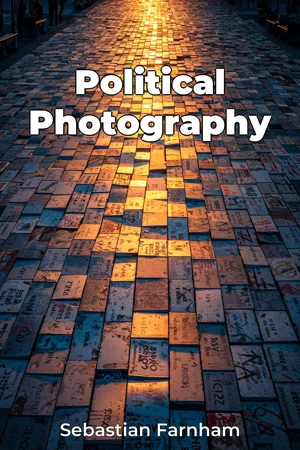
About This Book
How has a single image shaped the outcome of an election, galvanized a protest, or defined a political movement? "Political Photography" explores the profound and often unseen influence of photography on global politics and public perception. This book delves into the complex interplay between visual representation, power, and social change, revealing how photographs have served as both historical records and potent agents of political action. At its core, this book examines three crucial areas: the use of photography in election campaigns, its role in documenting and amplifying protest movements, and its impact on shaping public opinion regarding significant political events. These topics are vital because they illustrate the multifaceted ways in which visual media can sway public sentiment, influence policy decisions, and ultimately, alter the course of history. Analyzing these areas offers valuable insights into media literacy, political strategy, and the ethics of visual communication. To fully understand the power of political photography, it's essential to consider the historical and social context in which these images emerge. From early examples of documentary photography used to expose social injustices in the late 19th century to the pervasive use of digitally manipulated images in contemporary political discourse, the book traces the evolution of photography as a political tool. Readers will gain an understanding of topics such as photographic composition, visual rhetoric, and the psychology of perception, enabling them to critically analyze the images they encounter daily. The central argument of "Political Photography" is that photographs are not merely passive reflections of reality but actively construct narratives that can reinforce or challenge existing power structures. This viewpoint is crucial because it moves beyond a simplistic understanding of photography as objective truth, highlighting its inherent subjectivity and potential for manipulation. By revealing the underlying mechanisms through which photographs influence political discourse, the book equips readers with the analytical tools necessary to navigate the increasingly complex media landscape. The book is structured to provide a comprehensive exploration of political photography. It begins by introducing core concepts, such as visual propaganda, photojournalism ethics, and the semiotics of images. The subsequent sections delve into specific case studies, examining how photographs have been used in election campaigns to craft candidate personas, mobilize voters, and sway public opinion. A significant portion of the book is dedicated to analyzing photography's role in protest movements, showcasing how images have documented acts of resistance, amplified marginalized voices, and challenged oppressive regimes. Finally, the book culminates in an exploration of the ethical considerations surrounding political photography, including issues of privacy, consent, and the potential for misrepresentation. The arguments presented in "Political Photography" are supported by a diverse range of evidence, including historical photographs, in-depth case studies, and analyses of media coverage. The book draws upon primary source materials, such as photographers' personal archives and government documents, as well as secondary sources from academic journals and media reports. "Political Photography" also connects to other fields of study, such as communication studies, political science, and sociology. Its exploration of visual rhetoric intersects with communication theory, while its analysis of political campaigns draws upon principles of political strategy and marketing. Its examination of social movements connects to sociological theories of collective action and social change. What sets this book apart is its focus on the agency of photographs themselves. Rather than simply viewing photographs as illustrations of political events, it explores how images actively shape our understanding of those events and influence our political decisions. The book adopts an analytical tone, presenting information in a clear and concise manner while encouraging critical engagement with the subject matter. The target audience for "Political Photography" includes students of photography, journalism, and political science, as well as anyone interested in understanding the intersection of media, power, and social change. The book offers valuable insights for activists, policymakers, and concerned citizens who seek to navigate the complexities of the modern political landscape. As a work of non-fiction, "Political Photography" adheres to the genre's conventions by presenting factual information, supporting its arguments with evidence, and maintaining an objective tone. While the book strives for breadth in its coverage of global political photography, it acknowledges certain limitations in scope. For example, it primarily focuses on examples from the 20th and 21st centuries, with less emphasis on earlier periods. The information presented in "Political Photography" has numerous real-world applications. By understanding how photographs are used to shape political narratives, readers can become more critical consumers of media and more informed participants in the political process. The book also provides valuable insights for photographers and journalists who seek to use their work ethically and effectively in the service of social justice. The book also addresses ongoing debates surrounding the ethics of political photography, including questions about the use of digitally altered images, the invasion of privacy, and the potential for bias in photojournalism. By exploring these controversies, "Political Photography" encourages readers to engage in critical reflection on the role of visual media in shaping our understanding of the world.
How has a single image shaped the outcome of an election, galvanized a protest, or defined a political movement? "Political Photography" explores the profound and often unseen influence of photography on global politics and public perception. This book delves into the complex interplay between visual representation, power, and social change, revealing how photographs have served as both historical records and potent agents of political action. At its core, this book examines three crucial areas: the use of photography in election campaigns, its role in documenting and amplifying protest movements, and its impact on shaping public opinion regarding significant political events. These topics are vital because they illustrate the multifaceted ways in which visual media can sway public sentiment, influence policy decisions, and ultimately, alter the course of history. Analyzing these areas offers valuable insights into media literacy, political strategy, and the ethics of visual communication. To fully understand the power of political photography, it's essential to consider the historical and social context in which these images emerge. From early examples of documentary photography used to expose social injustices in the late 19th century to the pervasive use of digitally manipulated images in contemporary political discourse, the book traces the evolution of photography as a political tool. Readers will gain an understanding of topics such as photographic composition, visual rhetoric, and the psychology of perception, enabling them to critically analyze the images they encounter daily. The central argument of "Political Photography" is that photographs are not merely passive reflections of reality but actively construct narratives that can reinforce or challenge existing power structures. This viewpoint is crucial because it moves beyond a simplistic understanding of photography as objective truth, highlighting its inherent subjectivity and potential for manipulation. By revealing the underlying mechanisms through which photographs influence political discourse, the book equips readers with the analytical tools necessary to navigate the increasingly complex media landscape. The book is structured to provide a comprehensive exploration of political photography. It begins by introducing core concepts, such as visual propaganda, photojournalism ethics, and the semiotics of images. The subsequent sections delve into specific case studies, examining how photographs have been used in election campaigns to craft candidate personas, mobilize voters, and sway public opinion. A significant portion of the book is dedicated to analyzing photography's role in protest movements, showcasing how images have documented acts of resistance, amplified marginalized voices, and challenged oppressive regimes. Finally, the book culminates in an exploration of the ethical considerations surrounding political photography, including issues of privacy, consent, and the potential for misrepresentation. The arguments presented in "Political Photography" are supported by a diverse range of evidence, including historical photographs, in-depth case studies, and analyses of media coverage. The book draws upon primary source materials, such as photographers' personal archives and government documents, as well as secondary sources from academic journals and media reports. "Political Photography" also connects to other fields of study, such as communication studies, political science, and sociology. Its exploration of visual rhetoric intersects with communication theory, while its analysis of political campaigns draws upon principles of political strategy and marketing. Its examination of social movements connects to sociological theories of collective action and social change. What sets this book apart is its focus on the agency of photographs themselves. Rather than simply viewing photographs as illustrations of political events, it explores how images actively shape our understanding of those events and influence our political decisions. The book adopts an analytical tone, presenting information in a clear and concise manner while encouraging critical engagement with the subject matter. The target audience for "Political Photography" includes students of photography, journalism, and political science, as well as anyone interested in understanding the intersection of media, power, and social change. The book offers valuable insights for activists, policymakers, and concerned citizens who seek to navigate the complexities of the modern political landscape. As a work of non-fiction, "Political Photography" adheres to the genre's conventions by presenting factual information, supporting its arguments with evidence, and maintaining an objective tone. While the book strives for breadth in its coverage of global political photography, it acknowledges certain limitations in scope. For example, it primarily focuses on examples from the 20th and 21st centuries, with less emphasis on earlier periods. The information presented in "Political Photography" has numerous real-world applications. By understanding how photographs are used to shape political narratives, readers can become more critical consumers of media and more informed participants in the political process. The book also provides valuable insights for photographers and journalists who seek to use their work ethically and effectively in the service of social justice. The book also addresses ongoing debates surrounding the ethics of political photography, including questions about the use of digitally altered images, the invasion of privacy, and the potential for bias in photojournalism. By exploring these controversies, "Political Photography" encourages readers to engage in critical reflection on the role of visual media in shaping our understanding of the world.
"Political Photography" explores the significant role of photography in shaping political discourse and public opinion. It reveals how images are not passive records but active agents in constructing narratives that influence power structures. The book highlights how photography has been used in election campaigns to craft candidate personas, swaying voters, and in protest movements to amplify marginalized voices. For example, consider how a single image can galvanize public support for or against a political cause, illustrating the power of visual rhetoric. The book examines the use of photography across three critical areas: election campaigns, protest movements, and political events, providing insights into media literacy and political strategy. Beginning with core concepts like visual propaganda and photojournalism ethics, it progresses through case studies, analyzing how photographs shape our understanding of events and influence political decisions. It also addresses ethical considerations, such as the use of digitally altered images and bias in photojournalism, equipping readers with the tools to critically analyze today's media landscape.
Book Details
ISBN
9788235218193
Publisher
Publifye AS
Your Licenses
You don't own any licenses for this book
Purchase a license below to unlock this book and download the EPUB.
Purchase License
Select a tier to unlock this book
Need bulk licensing?
Contact us for enterprise agreements.