
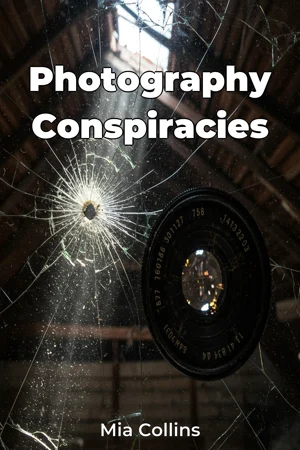
About This Book
Have you ever looked at a photograph and wondered if there was more to the story than meets the eye? "Photography Conspiracies" delves into the captivating world of photographic mysteries, exploring the hidden narratives and wild theories that surround some of history's most famous and enigmatic images. This book examines the intersection of photography, true crime, and general conspiracies as it seeks to uncover the truth behind manipulated images, staged scenes, and outright hoaxes. Photography holds immense power; it can document history, shape public opinion, and even rewrite reality. Understanding how images can be altered, misinterpreted, or deliberately faked is crucial in our visually saturated world. The book explores the dark side of this power, focusing on the ethical considerations and the potential for photographic evidence to mislead. We will explore the history of photo manipulation and the psychological factors that make us susceptible to believing fabricated realities. "Photography Conspiracies" is structured to guide the reader through a series of increasingly complex cases. It begins by establishing a foundation in the basics of photo analysis, covering topics like digital forensics, historical image processing techniques, and the psychology of perception. We then move into specific case studies, investigating famous images that have been subject to intense scrutiny and speculation. Key examples include the analysis of historical photographs purported to show paranormal activity, images used as evidence in criminal trials, and the examination of press photographs that may have been staged or manipulated to influence public opinion during wartime or political events. Each case is broken down methodically, presenting the original image, the surrounding context, the conspiracy theories, and the evidence for or against them. The book culminates by investigating the broader implications of these photographic deceptions, discussing how conspiracy theories take hold in society and the importance of critical thinking when interpreting visual information. The evidence presented throughout the book draws from a variety of sources, including forensic image analysis reports, historical documents, expert interviews, and first-hand accounts. The analysis considers various perspectives and presents the most plausible explanations based on available evidence. It offers a balanced view, presenting both sides of the argument before arriving at a reasoned conclusion. "Photography Conspiracies" bridges the gap between photography, history, psychology, and true crime. It connects to the field of journalism by examining the role of photojournalism and its susceptibility to manipulation. It relates to the study of psychology by exploring how our minds can be deceived by visual stimuli. The book provides readers with the tools to critically analyze images and evaluate claims of photographic manipulation. It offers practical advice on how to spot inconsistencies, research the origins of images, and avoid falling prey to misinformation. This book is written in an accessible style, making complex topics understandable for a broad audience. It avoids jargon and technical language wherever possible, focusing on clear explanations and engaging storytelling. "Photography Conspiracies" is aimed at anyone with an interest in photography, true crime, history, or conspiracy theories. It will appeal to those who enjoy critical thinking and are fascinated by the hidden stories behind iconic images. While "Photography Conspiracies" covers a range of photographic mysteries, it does not offer a comprehensive encyclopedia of every single case. The focus is on providing representative examples that illustrate the key concepts and principles involved in photographic deception. It is not intended to be a definitive statement on any particular conspiracy theory, but rather a guide to critical thinking and visual literacy. The information presented has real-world applications in fields such as journalism, law enforcement, and education. It also encourages readers to become more informed and discerning consumers of visual information, better equipped to navigate the complexities of our image-driven world. "Photography Conspiracies" explores the ongoing debates surrounding the authenticity of certain historical images and their impact on our understanding of the past, offering a new perspective on how we interpret the visual record.
Have you ever looked at a photograph and wondered if there was more to the story than meets the eye? "Photography Conspiracies" delves into the captivating world of photographic mysteries, exploring the hidden narratives and wild theories that surround some of history's most famous and enigmatic images. This book examines the intersection of photography, true crime, and general conspiracies as it seeks to uncover the truth behind manipulated images, staged scenes, and outright hoaxes. Photography holds immense power; it can document history, shape public opinion, and even rewrite reality. Understanding how images can be altered, misinterpreted, or deliberately faked is crucial in our visually saturated world. The book explores the dark side of this power, focusing on the ethical considerations and the potential for photographic evidence to mislead. We will explore the history of photo manipulation and the psychological factors that make us susceptible to believing fabricated realities. "Photography Conspiracies" is structured to guide the reader through a series of increasingly complex cases. It begins by establishing a foundation in the basics of photo analysis, covering topics like digital forensics, historical image processing techniques, and the psychology of perception. We then move into specific case studies, investigating famous images that have been subject to intense scrutiny and speculation. Key examples include the analysis of historical photographs purported to show paranormal activity, images used as evidence in criminal trials, and the examination of press photographs that may have been staged or manipulated to influence public opinion during wartime or political events. Each case is broken down methodically, presenting the original image, the surrounding context, the conspiracy theories, and the evidence for or against them. The book culminates by investigating the broader implications of these photographic deceptions, discussing how conspiracy theories take hold in society and the importance of critical thinking when interpreting visual information. The evidence presented throughout the book draws from a variety of sources, including forensic image analysis reports, historical documents, expert interviews, and first-hand accounts. The analysis considers various perspectives and presents the most plausible explanations based on available evidence. It offers a balanced view, presenting both sides of the argument before arriving at a reasoned conclusion. "Photography Conspiracies" bridges the gap between photography, history, psychology, and true crime. It connects to the field of journalism by examining the role of photojournalism and its susceptibility to manipulation. It relates to the study of psychology by exploring how our minds can be deceived by visual stimuli. The book provides readers with the tools to critically analyze images and evaluate claims of photographic manipulation. It offers practical advice on how to spot inconsistencies, research the origins of images, and avoid falling prey to misinformation. This book is written in an accessible style, making complex topics understandable for a broad audience. It avoids jargon and technical language wherever possible, focusing on clear explanations and engaging storytelling. "Photography Conspiracies" is aimed at anyone with an interest in photography, true crime, history, or conspiracy theories. It will appeal to those who enjoy critical thinking and are fascinated by the hidden stories behind iconic images. While "Photography Conspiracies" covers a range of photographic mysteries, it does not offer a comprehensive encyclopedia of every single case. The focus is on providing representative examples that illustrate the key concepts and principles involved in photographic deception. It is not intended to be a definitive statement on any particular conspiracy theory, but rather a guide to critical thinking and visual literacy. The information presented has real-world applications in fields such as journalism, law enforcement, and education. It also encourages readers to become more informed and discerning consumers of visual information, better equipped to navigate the complexities of our image-driven world. "Photography Conspiracies" explores the ongoing debates surrounding the authenticity of certain historical images and their impact on our understanding of the past, offering a new perspective on how we interpret the visual record.
"Photography Conspiracies" explores the fascinating intersection of photography, true crime, and conspiracy theories. It delves into how photographs, often perceived as objective records, can be manipulated to deceive, mislead, or rewrite history. The book examines the power of images, revealing how they can shape public opinion and become central to photographic mysteries. For example, the book investigates how photo manipulation has evolved and the psychological vulnerabilities that lead us to accept fabricated realities. The book progresses methodically, starting with the fundamentals of image analysis and digital forensics before diving into specific cases. These case studies scrutinize famous images, including those purported to capture paranormal activity and those used as evidence in criminal trials. By presenting the original image, context, conspiracy theories, and supporting evidence, the book provides readers with the tools to critically evaluate photographic claims. Ultimately, "Photography Conspiracies" emphasizes the importance of visual literacy and critical thinking in an image-saturated world.
Book Details
ISBN
9788235218094
Publisher
Publifye AS
Your Licenses
You don't own any licenses for this book
Purchase a license below to unlock this book and download the EPUB.
Purchase License
Select a tier to unlock this book
Need bulk licensing?
Contact us for enterprise agreements.