
About This Book
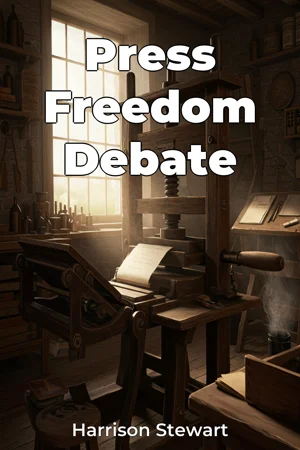
How did an explosion of print transform the very fabric of revolutionary societies? "Press Freedom Debate" delves into the tumultuous world of late 18th-century newspapers across France, Britain, and America to uncover the intricate relationship between burgeoning journalistic practices and the rise of modern political thought. This book examines censorship, propaganda, and the evolving notions of journalistic liberty and responsibility during a period of unprecedented social and political upheaval. These topics are crucial because they illuminate not only the historical development of the press but also the enduring challenges of balancing freedom of expression with societal order. The book provides a historical backdrop, exploring the pre-revolutionary media landscape in each nation, including the existing legal frameworks governing print and speech. Understanding these foundations is vital to grasping the magnitude of the changes that occurred during the revolutionary era. At the heart of this investigation lies the argument that the revolutionary period served as a crucible for shaping modern press freedoms. The nascent concepts of journalistic ethics and civic duty emerged in response to attempts by governments and factions to control public opinion. The importance of this argument lies in its relevance to contemporary debates about media bias, misinformation, and the role of journalism in democratic societies. The narrative unfolds in three major sections. First, it introduces the diverse landscape of revolutionary era newspapers, from partisan broadsides to more objective publications. Second, the book delves into the specific censorship strategies employed by each government and the propaganda techniques utilized by various factions to sway public sentiment. This includes analysis of seditious libel laws, licensing requirements, and the use of rhetoric and imagery in print. Finally, it examines the intellectual debates surrounding journalistic freedom and responsibility, exploring the ideas of prominent thinkers and the practical challenges faced by journalists operating in a volatile political climate. The book culminates by demonstrating how this period shaped enduring legal and ethical frameworks for journalism. The analysis is supported by extensive primary source research, drawing upon newspaper archives, pamphlets, personal correspondence of journalists and political figures, and legal documents from the period. This includes quantitative data on newspaper circulation, censorship cases, and the prevalence of specific propaganda themes. This book connects to other fields of study, including political science, legal history, and communications. By examining the interplay between political power, legal constraints, and media practices, it offers valuable insights for understanding the complex dynamics of democratic governance. It also interfaces with media studies by tracing the historical roots of contemporary journalistic practices and ethical debates. Finally, the book's exploration of propaganda links it to the field of psychology, examining how persuasive techniques were deployed to influence public opinion. "Press Freedom Debate" offers a comparative perspective, analyzing the unique experiences of France, Britain, and America to identify both shared trends and national specificities in the development of press freedom. It also underscores the limitations of journalistic freedom in this era, acknowledging the biases inherent in the available sources and the exclusion of marginalized voices from mainstream media. The book is targeted towards scholars and students of history, journalism, and political science, as well as anyone interested in the history of media and the ongoing struggle for freedom of expression. It is also relevant to journalists and media professionals seeking a deeper understanding of the historical context of their profession. The book also offers a timely examination of debates surrounding media bias, censorship, and the responsibility of journalists to inform the public accurately and fairly. The book tackles several ongoing controversies, including the debate over whether revolutionary era newspapers promoted objective reporting or were primarily tools of partisan advocacy. It also addresses the question of whether censorship was an inevitable response to the destabilizing effects of mass media or an unwarranted infringement on fundamental rights.
How did an explosion of print transform the very fabric of revolutionary societies? "Press Freedom Debate" delves into the tumultuous world of late 18th-century newspapers across France, Britain, and America to uncover the intricate relationship between burgeoning journalistic practices and the rise of modern political thought. This book examines censorship, propaganda, and the evolving notions of journalistic liberty and responsibility during a period of unprecedented social and political upheaval. These topics are crucial because they illuminate not only the historical development of the press but also the enduring challenges of balancing freedom of expression with societal order. The book provides a historical backdrop, exploring the pre-revolutionary media landscape in each nation, including the existing legal frameworks governing print and speech. Understanding these foundations is vital to grasping the magnitude of the changes that occurred during the revolutionary era. At the heart of this investigation lies the argument that the revolutionary period served as a crucible for shaping modern press freedoms. The nascent concepts of journalistic ethics and civic duty emerged in response to attempts by governments and factions to control public opinion. The importance of this argument lies in its relevance to contemporary debates about media bias, misinformation, and the role of journalism in democratic societies. The narrative unfolds in three major sections. First, it introduces the diverse landscape of revolutionary era newspapers, from partisan broadsides to more objective publications. Second, the book delves into the specific censorship strategies employed by each government and the propaganda techniques utilized by various factions to sway public sentiment. This includes analysis of seditious libel laws, licensing requirements, and the use of rhetoric and imagery in print. Finally, it examines the intellectual debates surrounding journalistic freedom and responsibility, exploring the ideas of prominent thinkers and the practical challenges faced by journalists operating in a volatile political climate. The book culminates by demonstrating how this period shaped enduring legal and ethical frameworks for journalism. The analysis is supported by extensive primary source research, drawing upon newspaper archives, pamphlets, personal correspondence of journalists and political figures, and legal documents from the period. This includes quantitative data on newspaper circulation, censorship cases, and the prevalence of specific propaganda themes. This book connects to other fields of study, including political science, legal history, and communications. By examining the interplay between political power, legal constraints, and media practices, it offers valuable insights for understanding the complex dynamics of democratic governance. It also interfaces with media studies by tracing the historical roots of contemporary journalistic practices and ethical debates. Finally, the book's exploration of propaganda links it to the field of psychology, examining how persuasive techniques were deployed to influence public opinion. "Press Freedom Debate" offers a comparative perspective, analyzing the unique experiences of France, Britain, and America to identify both shared trends and national specificities in the development of press freedom. It also underscores the limitations of journalistic freedom in this era, acknowledging the biases inherent in the available sources and the exclusion of marginalized voices from mainstream media. The book is targeted towards scholars and students of history, journalism, and political science, as well as anyone interested in the history of media and the ongoing struggle for freedom of expression. It is also relevant to journalists and media professionals seeking a deeper understanding of the historical context of their profession. The book also offers a timely examination of debates surrounding media bias, censorship, and the responsibility of journalists to inform the public accurately and fairly. The book tackles several ongoing controversies, including the debate over whether revolutionary era newspapers promoted objective reporting or were primarily tools of partisan advocacy. It also addresses the question of whether censorship was an inevitable response to the destabilizing effects of mass media or an unwarranted infringement on fundamental rights.
"Press Freedom Debate" explores the evolution of press freedom during the revolutionary era in France, Britain, and America. It delves into the dynamic interplay between journalism and political thought, revealing how the explosion of print media transformed societies. The book uncovers intriguing facts, such as the varying censorship strategies employed by each government to control public opinion and the emergence of journalistic ethics amidst political upheaval. The book progresses by first introducing the diverse landscape of revolutionary-era newspapers. It then delves into government censorship and propaganda techniques. Finally, it examines intellectual debates surrounding journalistic freedom and responsibility. By drawing upon extensive primary sources, including newspaper archives and personal correspondence, the book offers a comparative perspective on the development of press freedom, underscoring both shared trends and national specificities. This historical analysis provides valuable insights into the enduring challenges of balancing freedom of expression with societal order and offers a deeper understanding of the roots of contemporary journalistic practices, as well as debates surrounding media bias and journalistic ethics. It highlights how the revolutionary period shaped enduring legal and ethical frameworks for journalism, making it a valuable resource for scholars, students, and media professionals alike.
Book Details
ISBN
9788235217738
Publisher
Publifye AS
Your Licenses
You don't own any licenses for this book
Purchase a license below to unlock this book and download the EPUB.
Purchase License
Select a tier to unlock this book
Need bulk licensing?
Contact us for enterprise agreements.