
About This Book
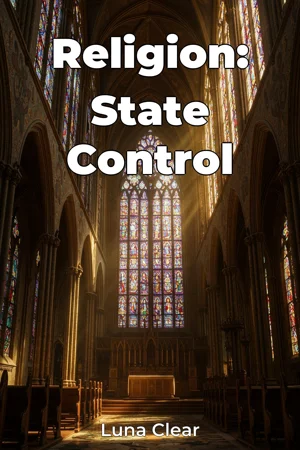
To what extent can a state legitimately control religious institutions without infringing on individual liberties or inciting societal upheaval? "Religion: State Control" delves into this enduring question through a comparative analysis of revolutionary France's attempts to subjugate the Catholic Church via the Civil Constitution of the Clergy, contrasting this with the established churches in Britain and the burgeoning landscape of religious freedom in America. This exploration is crucial for understanding the complex interplay between secular power and religious belief, a dynamic that continues to shape political and social landscapes worldwide. This book examines three core issues: the secularization efforts of the French Revolution, the diverse forms of clerical resistance these efforts provoked, and the consequential transformations in religious worship and practice that ensued. Understanding these topics is vital because they illuminate not only the specific events of the late 18th century but also broader themes of state power, religious autonomy, and the evolution of modern secularism. The historical context is crucial: the late 1700s was a period of profound intellectual and political upheaval, marked by Enlightenment ideals, revolutionary fervor, and shifting power dynamics between church and state. Readers will need a basic understanding of the French Revolution, the role of the Catholic Church in pre-revolutionary France, and the general principles of religious freedom. The central argument of "Religion: State Control" is that the French Revolution's attempt to create a state-controlled church, while ostensibly aimed at reform and national unity, ultimately backfired by alienating significant segments of the population, fostering resistance, and contributing to the Revolution's descent into violence. This argument challenges the view that secularization is always a progressive force and underscores the importance of negotiated settlements between state and religious institutions. The book is structured as follows: 1. An introduction that outlines the historical context, introduces key concepts such as secularization and religious freedom and establishes the comparative framework. 2. A detailed examination of the Civil Constitution of the Clergy, analyzing its provisions and the motivations behind it. 3. An exploration of the various forms of resistance to the Civil Constitution, including the refractory clergy, popular uprisings, and the rise of counter-revolutionary sentiment. 4. A comparative analysis of the established churches in Britain, highlighting the differences in state control and religious freedom compared to France. 5. An examination of religious freedom in America, focusing on the separation of church and state and the development of a pluralistic religious landscape. 6. A conclusion that synthesizes the findings and draws broader lessons about the relationship between state power and religious belief. The book draws upon a range of primary and secondary sources, including legislative documents, pamphlets, personal letters, and scholarly analyses of the French Revolution, British history, and American religious history. It employs a comparative historical methodology to highlight similarities and differences between the three case studies. "Religion: State Control" connects to several other fields of study, including political science (theories of state power), sociology (the sociology of religion), and law (constitutional law and religious freedom). These connections enrich the book's argument by providing different perspectives on the same historical events. This book offers a fresh perspective by directly comparing the secularization efforts in Revolutionary France with the models of established religion in Britain and the separation of church and state in America. This provides a more nuanced understanding of the various approaches to managing the relationship between state and religion. The book adopts an academic, yet accessible tone, aiming to present complex historical information in a clear and engaging manner. It is targeted towards students and scholars of history, religion, and political science, as well as general readers interested in the French Revolution and the history of secularism. This book appeals to those seeking a deeper understanding of the historical roots of contemporary debates about religious freedom and the separation of church and state. In line with the conventions of historical scholarship, the book provides detailed citations and relies on verifiable evidence to support its claims. The scope of the book is limited to the late 18th century and focuses primarily on France, Britain, and America. While it acknowledges the global context, it does not attempt to provide a comprehensive overview of religious history worldwide. The information presented in "Religion: State Control" has practical applications for understanding contemporary debates about religious freedom, secularism, and the role of religion in public life. It provides valuable insights for policymakers, religious leaders, and citizens alike. The book addresses ongoing debates about the proper relationship between state and religion, offering a historical perspective on these complex issues.
To what extent can a state legitimately control religious institutions without infringing on individual liberties or inciting societal upheaval? "Religion: State Control" delves into this enduring question through a comparative analysis of revolutionary France's attempts to subjugate the Catholic Church via the Civil Constitution of the Clergy, contrasting this with the established churches in Britain and the burgeoning landscape of religious freedom in America. This exploration is crucial for understanding the complex interplay between secular power and religious belief, a dynamic that continues to shape political and social landscapes worldwide. This book examines three core issues: the secularization efforts of the French Revolution, the diverse forms of clerical resistance these efforts provoked, and the consequential transformations in religious worship and practice that ensued. Understanding these topics is vital because they illuminate not only the specific events of the late 18th century but also broader themes of state power, religious autonomy, and the evolution of modern secularism. The historical context is crucial: the late 1700s was a period of profound intellectual and political upheaval, marked by Enlightenment ideals, revolutionary fervor, and shifting power dynamics between church and state. Readers will need a basic understanding of the French Revolution, the role of the Catholic Church in pre-revolutionary France, and the general principles of religious freedom. The central argument of "Religion: State Control" is that the French Revolution's attempt to create a state-controlled church, while ostensibly aimed at reform and national unity, ultimately backfired by alienating significant segments of the population, fostering resistance, and contributing to the Revolution's descent into violence. This argument challenges the view that secularization is always a progressive force and underscores the importance of negotiated settlements between state and religious institutions. The book is structured as follows: 1. An introduction that outlines the historical context, introduces key concepts such as secularization and religious freedom and establishes the comparative framework. 2. A detailed examination of the Civil Constitution of the Clergy, analyzing its provisions and the motivations behind it. 3. An exploration of the various forms of resistance to the Civil Constitution, including the refractory clergy, popular uprisings, and the rise of counter-revolutionary sentiment. 4. A comparative analysis of the established churches in Britain, highlighting the differences in state control and religious freedom compared to France. 5. An examination of religious freedom in America, focusing on the separation of church and state and the development of a pluralistic religious landscape. 6. A conclusion that synthesizes the findings and draws broader lessons about the relationship between state power and religious belief. The book draws upon a range of primary and secondary sources, including legislative documents, pamphlets, personal letters, and scholarly analyses of the French Revolution, British history, and American religious history. It employs a comparative historical methodology to highlight similarities and differences between the three case studies. "Religion: State Control" connects to several other fields of study, including political science (theories of state power), sociology (the sociology of religion), and law (constitutional law and religious freedom). These connections enrich the book's argument by providing different perspectives on the same historical events. This book offers a fresh perspective by directly comparing the secularization efforts in Revolutionary France with the models of established religion in Britain and the separation of church and state in America. This provides a more nuanced understanding of the various approaches to managing the relationship between state and religion. The book adopts an academic, yet accessible tone, aiming to present complex historical information in a clear and engaging manner. It is targeted towards students and scholars of history, religion, and political science, as well as general readers interested in the French Revolution and the history of secularism. This book appeals to those seeking a deeper understanding of the historical roots of contemporary debates about religious freedom and the separation of church and state. In line with the conventions of historical scholarship, the book provides detailed citations and relies on verifiable evidence to support its claims. The scope of the book is limited to the late 18th century and focuses primarily on France, Britain, and America. While it acknowledges the global context, it does not attempt to provide a comprehensive overview of religious history worldwide. The information presented in "Religion: State Control" has practical applications for understanding contemporary debates about religious freedom, secularism, and the role of religion in public life. It provides valuable insights for policymakers, religious leaders, and citizens alike. The book addresses ongoing debates about the proper relationship between state and religion, offering a historical perspective on these complex issues.
"Religion: State Control" explores the intricate relationship between state power and religious belief, focusing on the late 18th century. It examines revolutionary France's attempt to control the Catholic Church through the Civil Constitution of the Clergy, contrasting it with established religious practices in Britain and the emerging religious freedom in America. This comparative approach offers a nuanced understanding of secularization and religious freedom. Did you know that the French Revolution's efforts to create a state-controlled church backfired, leading to significant resistance and contributing to the Revolution's violence? Or, that the American model promoted the separation of church and state fostering a pluralistic religious landscape? The book progresses from outlining the historical context and key concepts to detailed analyses of the Civil Constitution, resistance movements, and comparative studies of Britain and America. By drawing on primary and secondary sources, it presents a compelling argument about the complexities of state control and religious autonomy. Ultimately, "Religion: State Control" offers a fresh perspective on the historical roots of contemporary debates surrounding secularism and the separation of church and state.
Book Details
ISBN
9788235217721
Publisher
Publifye AS
Your Licenses
You don't own any licenses for this book
Purchase a license below to unlock this book and download the EPUB.
Purchase License
Select a tier to unlock this book
Need bulk licensing?
Contact us for enterprise agreements.