
About This Book
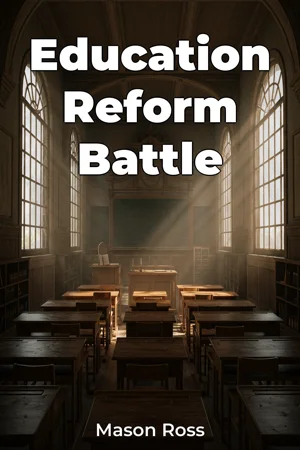
How did revolutionary France attempt to replace centuries of religious education with a secular system designed to forge a new kind of citizen? "Education Reform Battle" delves into the tumultuous period of the French Revolution to examine the clash between emergent secular educational initiatives and deeply entrenched religious schooling traditions. The book explores competing visions for shaping the future of France through competing educational models, the development of literacy, and the formation of curriculum. These battles were not simply academic debates; they were fundamental struggles over power, ideology, and the very soul of the nation. The book's primary focus is on three crucial aspects of this educational transformation: the struggle to define and implement universal literacy, the contentious process of curriculum development that aimed to instill republican values, and the contrasting ideals of citizen formation promoted by secular and religious institutions. Each of these areas reveals the profound tensions inherent in attempting to engineer a societal shift through education. Understanding this historical turning point requires recognizing the pervasive influence of the Catholic Church on education prior to the Revolution. For centuries, religious orders controlled the vast majority of schools, shaping not only academic knowledge but also moral and social values. The Revolution sought to dismantle this system, viewing it as a tool of oppression and superstition, and replace it with a system that promoted reason, civic virtue, and national unity. The central argument of "Education Reform Battle" is that the failure of the Revolution to fully implement its secular educational vision stemmed not only from practical challenges but also from deep ideological divisions and the enduring appeal of religious education to significant segments of the population. This failure highlights the complex relationship between education, power, and societal transformation, offering valuable lessons for contemporary debates about educational reform. The book unfolds in a structured manner. It begins by outlining the state of education in pre-revolutionary France, emphasizing the dominance of religious institutions and their pedagogical approaches. The narrative then moves to examine the initial revolutionary decrees aimed at establishing a national education system, detailing the debates over curriculum content, teacher training, and funding. Subsequent chapters explore the practical challenges of implementing these reforms, including resistance from religious orders, lack of resources, and political instability. The book analyzes the development of alternative educational models, like the Écoles Centrales, and the varying degrees of success they achieved in different regions. The conclusion assesses the long-term impact of the Revolution's educational reforms, considering the ways in which they shaped subsequent educational developments in France and beyond. To support its arguments, "Education Reform Battle" draws upon a range of primary sources, including legislative documents, educational plans, school reports, pamphlets, and personal correspondence from educators and students. It also incorporates quantitative data on literacy rates, school attendance, and curriculum content to provide an empirically grounded analysis. The book's methodology combines historical analysis with educational theory to offer a nuanced understanding of the complex interplay between ideology, policy, and practice. "Education Reform Battle" connects to several other fields of study, including political science (examining the role of education in nation-building), sociology (analyzing the social stratification within educational systems), and religious studies (exploring the tensions between secular and religious worldviews). This interdisciplinary approach enriches the book's analysis and broadens its appeal to scholars and students from diverse backgrounds. One of the book's unique contributions is its focus on the lived experiences of educators and students during this period of upheaval. By examining their perspectives, the book offers a more human and nuanced account of the educational transformation. The tone is academic yet accessible, striving to engage readers with clear and concise prose. The target audience includes historians, educators, political scientists, and anyone interested in the history of education, the French Revolution, or the relationship between secularism and religion. It would be valuable to those studying the history of education, political science, or religious studies. As a work of historical scholarship, "Education Reform Battle" adheres to the conventions of rigorous research, objective analysis, and clear argumentation. While the study focuses primarily on France, it acknowledges the broader European context and the influence of Enlightenment ideas on educational reform movements. The information presented in the book has real-world applications for contemporary debates about education policy, curriculum development, and the role of religion in public life. By understanding the historical challenges of implementing secular education, policymakers and educators can gain valuable insights into the complexities of educational reform and the importance of addressing diverse perspectives. The debates addressed in this book touch on ongoing controversies regarding the separation of church and state in education, the teaching of controversial subjects, and the promotion of civic values in schools.
How did revolutionary France attempt to replace centuries of religious education with a secular system designed to forge a new kind of citizen? "Education Reform Battle" delves into the tumultuous period of the French Revolution to examine the clash between emergent secular educational initiatives and deeply entrenched religious schooling traditions. The book explores competing visions for shaping the future of France through competing educational models, the development of literacy, and the formation of curriculum. These battles were not simply academic debates; they were fundamental struggles over power, ideology, and the very soul of the nation. The book's primary focus is on three crucial aspects of this educational transformation: the struggle to define and implement universal literacy, the contentious process of curriculum development that aimed to instill republican values, and the contrasting ideals of citizen formation promoted by secular and religious institutions. Each of these areas reveals the profound tensions inherent in attempting to engineer a societal shift through education. Understanding this historical turning point requires recognizing the pervasive influence of the Catholic Church on education prior to the Revolution. For centuries, religious orders controlled the vast majority of schools, shaping not only academic knowledge but also moral and social values. The Revolution sought to dismantle this system, viewing it as a tool of oppression and superstition, and replace it with a system that promoted reason, civic virtue, and national unity. The central argument of "Education Reform Battle" is that the failure of the Revolution to fully implement its secular educational vision stemmed not only from practical challenges but also from deep ideological divisions and the enduring appeal of religious education to significant segments of the population. This failure highlights the complex relationship between education, power, and societal transformation, offering valuable lessons for contemporary debates about educational reform. The book unfolds in a structured manner. It begins by outlining the state of education in pre-revolutionary France, emphasizing the dominance of religious institutions and their pedagogical approaches. The narrative then moves to examine the initial revolutionary decrees aimed at establishing a national education system, detailing the debates over curriculum content, teacher training, and funding. Subsequent chapters explore the practical challenges of implementing these reforms, including resistance from religious orders, lack of resources, and political instability. The book analyzes the development of alternative educational models, like the Écoles Centrales, and the varying degrees of success they achieved in different regions. The conclusion assesses the long-term impact of the Revolution's educational reforms, considering the ways in which they shaped subsequent educational developments in France and beyond. To support its arguments, "Education Reform Battle" draws upon a range of primary sources, including legislative documents, educational plans, school reports, pamphlets, and personal correspondence from educators and students. It also incorporates quantitative data on literacy rates, school attendance, and curriculum content to provide an empirically grounded analysis. The book's methodology combines historical analysis with educational theory to offer a nuanced understanding of the complex interplay between ideology, policy, and practice. "Education Reform Battle" connects to several other fields of study, including political science (examining the role of education in nation-building), sociology (analyzing the social stratification within educational systems), and religious studies (exploring the tensions between secular and religious worldviews). This interdisciplinary approach enriches the book's analysis and broadens its appeal to scholars and students from diverse backgrounds. One of the book's unique contributions is its focus on the lived experiences of educators and students during this period of upheaval. By examining their perspectives, the book offers a more human and nuanced account of the educational transformation. The tone is academic yet accessible, striving to engage readers with clear and concise prose. The target audience includes historians, educators, political scientists, and anyone interested in the history of education, the French Revolution, or the relationship between secularism and religion. It would be valuable to those studying the history of education, political science, or religious studies. As a work of historical scholarship, "Education Reform Battle" adheres to the conventions of rigorous research, objective analysis, and clear argumentation. While the study focuses primarily on France, it acknowledges the broader European context and the influence of Enlightenment ideas on educational reform movements. The information presented in the book has real-world applications for contemporary debates about education policy, curriculum development, and the role of religion in public life. By understanding the historical challenges of implementing secular education, policymakers and educators can gain valuable insights into the complexities of educational reform and the importance of addressing diverse perspectives. The debates addressed in this book touch on ongoing controversies regarding the separation of church and state in education, the teaching of controversial subjects, and the promotion of civic values in schools.
"Education Reform Battle" explores revolutionary France's ambitious, yet ultimately incomplete, attempt to replace religious education with a secular system aimed at forging a new citizenry. During the French Revolution, reformers sought to dismantle the Catholic Church's pervasive control over schooling, viewing it as a tool of oppression. The book details the struggle to implement universal literacy and instill republican values through curriculum development, highlighting the profound tensions between secular and religious visions for shaping the nation's future. The book examines the state of education before the revolution, the initial decrees establishing a national system, and the practical challenges of implementation. For example, the Écoles Centrales represented an alternative educational model. By using primary sources like legislative documents and school reports, the book provides a nuanced understanding of the interplay between ideology, policy, and practice. The narrative unfolds across chapters detailing pre-revolutionary education, initial reforms, implementation challenges, and alternative models. Ultimately, the book reveals how deep ideological divisions and the enduring appeal of religious education hindered the revolution's secular aims. This failure provides valuable lessons for contemporary debates on education policy, curriculum, and the role of religion in public life.
Book Details
ISBN
9788235217691
Publisher
Publifye AS
Your Licenses
You don't own any licenses for this book
Purchase a license below to unlock this book and download the EPUB.
Purchase License
Select a tier to unlock this book
Need bulk licensing?
Contact us for enterprise agreements.