
About This Book
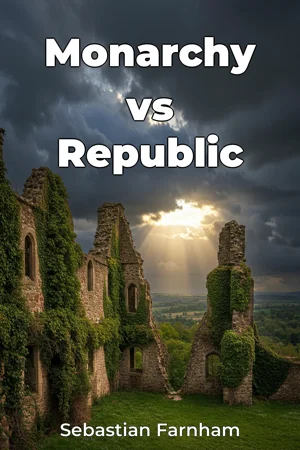
What if the bedrock of a nation's authority, unquestioned for centuries, suddenly crumbled under the weight of new ideas? "Monarchy vs Republic: France 1789-1799" delves into this pivotal decade, dissecting the dramatic collision between the absolute monarchy of France and the burgeoning republican ideals that ignited the French Revolution. This book examines the philosophical, social, and political forces that propelled France from an entrenched system of hereditary rule toward an unprecedented experiment in self-governance. Two key topics form the backbone of this analysis: the philosophical underpinnings of both systems and the stark power structures that defined them. Understanding the Divine Right of Kings versus Enlightenment concepts like popular sovereignty and the social contract is critical to grasping the revolution's intellectual currents. Similarly, the shift from a society rigidly stratified by birth to one theoretically based on equality demands a close examination of power dynamics and their impact on individual lives. The book further explores the transition itself, a chaotic period marked by violence, experimentation, and the constant renegotiation of national identity. These topics are vital because they illuminate not only the specific circumstances of the French Revolution but also the enduring tension between established authority and popular will that resonates across history. The historical context is crucial. Pre-revolutionary France suffered from crippling debt, social inequalities, and a monarch seemingly detached from the plight of his people. The ideas of Enlightenment thinkers such as Rousseau and Montesquieu provided a powerful intellectual framework for challenging the status quo. Readers will benefit from a basic understanding of French society in the late 18th century and the key figures of the Enlightenment. The central argument of "Monarchy vs Republic" is that the French Revolution, though characterized by violence and instability, represented a fundamental and irreversible shift in European political thought. The revolution demonstrated the viability, albeit fraught with challenges, of a nation governed by its citizens rather than a divinely appointed monarch. This argument is significant because it moves beyond a simple narrative of events to explore the long-term impact of the revolution on the development of modern democratic ideals. The book begins by introducing the core concepts of monarchy and republicanism, tracing their historical roots and philosophical justifications. It then proceeds through a chronological exploration of the revolution, dedicating sections to: (1) The intellectual ferment and growing discontent that preceded 1789; (2) The key events of the revolution, from the storming of the Bastille to the Reign of Terror; (3) The rise and fall of various republican experiments, including the Directory; (4) The eventual ascent of Napoleon Bonaparte, which marked a complex denouement to the initial revolutionary fervor. The book culminates by assessing the lasting legacy of the revolution, considering its impact on subsequent political movements and the ongoing debate about the best form of government. The analysis relies on primary sources such as pamphlets, speeches, and legislative decrees from the revolutionary period, alongside secondary scholarship from leading historians of the French Revolution. Specific attention is devoted to analyzing the visual culture of the time, including political cartoons and revolutionary art, as evidence of shifting public opinion. The book connects to fields such as political science, sociology, and art history. Political science benefits from the case study of revolutionary France as an example of regime change and state formation. Sociology gains insights into the social dynamics of revolution and the role of class conflict. Art history finds relevance in the study of propaganda and the visual representation of political ideas. This book offers a fresh perspective by analyzing the revolution not solely as a series of events but as a complex negotiation between competing ideologies and power structures. It moves beyond simplistic narratives of heroism and villainy to explore the nuances and contradictions that shaped this pivotal era. The book adopts a balanced and analytical tone, presenting information in a clear and accessible manner while maintaining scholarly rigor. The writing style is designed to engage the reader without sacrificing accuracy or depth. The target audience includes students of history and political science, as well as general readers interested in the French Revolution and the history of democracy. The book's detailed analysis and accessible style make it valuable to both academic and non-academic audiences. As a work of history, the book adheres to the conventions of historical scholarship, including rigorous source citation and adherence to established methodologies. The book focuses specifically on the decade between 1789 and 1799, intentionally limiting its scope to the most transformative period of the revolution. This allows for a more in-depth analysis of the key events and ideas that shaped the era. Understanding the dynamics of the French Revolution provides valuable insights into contemporary political debates about democracy, social justice, and the role of government. The lessons learned from this period can inform our understanding of current movements for social and political change. The interpretation of the French Revolution remains a subject of ongoing debate among historians, particularly regarding the causes of the Reign of Terror and the legacy of Napoleon. This book engages with these debates, presenting different perspectives and encouraging readers to form their own informed opinions.
What if the bedrock of a nation's authority, unquestioned for centuries, suddenly crumbled under the weight of new ideas? "Monarchy vs Republic: France 1789-1799" delves into this pivotal decade, dissecting the dramatic collision between the absolute monarchy of France and the burgeoning republican ideals that ignited the French Revolution. This book examines the philosophical, social, and political forces that propelled France from an entrenched system of hereditary rule toward an unprecedented experiment in self-governance. Two key topics form the backbone of this analysis: the philosophical underpinnings of both systems and the stark power structures that defined them. Understanding the Divine Right of Kings versus Enlightenment concepts like popular sovereignty and the social contract is critical to grasping the revolution's intellectual currents. Similarly, the shift from a society rigidly stratified by birth to one theoretically based on equality demands a close examination of power dynamics and their impact on individual lives. The book further explores the transition itself, a chaotic period marked by violence, experimentation, and the constant renegotiation of national identity. These topics are vital because they illuminate not only the specific circumstances of the French Revolution but also the enduring tension between established authority and popular will that resonates across history. The historical context is crucial. Pre-revolutionary France suffered from crippling debt, social inequalities, and a monarch seemingly detached from the plight of his people. The ideas of Enlightenment thinkers such as Rousseau and Montesquieu provided a powerful intellectual framework for challenging the status quo. Readers will benefit from a basic understanding of French society in the late 18th century and the key figures of the Enlightenment. The central argument of "Monarchy vs Republic" is that the French Revolution, though characterized by violence and instability, represented a fundamental and irreversible shift in European political thought. The revolution demonstrated the viability, albeit fraught with challenges, of a nation governed by its citizens rather than a divinely appointed monarch. This argument is significant because it moves beyond a simple narrative of events to explore the long-term impact of the revolution on the development of modern democratic ideals. The book begins by introducing the core concepts of monarchy and republicanism, tracing their historical roots and philosophical justifications. It then proceeds through a chronological exploration of the revolution, dedicating sections to: (1) The intellectual ferment and growing discontent that preceded 1789; (2) The key events of the revolution, from the storming of the Bastille to the Reign of Terror; (3) The rise and fall of various republican experiments, including the Directory; (4) The eventual ascent of Napoleon Bonaparte, which marked a complex denouement to the initial revolutionary fervor. The book culminates by assessing the lasting legacy of the revolution, considering its impact on subsequent political movements and the ongoing debate about the best form of government. The analysis relies on primary sources such as pamphlets, speeches, and legislative decrees from the revolutionary period, alongside secondary scholarship from leading historians of the French Revolution. Specific attention is devoted to analyzing the visual culture of the time, including political cartoons and revolutionary art, as evidence of shifting public opinion. The book connects to fields such as political science, sociology, and art history. Political science benefits from the case study of revolutionary France as an example of regime change and state formation. Sociology gains insights into the social dynamics of revolution and the role of class conflict. Art history finds relevance in the study of propaganda and the visual representation of political ideas. This book offers a fresh perspective by analyzing the revolution not solely as a series of events but as a complex negotiation between competing ideologies and power structures. It moves beyond simplistic narratives of heroism and villainy to explore the nuances and contradictions that shaped this pivotal era. The book adopts a balanced and analytical tone, presenting information in a clear and accessible manner while maintaining scholarly rigor. The writing style is designed to engage the reader without sacrificing accuracy or depth. The target audience includes students of history and political science, as well as general readers interested in the French Revolution and the history of democracy. The book's detailed analysis and accessible style make it valuable to both academic and non-academic audiences. As a work of history, the book adheres to the conventions of historical scholarship, including rigorous source citation and adherence to established methodologies. The book focuses specifically on the decade between 1789 and 1799, intentionally limiting its scope to the most transformative period of the revolution. This allows for a more in-depth analysis of the key events and ideas that shaped the era. Understanding the dynamics of the French Revolution provides valuable insights into contemporary political debates about democracy, social justice, and the role of government. The lessons learned from this period can inform our understanding of current movements for social and political change. The interpretation of the French Revolution remains a subject of ongoing debate among historians, particularly regarding the causes of the Reign of Terror and the legacy of Napoleon. This book engages with these debates, presenting different perspectives and encouraging readers to form their own informed opinions.
"Monarchy vs Republic: France 1789-1799" explores the clash between absolute monarchy and republican ideals during the French Revolution. It dissects the philosophical underpinnings of each system, contrasting the Divine Right of Kings with Enlightenment concepts like popular sovereignty and the social contract. The book highlights the shift from a rigid social hierarchy to a society theoretically based on equality. This pivotal decade witnessed France's unprecedented experiment in self-governance, forever altering European political thought. The book examines the revolution's key events, from the storming of the Bastille to the Reign of Terror, alongside the rise and fall of various republican experiments. It analyzes primary sources like pamphlets and speeches, along with visual culture, to reveal shifting public opinion. The narrative progresses chronologically, starting with pre-revolutionary discontent and concluding with Napoleon Bonaparte's ascent. The book argues that, despite its turmoil, the revolution marked a fundamental shift towards modern democratic ideals. By exploring the nuances and contradictions of this era, "Monarchy vs Republic" provides a fresh perspective on the revolution, moving beyond simplistic narratives to analyze the complex interplay of ideologies and power structures. It offers valuable insights into the enduring tension between established authority and popular will, making it relevant for students, scholars, and anyone interested in world history and political science.
Book Details
ISBN
9788235217646
Publisher
Publifye AS
Your Licenses
You don't own any licenses for this book
Purchase a license below to unlock this book and download the EPUB.
Purchase License
Select a tier to unlock this book
Need bulk licensing?
Contact us for enterprise agreements.