
About This Book
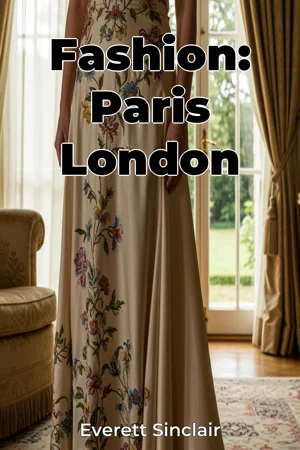
How did political upheaval shape the very fabric of what people wore? "Fashion: Paris London" delves into the captivating sartorial stories of two of Europe’s most influential capital cities during a transformative era: revolutionary Paris and Georgian London. This book examines how clothing acted as a potent visual language, reflecting and shaping the political ideologies, social hierarchies, and economic realities of the late 18th century. Understanding the fashion of this era reveals how societies express themselves and negotiate power through material culture. This book argues that fashion in Paris and London served as a critical battleground for competing ideologies. In Paris, the revolution led to both explicit restrictions on aristocratic luxury and a radical reimagining of dress as a symbol of republican virtue. Simultaneously, London's Georgian society fostered a unique environment where fashion reflected a complex interplay of class ambition, commercial interests, and evolving social norms. Examining these contrasting approaches offers crucial insight into how political and social contexts directly impact the evolution of design and its meaning. "Fashion: Paris London" provides a comprehensive overview beginning with an introduction to the socio-political landscapes of both cities, setting the stage for understanding the subsequent fashion movements. The core of the book is structured around three major thematic areas. First, it analyzes the direct impact of political events on clothing, contrasting the suppression of luxury goods in revolutionary Paris with the continued embrace of elaborate styles by the British aristocracy. Secondly, it explores the rise of new social signifiers in dress, such as the adoption of classically inspired gowns in France as a statement of civic virtue and the emergence of distinctly British styles that emphasized practicality and individuality. Thirdly, the book scrutinizes the evolving relationship between fashion and commerce, investigating how the growth of textile industries and transatlantic trade influenced both Parisian and London fashion trends. The book culminates by examining the long-term legacy of these sartorial shifts, revealing their enduring influence on subsequent fashion movements and our understanding of dress as a form of cultural expression. The arguments presented are supported by diverse primary sources, including fashion plates, portraits, personal letters, diaries, and surviving garments from museum collections. This book also draws on contemporary accounts of political events and social customs to provide a rich and nuanced understanding of the historical context. Methodologically, the book employs a multidisciplinary approach, combining art historical analysis, social history, and material culture studies to offer fresh perspectives on the relationship between fashion and society. This book connects to broader fields such as political science, sociology, and economics by demonstrating how fashion functions as a barometer of social change and economic development. By analyzing dress as a form of nonverbal communication, the book also offers insights into the construction of identity, the negotiation of power, and the dynamics of cultural exchange. This study distinguishes itself by providing a comparative analysis of two major European capitals, revealing both the shared influences and divergent paths of their fashion cultures. It also offers a nuanced interpretation of the revolutionary period, challenging simplistic narratives of fashion as merely a reflection of political ideology. The writing style is academic but accessible, aiming to engage a broad audience interested in fashion history, social history, and design studies. The book is targeted towards students, researchers, and anyone with a general interest in the history of fashion and its cultural significance. As a work of design history, the book adheres to the conventions of rigorous scholarship, including detailed source citations and a comprehensive bibliography. While focusing on Paris and London, the book acknowledges that other European cities also contributed to the fashion landscape of the time. However, the scope is intentionally limited to these two capitals to allow for a more in-depth exploration of their unique dynamics. By understanding the historical context of fashion choices, readers can gain a deeper appreciation for the complex social and political forces that shape our contemporary styles. The book also provides a framework for analyzing the ways in which clothing continues to function as a powerful form of self-expression and cultural commentary. The book addresses ongoing debates within fashion history, such as the extent to which fashion is driven by elite influence versus popular demand, and the role of consumerism in shaping sartorial trends. By presenting diverse perspectives and challenging conventional wisdom, "Fashion: Paris London" contributes to a more nuanced understanding of the complex relationship between fashion and society.
How did political upheaval shape the very fabric of what people wore? "Fashion: Paris London" delves into the captivating sartorial stories of two of Europe’s most influential capital cities during a transformative era: revolutionary Paris and Georgian London. This book examines how clothing acted as a potent visual language, reflecting and shaping the political ideologies, social hierarchies, and economic realities of the late 18th century. Understanding the fashion of this era reveals how societies express themselves and negotiate power through material culture. This book argues that fashion in Paris and London served as a critical battleground for competing ideologies. In Paris, the revolution led to both explicit restrictions on aristocratic luxury and a radical reimagining of dress as a symbol of republican virtue. Simultaneously, London's Georgian society fostered a unique environment where fashion reflected a complex interplay of class ambition, commercial interests, and evolving social norms. Examining these contrasting approaches offers crucial insight into how political and social contexts directly impact the evolution of design and its meaning. "Fashion: Paris London" provides a comprehensive overview beginning with an introduction to the socio-political landscapes of both cities, setting the stage for understanding the subsequent fashion movements. The core of the book is structured around three major thematic areas. First, it analyzes the direct impact of political events on clothing, contrasting the suppression of luxury goods in revolutionary Paris with the continued embrace of elaborate styles by the British aristocracy. Secondly, it explores the rise of new social signifiers in dress, such as the adoption of classically inspired gowns in France as a statement of civic virtue and the emergence of distinctly British styles that emphasized practicality and individuality. Thirdly, the book scrutinizes the evolving relationship between fashion and commerce, investigating how the growth of textile industries and transatlantic trade influenced both Parisian and London fashion trends. The book culminates by examining the long-term legacy of these sartorial shifts, revealing their enduring influence on subsequent fashion movements and our understanding of dress as a form of cultural expression. The arguments presented are supported by diverse primary sources, including fashion plates, portraits, personal letters, diaries, and surviving garments from museum collections. This book also draws on contemporary accounts of political events and social customs to provide a rich and nuanced understanding of the historical context. Methodologically, the book employs a multidisciplinary approach, combining art historical analysis, social history, and material culture studies to offer fresh perspectives on the relationship between fashion and society. This book connects to broader fields such as political science, sociology, and economics by demonstrating how fashion functions as a barometer of social change and economic development. By analyzing dress as a form of nonverbal communication, the book also offers insights into the construction of identity, the negotiation of power, and the dynamics of cultural exchange. This study distinguishes itself by providing a comparative analysis of two major European capitals, revealing both the shared influences and divergent paths of their fashion cultures. It also offers a nuanced interpretation of the revolutionary period, challenging simplistic narratives of fashion as merely a reflection of political ideology. The writing style is academic but accessible, aiming to engage a broad audience interested in fashion history, social history, and design studies. The book is targeted towards students, researchers, and anyone with a general interest in the history of fashion and its cultural significance. As a work of design history, the book adheres to the conventions of rigorous scholarship, including detailed source citations and a comprehensive bibliography. While focusing on Paris and London, the book acknowledges that other European cities also contributed to the fashion landscape of the time. However, the scope is intentionally limited to these two capitals to allow for a more in-depth exploration of their unique dynamics. By understanding the historical context of fashion choices, readers can gain a deeper appreciation for the complex social and political forces that shape our contemporary styles. The book also provides a framework for analyzing the ways in which clothing continues to function as a powerful form of self-expression and cultural commentary. The book addresses ongoing debates within fashion history, such as the extent to which fashion is driven by elite influence versus popular demand, and the role of consumerism in shaping sartorial trends. By presenting diverse perspectives and challenging conventional wisdom, "Fashion: Paris London" contributes to a more nuanced understanding of the complex relationship between fashion and society.
"Fashion: Paris London" explores the dynamic relationship between clothing and society in revolutionary Paris and Georgian London during the late 18th century. It reveals how fashion served as a powerful visual language, reflecting and shaping political ideologies, social hierarchies, and economic realities. The book uniquely compares these two influential European capitals, highlighting their shared influences and divergent fashion paths. For instance, the French Revolution led to the suppression of aristocratic luxury, while London embraced a complex mix of class ambition and commercial interests in its clothing. The book's approach is comprehensive, beginning with an introduction to the socio-political landscapes of Paris and London. It examines how political events directly impacted clothing, contrasting the restrictions on luxury in Paris with the continued embrace of elaborate styles in London. It further explores the rise of new social signifiers in dress, such as classically inspired gowns in France and practical, individualistic styles in Britain and investigates the evolving relationship between fashion and commerce, including the growth of textile industries. By analyzing diverse primary sources, including fashion plates, portraits, and personal letters, "Fashion: Paris London" offers a nuanced understanding of the era. The book progresses thematically, examining the impact of political events, the emergence of new social signifiers, and the role of commerce in shaping fashion trends. Ultimately, it reveals the enduring influence of these sartorial shifts on subsequent fashion movements and our understanding of clothing as a form of cultural expression and a key element of design history.
Book Details
ISBN
9788235217639
Publisher
Publifye AS
Your Licenses
You don't own any licenses for this book
Purchase a license below to unlock this book and download the EPUB.
Purchase License
Select a tier to unlock this book
Need bulk licensing?
Contact us for enterprise agreements.