
About This Book
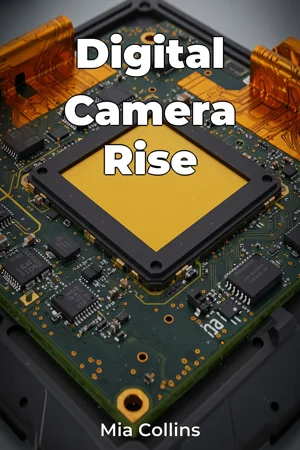
How did a technology once considered a novelty transform into the dominant force in image-making, reshaping not only photography but also visual culture itself? "Digital Camera Rise" examines the complete transition from chemical film to digital photography, dissecting the technological advancements, aesthetic shifts, and profound cultural impacts that define this remarkable transformation. This book is significant because it provides a comprehensive, accessible, and technically informed account of a revolution that continues to unfold. The book focuses on three key areas: the evolution of sensor technology, the establishment of image quality benchmarks in the digital realm, and the adaptation of photographic practices to the new digital tools. Sensor technology, particularly CMOS and CCD sensors, is explored from its nascent stages to current advancements, detailing how improvements in sensitivity, resolution, and dynamic range have driven the digital revolution. Image quality benchmarks, including resolution, noise performance, color accuracy, and dynamic range, are examined to determine how digital photography achieved—and in many cases surpassed—the standards set by film. Finally, changes in photographic practices are analyzed, from image capture and editing to distribution and archiving, considering how digital tools have both democratized and professionalized the field. To understand the digital revolution, context is provided on the history of analog photography, explaining the limitations and strengths of film-based processes. The scientific principles of light capture, image formation, and color reproduction are presented in an accessible manner, ensuring that readers from diverse backgrounds can grasp the technical underpinnings of digital photography. The central argument of "Digital Camera Rise" is that the shift from film to digital was not simply a technological upgrade but a complete paradigm shift that fundamentally altered the nature of photography. Digital technology made image capture more accessible, immediate, and manipulable, leading to a proliferation of images and new forms of visual communication. The book begins by introducing the core concepts of digital imaging and tracing the early history of digital cameras. It then delves into the technological specifics of image sensors, detailing how they function and how their performance has improved over time. A critical section of the book establishes the objective benchmarks used to evaluate image quality, comparing digital and film in terms of resolution, dynamic range, and noise. The book then explores the transformation of photographic practices, including the rise of digital editing, the shift to online distribution, and the emergence of new photographic genres. It culminates by examining the broader cultural implications of ubiquitous digital photography, including its impact on art, journalism, and social media. The arguments presented are supported by a wide range of evidence, including scientific literature on sensor technology, objective measurements of image quality, historical analysis of camera development, and case studies of photographers who have embraced digital tools. The book draws on unique data sources, such as technical specifications of digital cameras, surveys of photographers' practices, and analyses of online image databases. "Digital Camera Rise" also connects photography with computer science (image processing algorithms), materials science (sensor fabrication), and sociology (the impact of photography on society). These interdisciplinary connections enrich the book's analysis and provide a more holistic understanding of the digital revolution. The book offers a perspective by combining robust technical analysis with insightful cultural commentary. The tone and writing style are professional yet accessible, combining technical precision with clear explanations. Complex technical concepts are explained in plain language, making the book accessible to a broad audience. The primary target audience includes photography enthusiasts, students of photography and visual communication, professionals in the imaging industry, and anyone interested in the history and technology of digital photography. This book would be valuable to them because it provides a comprehensive, technically sound, and culturally aware account of the digital revolution. In line with the conventions of non-fiction technology books, "Digital Camera Rise" aims to be authoritative, informative, and objective. It seeks to provide a balanced assessment of the benefits and drawbacks of digital photography. The scope of the book is limited to the transition from film to digital, focusing primarily on still photography. While video technology is touched upon, the book does not delve deeply into cinematography or other forms of moving-image capture. The information in "Digital Camera Rise" can be applied practically by photographers seeking to understand the technical aspects of their craft, by students researching the history and impact of digital imaging, and by professionals developing new imaging technologies. The book addresses debates about the relative merits of film and digital photography, acknowledging the nostalgic appeal of film while demonstrating the objective advantages of digital technology in many areas.
How did a technology once considered a novelty transform into the dominant force in image-making, reshaping not only photography but also visual culture itself? "Digital Camera Rise" examines the complete transition from chemical film to digital photography, dissecting the technological advancements, aesthetic shifts, and profound cultural impacts that define this remarkable transformation. This book is significant because it provides a comprehensive, accessible, and technically informed account of a revolution that continues to unfold. The book focuses on three key areas: the evolution of sensor technology, the establishment of image quality benchmarks in the digital realm, and the adaptation of photographic practices to the new digital tools. Sensor technology, particularly CMOS and CCD sensors, is explored from its nascent stages to current advancements, detailing how improvements in sensitivity, resolution, and dynamic range have driven the digital revolution. Image quality benchmarks, including resolution, noise performance, color accuracy, and dynamic range, are examined to determine how digital photography achieved—and in many cases surpassed—the standards set by film. Finally, changes in photographic practices are analyzed, from image capture and editing to distribution and archiving, considering how digital tools have both democratized and professionalized the field. To understand the digital revolution, context is provided on the history of analog photography, explaining the limitations and strengths of film-based processes. The scientific principles of light capture, image formation, and color reproduction are presented in an accessible manner, ensuring that readers from diverse backgrounds can grasp the technical underpinnings of digital photography. The central argument of "Digital Camera Rise" is that the shift from film to digital was not simply a technological upgrade but a complete paradigm shift that fundamentally altered the nature of photography. Digital technology made image capture more accessible, immediate, and manipulable, leading to a proliferation of images and new forms of visual communication. The book begins by introducing the core concepts of digital imaging and tracing the early history of digital cameras. It then delves into the technological specifics of image sensors, detailing how they function and how their performance has improved over time. A critical section of the book establishes the objective benchmarks used to evaluate image quality, comparing digital and film in terms of resolution, dynamic range, and noise. The book then explores the transformation of photographic practices, including the rise of digital editing, the shift to online distribution, and the emergence of new photographic genres. It culminates by examining the broader cultural implications of ubiquitous digital photography, including its impact on art, journalism, and social media. The arguments presented are supported by a wide range of evidence, including scientific literature on sensor technology, objective measurements of image quality, historical analysis of camera development, and case studies of photographers who have embraced digital tools. The book draws on unique data sources, such as technical specifications of digital cameras, surveys of photographers' practices, and analyses of online image databases. "Digital Camera Rise" also connects photography with computer science (image processing algorithms), materials science (sensor fabrication), and sociology (the impact of photography on society). These interdisciplinary connections enrich the book's analysis and provide a more holistic understanding of the digital revolution. The book offers a perspective by combining robust technical analysis with insightful cultural commentary. The tone and writing style are professional yet accessible, combining technical precision with clear explanations. Complex technical concepts are explained in plain language, making the book accessible to a broad audience. The primary target audience includes photography enthusiasts, students of photography and visual communication, professionals in the imaging industry, and anyone interested in the history and technology of digital photography. This book would be valuable to them because it provides a comprehensive, technically sound, and culturally aware account of the digital revolution. In line with the conventions of non-fiction technology books, "Digital Camera Rise" aims to be authoritative, informative, and objective. It seeks to provide a balanced assessment of the benefits and drawbacks of digital photography. The scope of the book is limited to the transition from film to digital, focusing primarily on still photography. While video technology is touched upon, the book does not delve deeply into cinematography or other forms of moving-image capture. The information in "Digital Camera Rise" can be applied practically by photographers seeking to understand the technical aspects of their craft, by students researching the history and impact of digital imaging, and by professionals developing new imaging technologies. The book addresses debates about the relative merits of film and digital photography, acknowledging the nostalgic appeal of film while demonstrating the objective advantages of digital technology in many areas.
"Digital Camera Rise" explores the monumental shift from film to digital photography, examining the technological and cultural transformations that have reshaped visual culture. The book delves into how digital cameras, initially considered a novelty, became the dominant force in image-making. One intriguing aspect is the evolution of image sensors, specifically CMOS and CCD technology, which dramatically improved image quality, resolution, and sensitivity. Furthermore, digital photography has not only met but, in many ways, surpassed the benchmarks set by film, impacting photographic practices from capture to distribution. The book charts this evolution by first introducing the core concepts of digital imaging and its early history. It then investigates image sensors and establishes benchmarks for image quality, comparing digital and film. By providing context on analog photography's strengths and limitations, readers gain a deeper appreciation for digital's advancements. The book also considers how digital tools have democratized and professionalized the field, leading to new forms of visual communication and a proliferation of images. Ultimately, "Digital Camera Rise" argues that the transition to digital was a paradigm shift, making image capture more accessible and immediate. It blends technical analysis with cultural commentary, appealing to photography enthusiasts, students, and industry professionals alike, by providing a comprehensive and accessible account of this ongoing revolution. The book progresses by detailing the history, technology, and cultural impacts of digital photography, culminating in an examination of its influence on art, journalism, and social media.
Book Details
ISBN
9788235217530
Publisher
Publifye AS
Your Licenses
You don't own any licenses for this book
Purchase a license below to unlock this book and download the EPUB.
Purchase License
Select a tier to unlock this book
Need bulk licensing?
Contact us for enterprise agreements.