
About This Book
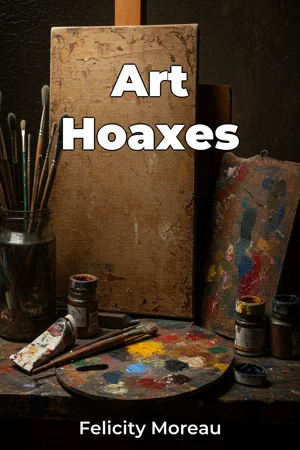
Have you ever considered that the masterpiece hanging in a museum might be a carefully constructed deception? "Art Hoaxes" delves into the shadowy world of forged paintings, revealing the intricate schemes, deceptive techniques, and the high stakes involved in art fraud. This book explores the core question of authenticity, examining how perceived value and historical context can be manipulated to deceive experts and collectors alike. This book focuses on two primary subjects. First, it dissects the psychology of art fraud, investigating the motivations of both the forgers and those they deceive. Driven by greed, ego, or sometimes even artistic ambition, forgers often exploit the vulnerabilities within the art market, preying on collectors’ desires for rare and significant works. Conversely, the book studies the biases and assumptions that can blind even the most seasoned experts to a forgery's telltale signs. Second, the book thoroughly examines the technical methods employed in art forgery, from the creation of convincing pigments and canvases to the artificial aging of paintings. Modern scientific analysis has made forgery detection increasingly sophisticated, but forgers are constantly adapting their methods, leading to an ongoing cat-and-mouse game. The art world operates within a complex interplay of historical context, subjective interpretation, and market forces. Establishing provenance – a painting's ownership history – is crucial. Yet, falsified documents and cleverly constructed narratives can create a convincing but ultimately fabricated lineage. This book argues that the art market's reliance on reputation and connoisseurship, while valuable, remains vulnerable to exploitation. "Art Hoaxes" is structured to provide a comprehensive understanding of this deceptive realm. It begins by introducing the key players – the forgers, the dealers, the experts, and the collectors – and outlining the various types of art fraud. It then focuses on specific case studies, each highlighting different aspects of forgery. Chapters will dissect the infamous cases of Han van Meegeren, who fooled the world with his "Vermeers," and Elmyr de Hory, a prolific forger who flooded the market with fake masterpieces. The book explores the methods used to detect these forgeries, explaining the role of scientific analysis, historical research, and stylistic comparison. Finally, it considers the implications of art fraud for the art world as a whole, discussing the ethical challenges and the ongoing efforts to combat deception. The book draws upon a range of sources, including court records, personal accounts from forgers and their victims, and the findings of scientific analyses. It examines the intersection of art history, chemistry, forensic science, and the psychology of deception. The study of art crime connects directly to broader fields such as criminology, economics (specifically market manipulation), and the philosophy of aesthetics, which questions the very nature of art and its value. A unique aspect of "Art Hoaxes" is its dual focus on both the technical and psychological dimensions of art forgery. It not only reveals the "how" of forgery but also the "why," providing a deeper understanding of the motivations and vulnerabilities that make art fraud possible. Written in a narrative non-fiction style, "Art Hoaxes" is intended for art enthusiasts, collectors, students of art history, and anyone fascinated by true crime and the psychology of deception. It offers valuable insights into the art market, the challenges of authentication, and the enduring allure of deception. While the book covers a wide range of art forgeries throughout history, it focuses primarily on painting, acknowledging that other forms of art fraud exist. It seeks to provide a comprehensive overview of the key issues and challenges in this area. The knowledge gained from this book can be applied practically by art collectors, helping them to make informed decisions and avoid falling victim to fraud. It can also be valuable for art history students and professionals, providing them with a deeper understanding of the complexities of authentication and the ethical challenges of the art world. The ongoing debate about the role of subjective interpretation versus scientific analysis in art authentication is addressed throughout the book, offering a balanced perspective on this complex issue. "Art Hoaxes" invites readers to question their assumptions about art, value, and authenticity, ultimately providing a clearer understanding of the surprising and often deceptive world behind the canvas.
Have you ever considered that the masterpiece hanging in a museum might be a carefully constructed deception? "Art Hoaxes" delves into the shadowy world of forged paintings, revealing the intricate schemes, deceptive techniques, and the high stakes involved in art fraud. This book explores the core question of authenticity, examining how perceived value and historical context can be manipulated to deceive experts and collectors alike. This book focuses on two primary subjects. First, it dissects the psychology of art fraud, investigating the motivations of both the forgers and those they deceive. Driven by greed, ego, or sometimes even artistic ambition, forgers often exploit the vulnerabilities within the art market, preying on collectors’ desires for rare and significant works. Conversely, the book studies the biases and assumptions that can blind even the most seasoned experts to a forgery's telltale signs. Second, the book thoroughly examines the technical methods employed in art forgery, from the creation of convincing pigments and canvases to the artificial aging of paintings. Modern scientific analysis has made forgery detection increasingly sophisticated, but forgers are constantly adapting their methods, leading to an ongoing cat-and-mouse game. The art world operates within a complex interplay of historical context, subjective interpretation, and market forces. Establishing provenance – a painting's ownership history – is crucial. Yet, falsified documents and cleverly constructed narratives can create a convincing but ultimately fabricated lineage. This book argues that the art market's reliance on reputation and connoisseurship, while valuable, remains vulnerable to exploitation. "Art Hoaxes" is structured to provide a comprehensive understanding of this deceptive realm. It begins by introducing the key players – the forgers, the dealers, the experts, and the collectors – and outlining the various types of art fraud. It then focuses on specific case studies, each highlighting different aspects of forgery. Chapters will dissect the infamous cases of Han van Meegeren, who fooled the world with his "Vermeers," and Elmyr de Hory, a prolific forger who flooded the market with fake masterpieces. The book explores the methods used to detect these forgeries, explaining the role of scientific analysis, historical research, and stylistic comparison. Finally, it considers the implications of art fraud for the art world as a whole, discussing the ethical challenges and the ongoing efforts to combat deception. The book draws upon a range of sources, including court records, personal accounts from forgers and their victims, and the findings of scientific analyses. It examines the intersection of art history, chemistry, forensic science, and the psychology of deception. The study of art crime connects directly to broader fields such as criminology, economics (specifically market manipulation), and the philosophy of aesthetics, which questions the very nature of art and its value. A unique aspect of "Art Hoaxes" is its dual focus on both the technical and psychological dimensions of art forgery. It not only reveals the "how" of forgery but also the "why," providing a deeper understanding of the motivations and vulnerabilities that make art fraud possible. Written in a narrative non-fiction style, "Art Hoaxes" is intended for art enthusiasts, collectors, students of art history, and anyone fascinated by true crime and the psychology of deception. It offers valuable insights into the art market, the challenges of authentication, and the enduring allure of deception. While the book covers a wide range of art forgeries throughout history, it focuses primarily on painting, acknowledging that other forms of art fraud exist. It seeks to provide a comprehensive overview of the key issues and challenges in this area. The knowledge gained from this book can be applied practically by art collectors, helping them to make informed decisions and avoid falling victim to fraud. It can also be valuable for art history students and professionals, providing them with a deeper understanding of the complexities of authentication and the ethical challenges of the art world. The ongoing debate about the role of subjective interpretation versus scientific analysis in art authentication is addressed throughout the book, offering a balanced perspective on this complex issue. "Art Hoaxes" invites readers to question their assumptions about art, value, and authenticity, ultimately providing a clearer understanding of the surprising and often deceptive world behind the canvas.
"Art Hoaxes" unveils the captivating world of art forgery, a realm where deception and artistic skill intertwine. This true crime narrative explores how forgers exploit vulnerabilities within the art market, preying on collectors' desires and even fooling seasoned experts. Driven by motives ranging from greed to ego, these individuals manipulate historical context and perceived value to create convincing deceptions. One intriguing aspect is the cat-and-mouse game between forgers adapting their methods and modern scientific analysis striving to unmask their creations. The book dissects the psychology of art fraud, examining the motivations of both the forgers and those they deceive. It highlights infamous cases like Han van Meegeren, who successfully forged "Vermeers," and Elmyr de Hory, a prolific creator of fake masterpieces. A key element in authenticating art is establishing provenance, but even this can be fabricated. By drawing upon court records, personal accounts, and scientific findings, "Art Hoaxes" provides a comprehensive understanding of this deceptive realm, progressing from introducing key players to dissecting specific case studies and exploring detection methods.
Book Details
ISBN
9788235217257
Publisher
Publifye AS
Your Licenses
You don't own any licenses for this book
Purchase a license below to unlock this book and download the EPUB.
Purchase License
Select a tier to unlock this book
Need bulk licensing?
Contact us for enterprise agreements.