
About This Book
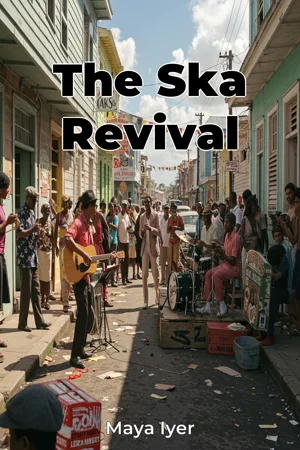
Why has ska, a music born from Jamaican independence, repeatedly found new life on the global stage? "The Ska Revival" explores the vibrant history of ska music, tracing its evolution and recurring resurgence across generations and diverse musical landscapes. This book examines not just the sound of ska, but the cultural contexts that fueled its repeated revivals, making it a global phenomenon. We delve into three key areas: ska's origins in 1960s Jamaica, its initial wave of international popularity, and the subsequent revivals that cemented its place in music history. Understanding these periods requires an examination of the social and political climates that shaped them. The book provides this context, enabling readers to appreciate ska not simply as a genre, but as a reflection of cultural shifts and youth movements. No prior musical expertise is required; the narrative unfolds in a way that is accessible to all readers, ensuring that even those unfamiliar with music theory can grasp the nuances and significance of ska. The central argument of "The Ska Revival" is that ska's enduring appeal lies in its adaptability and its inherent connection to themes of social change and community. Each revival, from the Two-Tone explosion in 1970s Britain to the third-wave ska-punk movement in the 1990s United States, demonstrates the genre's unique ability to resonate with new audiences facing their own distinct challenges. The introduction lays the groundwork by defining ska's core elements and tracing its Jamaican roots, emphasizing its significance as a soundtrack to independence. The book proceeds chronologically, dedicating sections to the first wave, second wave (Two-Tone), and third wave of ska. Each section focuses on the historical context, key artists, and musical characteristics that define each revival. It culminates by examining ska's continued presence in contemporary music scenes, exploring how it continues to evolve and adapt in the 21st century. The book seeks to provide a comprehensive understanding of ska's cyclical nature, uncovering the common threads that connect each era. The research for this book draws upon a diverse range of sources, including interviews with musicians, historical accounts, academic studies of music subcultures, and archival materials such as concert footage, photography, and promotional materials. The analysis incorporates both quantitative data, such as record sales and chart positions, and qualitative data, such as lyrical content and the iconography of ska subcultures. "The Ska Revival" sits at the intersection of musicology, cultural studies, and sociology. It explores how music functions as a form of social commentary and identity construction. Moreover, it touches upon fashion, dance, and visual art of the different ska eras. This book distinguishes itself through its holistic approach. Rather than simply documenting the history of ska, it seeks to understand the underlying cultural, social, and political forces that have contributed to its lasting appeal. The writing style adopts a balanced approach, maintaining scholarly accuracy while offering an engaging narrative suitable for a broad audience. The target audience includes music enthusiasts, students of popular culture, historians interested in youth movements, and anyone curious about the story behind this energetic and influential genre. The book offers valuable insights into the dynamics of musical evolution, the power of subcultures, and the enduring relevance of music as a form of social expression. As a work of non-fiction, "The Ska Revival" strives for accuracy, objectivity, and a comprehensive presentation of information. While the book aims for a broad overview, certain micro-scenes and regional variations within ska revivals may receive less detailed attention due to space constraints. This book does not shy away from addressing the debates surrounding authenticity and appropriation within the ska community. These discussions underscore the complexities inherent in any musical genre that crosses cultural boundaries and evolves over time. By understanding ska’s past, audiences can use the lessons of community and resilience to move forward.
Why has ska, a music born from Jamaican independence, repeatedly found new life on the global stage? "The Ska Revival" explores the vibrant history of ska music, tracing its evolution and recurring resurgence across generations and diverse musical landscapes. This book examines not just the sound of ska, but the cultural contexts that fueled its repeated revivals, making it a global phenomenon. We delve into three key areas: ska's origins in 1960s Jamaica, its initial wave of international popularity, and the subsequent revivals that cemented its place in music history. Understanding these periods requires an examination of the social and political climates that shaped them. The book provides this context, enabling readers to appreciate ska not simply as a genre, but as a reflection of cultural shifts and youth movements. No prior musical expertise is required; the narrative unfolds in a way that is accessible to all readers, ensuring that even those unfamiliar with music theory can grasp the nuances and significance of ska. The central argument of "The Ska Revival" is that ska's enduring appeal lies in its adaptability and its inherent connection to themes of social change and community. Each revival, from the Two-Tone explosion in 1970s Britain to the third-wave ska-punk movement in the 1990s United States, demonstrates the genre's unique ability to resonate with new audiences facing their own distinct challenges. The introduction lays the groundwork by defining ska's core elements and tracing its Jamaican roots, emphasizing its significance as a soundtrack to independence. The book proceeds chronologically, dedicating sections to the first wave, second wave (Two-Tone), and third wave of ska. Each section focuses on the historical context, key artists, and musical characteristics that define each revival. It culminates by examining ska's continued presence in contemporary music scenes, exploring how it continues to evolve and adapt in the 21st century. The book seeks to provide a comprehensive understanding of ska's cyclical nature, uncovering the common threads that connect each era. The research for this book draws upon a diverse range of sources, including interviews with musicians, historical accounts, academic studies of music subcultures, and archival materials such as concert footage, photography, and promotional materials. The analysis incorporates both quantitative data, such as record sales and chart positions, and qualitative data, such as lyrical content and the iconography of ska subcultures. "The Ska Revival" sits at the intersection of musicology, cultural studies, and sociology. It explores how music functions as a form of social commentary and identity construction. Moreover, it touches upon fashion, dance, and visual art of the different ska eras. This book distinguishes itself through its holistic approach. Rather than simply documenting the history of ska, it seeks to understand the underlying cultural, social, and political forces that have contributed to its lasting appeal. The writing style adopts a balanced approach, maintaining scholarly accuracy while offering an engaging narrative suitable for a broad audience. The target audience includes music enthusiasts, students of popular culture, historians interested in youth movements, and anyone curious about the story behind this energetic and influential genre. The book offers valuable insights into the dynamics of musical evolution, the power of subcultures, and the enduring relevance of music as a form of social expression. As a work of non-fiction, "The Ska Revival" strives for accuracy, objectivity, and a comprehensive presentation of information. While the book aims for a broad overview, certain micro-scenes and regional variations within ska revivals may receive less detailed attention due to space constraints. This book does not shy away from addressing the debates surrounding authenticity and appropriation within the ska community. These discussions underscore the complexities inherent in any musical genre that crosses cultural boundaries and evolves over time. By understanding ska’s past, audiences can use the lessons of community and resilience to move forward.
"The Ska Revival" explores the dynamic history of ska music, a genre born from Jamaican independence that has experienced multiple resurgences across the globe. The book delves into the social and political contexts that fueled these revivals, demonstrating ska's unique ability to reflect cultural shifts and youth movements. From its origins in 1960s Jamaica to the Two-Tone explosion in Britain and the ska-punk movement in the US, each wave highlights the genre’s adaptability and its resonance with new audiences. The book examines ska's evolution chronologically, dedicating sections to each major revival. It analyzes the key artists, musical characteristics, and historical contexts that define each era, offering a comprehensive understanding of ska's cyclical nature. By drawing upon interviews, historical accounts, and archival materials, "The Ska Revival" uncovers the common threads that connect each wave, emphasizing ska's enduring connection to themes of social change and community.
Book Details
ISBN
9788235217059
Publisher
Publifye AS
Your Licenses
You don't own any licenses for this book
Purchase a license below to unlock this book and download the EPUB.
Purchase License
Select a tier to unlock this book
Need bulk licensing?
Contact us for enterprise agreements.