
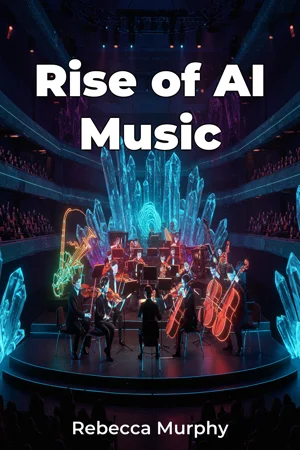
About This Book
Is the future of music human, or machine? "Rise of AI Music" delves into the rapidly evolving world where artificial intelligence is not just a tool for musicians, but a potential composer, performer, and even artist in its own right. This book explores the groundbreaking advancements in AI music composition, the ethical implications of AI mimicking established artists, and the profound shifts occurring in the very foundations of music creation. These topics are critical because they challenge our understanding of creativity, authorship, and the future of artistic expression in a digital age. To fully appreciate the impact of AI on music, we first examine the historical context of computer-generated music, tracing its roots from early algorithmic compositions to the sophisticated deep learning models of today. A basic understanding of machine learning principles, particularly neural networks and generative algorithms, will enhance the reader's comprehension, although the book avoids overly technical jargon, focusing instead on the concepts and their practical application. The central argument of "Rise of AI Music" is that AI is not merely a technological advancement, but a catalyst redefining the creative process in music. It is altering how music is conceived, produced, distributed, and consumed, raising complex questions about originality, copyright, and the value of human artistry. This book unfolds in three major parts. First, it introduces the core technologies driving AI music, explaining how algorithms learn musical styles, generate melodies, and even improvise in real-time. Second, it examines the implications of AI-driven music creation for artists, copyright holders, and the music industry as a whole. This section discusses legal battles over AI-generated content and the challenges of determining authorship in a collaborative human-AI environment. Third, the book explores the potential of AI to democratize music creation, allowing anyone with a computer to compose and produce their own songs, regardless of musical training. The evidence presented throughout this book is drawn from a variety of sources, including academic research papers, industry reports, interviews with leading AI music researchers and developers, and case studies of successful AI music projects. We analyze unique datasets of AI-generated music to identify patterns and trends, and we evaluate the aesthetic qualities of AI-composed pieces through controlled listening experiments. "Rise of AI Music" sits at the intersection of technology, musicology, and law. It connects to the field of computer science by exploring the algorithms that power AI music. It connects with musicology in analyzing the structure and style of AI-generated compositions. Finally, it connects with law through discussions of intellectual property and copyright issues raised by AI-created works. These interdisciplinary connections enrich the book's argument by providing a holistic view of the AI music phenomenon. What sets this book apart is its focus on the ethical and societal implications of AI music. While other books may focus solely on the technology, "Rise of AI Music" considers the broader impact on human creativity, artist livelihoods, and the future of the music industry. Written in a clear and accessible style, "Rise of AI Music" is aimed at a broad audience, including musicians, music industry professionals, technology enthusiasts, and anyone curious about the intersection of AI and creativity. It will be valuable to readers seeking to understand the transformative potential and challenges of AI in music. As a work of non-fiction, "Rise of AI Music" adheres to the principles of accuracy, objectivity, and thorough research. While the scope of the book is broad, it focuses primarily on the technological and artistic aspects of AI music, rather than delving into the technical specifics of AI algorithm development. Readers will gain practical insights into how AI is being used in music production, how to navigate the legal landscape of AI-generated music, and how to leverage AI tools to enhance their own creative endeavors. One ongoing debate addressed in the book is whether AI-generated music can be truly original and whether it poses a threat to human musicians. "Rise of AI Music" explores these controversies from multiple perspectives, offering a balanced and nuanced analysis.
Is the future of music human, or machine? "Rise of AI Music" delves into the rapidly evolving world where artificial intelligence is not just a tool for musicians, but a potential composer, performer, and even artist in its own right. This book explores the groundbreaking advancements in AI music composition, the ethical implications of AI mimicking established artists, and the profound shifts occurring in the very foundations of music creation. These topics are critical because they challenge our understanding of creativity, authorship, and the future of artistic expression in a digital age. To fully appreciate the impact of AI on music, we first examine the historical context of computer-generated music, tracing its roots from early algorithmic compositions to the sophisticated deep learning models of today. A basic understanding of machine learning principles, particularly neural networks and generative algorithms, will enhance the reader's comprehension, although the book avoids overly technical jargon, focusing instead on the concepts and their practical application. The central argument of "Rise of AI Music" is that AI is not merely a technological advancement, but a catalyst redefining the creative process in music. It is altering how music is conceived, produced, distributed, and consumed, raising complex questions about originality, copyright, and the value of human artistry. This book unfolds in three major parts. First, it introduces the core technologies driving AI music, explaining how algorithms learn musical styles, generate melodies, and even improvise in real-time. Second, it examines the implications of AI-driven music creation for artists, copyright holders, and the music industry as a whole. This section discusses legal battles over AI-generated content and the challenges of determining authorship in a collaborative human-AI environment. Third, the book explores the potential of AI to democratize music creation, allowing anyone with a computer to compose and produce their own songs, regardless of musical training. The evidence presented throughout this book is drawn from a variety of sources, including academic research papers, industry reports, interviews with leading AI music researchers and developers, and case studies of successful AI music projects. We analyze unique datasets of AI-generated music to identify patterns and trends, and we evaluate the aesthetic qualities of AI-composed pieces through controlled listening experiments. "Rise of AI Music" sits at the intersection of technology, musicology, and law. It connects to the field of computer science by exploring the algorithms that power AI music. It connects with musicology in analyzing the structure and style of AI-generated compositions. Finally, it connects with law through discussions of intellectual property and copyright issues raised by AI-created works. These interdisciplinary connections enrich the book's argument by providing a holistic view of the AI music phenomenon. What sets this book apart is its focus on the ethical and societal implications of AI music. While other books may focus solely on the technology, "Rise of AI Music" considers the broader impact on human creativity, artist livelihoods, and the future of the music industry. Written in a clear and accessible style, "Rise of AI Music" is aimed at a broad audience, including musicians, music industry professionals, technology enthusiasts, and anyone curious about the intersection of AI and creativity. It will be valuable to readers seeking to understand the transformative potential and challenges of AI in music. As a work of non-fiction, "Rise of AI Music" adheres to the principles of accuracy, objectivity, and thorough research. While the scope of the book is broad, it focuses primarily on the technological and artistic aspects of AI music, rather than delving into the technical specifics of AI algorithm development. Readers will gain practical insights into how AI is being used in music production, how to navigate the legal landscape of AI-generated music, and how to leverage AI tools to enhance their own creative endeavors. One ongoing debate addressed in the book is whether AI-generated music can be truly original and whether it poses a threat to human musicians. "Rise of AI Music" explores these controversies from multiple perspectives, offering a balanced and nuanced analysis.
"Rise of AI Music" explores the burgeoning intersection of artificial intelligence and music, examining how AI is transforming music creation, production, and consumption. The book delves into the core technologies that enable AI to compose melodies, learn musical styles, and even improvise, raising fundamental questions about creativity, authorship, and the future of music. For instance, AI's ability to mimic established artists raises complex ethical and copyright issues. The book progresses through three key sections. It begins by introducing the technologies behind AI music, then analyzes the implications for artists and the music industry, including discussions of legal challenges and collaborative human-AI environments. Finally, it explores AI's potential to democratize music creation, empowering individuals regardless of musical training. This approach allows "Rise of AI Music" to offer a comprehensive view of AI's impact, balancing technological insights with broader societal and artistic considerations. What sets this book apart is its focus on the ethical and societal implications of AI music, considering the broader impact on human creativity, artist livelihoods, and the future of the music industry. It analyzes datasets of AI-generated music to identify patterns and trends, offering readers practical insights into navigating the evolving landscape of AI in music.
Book Details
ISBN
9788235216816
Publisher
Publifye AS
Your Licenses
You don't own any licenses for this book
Purchase a license below to unlock this book and download the EPUB.
Purchase License
Select a tier to unlock this book
Need bulk licensing?
Contact us for enterprise agreements.