
About This Book
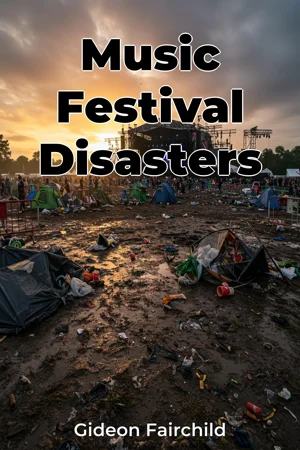
Have you ever wondered how a music festival, promising unforgettable experiences, can devolve into a complete and utter disaster? "Music Festival Disasters" delves into the anatomy of catastrophic events in the music industry, unraveling the complex interplay of financial mismanagement, deceptive marketing, and operational incompetence that leads to spectacular failures. This book examines not just the surface-level chaos but the underlying systemic flaws that make these events so susceptible to collapse. This book centrally concerns itself with two primary topics: the prevalence of financial scams within the music festival industry and the cascading effects of operational failures on festival attendees and organizers alike. Understanding these areas is vital, as they expose the vulnerabilities in an industry that often prioritizes profit over safety and ethical conduct. The exploration of these topics is important in a world increasingly shaped by experiences and events. The context for these failures often lies in the rapid commercialization of live music events, where exponential growth outpaces the development of robust regulatory frameworks and ethical business practices. A basic knowledge of event planning principles, financial management, and consumer protection laws will enhance the reader's understanding of the issues discussed, though the book is designed to be accessible to a broad audience. The central argument of "Music Festival Disasters" is that many high-profile music festival failures are not isolated incidents but rather predictable outcomes of systemic flaws in the industry. By demonstrating the patterns of mismanagement and the frequent disregard for ethical considerations, the book aims to provide a comprehensive overview of the risks involved and the consequences of unchecked ambition. This argument seeks to provide a clearer, more informed perspective on the music festival industry. The book begins by introducing the key concepts of risk management, financial oversight, and operational logistics in the context of large-scale music events. It then develops these ideas through several case studies, examining events marred by financial fraud, logistical nightmares, and security breaches. Major points include an analysis of the deceptive marketing practices and a breakdown of organizational structures susceptible to failure. The culmination of the argument presents a framework for more responsible and sustainable event management. Finally, the book offers practical applications and implications for event organizers, investors, and attendees, advocating for greater transparency and accountability within the industry. Evidence presented will include detailed financial analyses of festival budgets and expenditures, firsthand accounts from attendees and industry insiders, and legal documents related to bankruptcies and lawsuits. Unique data sources include internal communications leaked from festival organizers and forensic accounting reports that shed light on fraudulent activities. This book connects to other fields such as business ethics, risk management, and sociology. The relationship to business ethics highlights the moral responsibilities of event organizers. Ties to risk management demonstrate the importance of planning and mitigation strategies. Links to sociology show the broader societal impact of these failures on communities and cultural movements. The approach taken is to blend investigative journalism with academic rigor, offering a detailed yet accessible analysis of the events in question. The tone is objective and fact-based, aiming to inform and educate rather than sensationalize. The target audience includes students of event management, music industry professionals, investors in live entertainment, and avid festival-goers. This book will be valuable by equipping readers with the knowledge to assess the risks involved in music festivals, make informed decisions about their involvement, and advocate for positive change within the industry. Adhering to the conventions of non-fiction, especially in the finance and music genres, the book presents thoroughly researched information with clear sourcing and factual accuracy. It avoids speculation and relies on verifiable data to support its claims. The scope of the book is intentionally limited to events where significant failures resulted in financial losses, safety concerns, or legal repercussions. It does not delve into minor logistical issues or artistic disagreements. This focused approach allows for a deeper, more comprehensive analysis of the most critical aspects of festival disasters. The information in this book can be applied practically by event organizers to improve their planning and risk management strategies, by investors to assess the financial viability of music festivals, and by attendees to make informed decisions about which events to support. Ongoing debates surrounding issues include the lack of regulation in the live music industry and the ethical responsibilities of social media influencers who promote these events.
Have you ever wondered how a music festival, promising unforgettable experiences, can devolve into a complete and utter disaster? "Music Festival Disasters" delves into the anatomy of catastrophic events in the music industry, unraveling the complex interplay of financial mismanagement, deceptive marketing, and operational incompetence that leads to spectacular failures. This book examines not just the surface-level chaos but the underlying systemic flaws that make these events so susceptible to collapse. This book centrally concerns itself with two primary topics: the prevalence of financial scams within the music festival industry and the cascading effects of operational failures on festival attendees and organizers alike. Understanding these areas is vital, as they expose the vulnerabilities in an industry that often prioritizes profit over safety and ethical conduct. The exploration of these topics is important in a world increasingly shaped by experiences and events. The context for these failures often lies in the rapid commercialization of live music events, where exponential growth outpaces the development of robust regulatory frameworks and ethical business practices. A basic knowledge of event planning principles, financial management, and consumer protection laws will enhance the reader's understanding of the issues discussed, though the book is designed to be accessible to a broad audience. The central argument of "Music Festival Disasters" is that many high-profile music festival failures are not isolated incidents but rather predictable outcomes of systemic flaws in the industry. By demonstrating the patterns of mismanagement and the frequent disregard for ethical considerations, the book aims to provide a comprehensive overview of the risks involved and the consequences of unchecked ambition. This argument seeks to provide a clearer, more informed perspective on the music festival industry. The book begins by introducing the key concepts of risk management, financial oversight, and operational logistics in the context of large-scale music events. It then develops these ideas through several case studies, examining events marred by financial fraud, logistical nightmares, and security breaches. Major points include an analysis of the deceptive marketing practices and a breakdown of organizational structures susceptible to failure. The culmination of the argument presents a framework for more responsible and sustainable event management. Finally, the book offers practical applications and implications for event organizers, investors, and attendees, advocating for greater transparency and accountability within the industry. Evidence presented will include detailed financial analyses of festival budgets and expenditures, firsthand accounts from attendees and industry insiders, and legal documents related to bankruptcies and lawsuits. Unique data sources include internal communications leaked from festival organizers and forensic accounting reports that shed light on fraudulent activities. This book connects to other fields such as business ethics, risk management, and sociology. The relationship to business ethics highlights the moral responsibilities of event organizers. Ties to risk management demonstrate the importance of planning and mitigation strategies. Links to sociology show the broader societal impact of these failures on communities and cultural movements. The approach taken is to blend investigative journalism with academic rigor, offering a detailed yet accessible analysis of the events in question. The tone is objective and fact-based, aiming to inform and educate rather than sensationalize. The target audience includes students of event management, music industry professionals, investors in live entertainment, and avid festival-goers. This book will be valuable by equipping readers with the knowledge to assess the risks involved in music festivals, make informed decisions about their involvement, and advocate for positive change within the industry. Adhering to the conventions of non-fiction, especially in the finance and music genres, the book presents thoroughly researched information with clear sourcing and factual accuracy. It avoids speculation and relies on verifiable data to support its claims. The scope of the book is intentionally limited to events where significant failures resulted in financial losses, safety concerns, or legal repercussions. It does not delve into minor logistical issues or artistic disagreements. This focused approach allows for a deeper, more comprehensive analysis of the most critical aspects of festival disasters. The information in this book can be applied practically by event organizers to improve their planning and risk management strategies, by investors to assess the financial viability of music festivals, and by attendees to make informed decisions about which events to support. Ongoing debates surrounding issues include the lack of regulation in the live music industry and the ethical responsibilities of social media influencers who promote these events.
"Music Festival Disasters" explores the dark side of live music events, dissecting how promising festivals can turn into financial and operational nightmares. The book reveals that many festival failures aren't isolated incidents, but rather predictable outcomes of systemic flaws like financial mismanagement and ethical oversights. For instance, deceptive marketing, promising luxurious experiences, often masks severe underfunding and logistical incompetence. The book examines real-world case studies, detailing how operational failures directly impact attendees and organizers. It analyzes how the rapid commercialization of music festivals often outpaces regulation, creating an environment ripe for financial scams. By blending investigative journalism with academic rigor, "Music Festival Disasters" provides a framework for responsible event management. Beginning with key concepts in risk management, the book progresses through case studies of events marred by fraud and security breaches. Ultimately, it offers practical advice for event organizers, investors, and attendees, advocating for transparency within the industry. This resource equips readers to assess risks, make informed decisions and advocate for positive change.
Book Details
ISBN
9788235216762
Publisher
Publifye AS
Your Licenses
You don't own any licenses for this book
Purchase a license below to unlock this book and download the EPUB.
Purchase License
Select a tier to unlock this book
Need bulk licensing?
Contact us for enterprise agreements.