
About This Book
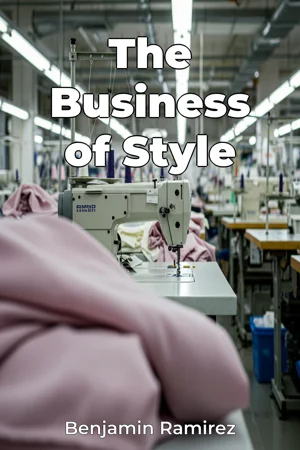
Why does last year’s must-have become this year’s fashion faux pas? "The Business of Style" unravels the complex mechanisms through which fashion is monetized and trends are manufactured, delivering a comprehensive understanding of the fashion industry's economic engine. This book explores the intertwined worlds of design, business, and consumer behavior to reveal the strategic forces shaping our wardrobes. Two fundamental themes drive our investigation: firstly, how the relentless pursuit of profit fuels the cyclical nature of trends, and secondly, how design innovation is strategically deployed to stimulate consumer demand. Understanding these dynamics is crucial for anyone seeking to navigate, critique, or participate in the fashion ecosystem. This is essential knowledge, particularly as consumers become more conscious of the environmental and social impacts of their choices. To contextualize the contemporary landscape, we delve into the historical evolution of the fashion system, tracing its roots from haute couture to mass production. We examine the social factors influencing fashion, from celebrity endorsements and influencer marketing to the psychological drivers of desire and conformity. No prior knowledge of fashion theory is required as key concepts will be defined throughout. The central argument of "The Business of Style" is that the fashion industry’s economic model hinges on the planned obsolescence of style – the deliberate creation of new trends to devalue existing wardrobes. This is not merely a superficial observation; it is the foundation upon which multi-billion dollar empires are built. Understanding this premise is vital for designers, marketers, business professionals, and consumers alike. The book is structured to progressively build this argument. We begin by introducing the core concepts of trend forecasting, design cycles, and brand management. We then examine the major points: (1) dissecting the roles of designers, manufacturers, and retailers in the trend creation process; (2) analyzing the impact of media and advertising on shaping consumer preferences and (3) investigating the financial strategies used by fashion brands to maximize profit. We culminate by demonstrating how these factors combine to create a system where continuous change is both necessary and inevitable. Finally, we consider the ethical implications of this model, and explore sustainable alternatives. The evidence presented within “The Business of Style” will be drawn from diverse sources including industry reports, academic research, case studies of successful and unsuccessful fashion ventures, and analyses of consumer behavior. Proprietary data from market research firms will provide quantifiable insights into sales trends and consumer preferences. The book integrates insights from a variety of fields, beyond design and business. Sociological perspectives explain how fashion reflects and reinforces social hierarchies, while psychological theories illuminate the cognitive biases that influence purchasing decisions. Furthermore, the book connects to environmental studies through its analysis of sustainability and the environmental impact of fast fashion. These interdisciplinary connections enrich our understanding of the fashion system's complexities. A unique perspective offered by "The Business of Style" is its focus on the proactive manipulation of trends. Rather than viewing trends as organic phenomena, we reveal the calculated strategies employed by fashion companies to engineer desire. The tone is analytical and objective, aiming to inform and empower readers with a thorough understanding of the fashion industry's inner workings. The target audience encompasses fashion students, designers, marketers, business professionals, and conscious consumers seeking to understand the industry’s underlying dynamics. This book offers a valuable resource for navigating the fashion world with greater awareness and strategic insight. As a book about business it will include real world examples and situations that commonly occur. The book offers a broad overview of the global fashion system, with particular emphasis on the dynamics within major markets such as Europe, North America, and Asia. While specific regional trends may be discussed, the primary focus remains on the underlying economic and strategic principles applicable across diverse contexts. The principles discussed can be applied practically in various ways: designers can use this knowledge to develop more sustainable and ethical business models, marketers can craft more authentic and effective campaigns, and consumers can make more informed purchasing decisions. Fashion, however, is not without debate. The industry continues to grapple with issues such as cultural appropriation, body image standards, and labor practices. These issues are addressed not from a subjective viewpoint, but rather through an examination of the economic incentives that perpetuate these challenges.
Why does last year’s must-have become this year’s fashion faux pas? "The Business of Style" unravels the complex mechanisms through which fashion is monetized and trends are manufactured, delivering a comprehensive understanding of the fashion industry's economic engine. This book explores the intertwined worlds of design, business, and consumer behavior to reveal the strategic forces shaping our wardrobes. Two fundamental themes drive our investigation: firstly, how the relentless pursuit of profit fuels the cyclical nature of trends, and secondly, how design innovation is strategically deployed to stimulate consumer demand. Understanding these dynamics is crucial for anyone seeking to navigate, critique, or participate in the fashion ecosystem. This is essential knowledge, particularly as consumers become more conscious of the environmental and social impacts of their choices. To contextualize the contemporary landscape, we delve into the historical evolution of the fashion system, tracing its roots from haute couture to mass production. We examine the social factors influencing fashion, from celebrity endorsements and influencer marketing to the psychological drivers of desire and conformity. No prior knowledge of fashion theory is required as key concepts will be defined throughout. The central argument of "The Business of Style" is that the fashion industry’s economic model hinges on the planned obsolescence of style – the deliberate creation of new trends to devalue existing wardrobes. This is not merely a superficial observation; it is the foundation upon which multi-billion dollar empires are built. Understanding this premise is vital for designers, marketers, business professionals, and consumers alike. The book is structured to progressively build this argument. We begin by introducing the core concepts of trend forecasting, design cycles, and brand management. We then examine the major points: (1) dissecting the roles of designers, manufacturers, and retailers in the trend creation process; (2) analyzing the impact of media and advertising on shaping consumer preferences and (3) investigating the financial strategies used by fashion brands to maximize profit. We culminate by demonstrating how these factors combine to create a system where continuous change is both necessary and inevitable. Finally, we consider the ethical implications of this model, and explore sustainable alternatives. The evidence presented within “The Business of Style” will be drawn from diverse sources including industry reports, academic research, case studies of successful and unsuccessful fashion ventures, and analyses of consumer behavior. Proprietary data from market research firms will provide quantifiable insights into sales trends and consumer preferences. The book integrates insights from a variety of fields, beyond design and business. Sociological perspectives explain how fashion reflects and reinforces social hierarchies, while psychological theories illuminate the cognitive biases that influence purchasing decisions. Furthermore, the book connects to environmental studies through its analysis of sustainability and the environmental impact of fast fashion. These interdisciplinary connections enrich our understanding of the fashion system's complexities. A unique perspective offered by "The Business of Style" is its focus on the proactive manipulation of trends. Rather than viewing trends as organic phenomena, we reveal the calculated strategies employed by fashion companies to engineer desire. The tone is analytical and objective, aiming to inform and empower readers with a thorough understanding of the fashion industry's inner workings. The target audience encompasses fashion students, designers, marketers, business professionals, and conscious consumers seeking to understand the industry’s underlying dynamics. This book offers a valuable resource for navigating the fashion world with greater awareness and strategic insight. As a book about business it will include real world examples and situations that commonly occur. The book offers a broad overview of the global fashion system, with particular emphasis on the dynamics within major markets such as Europe, North America, and Asia. While specific regional trends may be discussed, the primary focus remains on the underlying economic and strategic principles applicable across diverse contexts. The principles discussed can be applied practically in various ways: designers can use this knowledge to develop more sustainable and ethical business models, marketers can craft more authentic and effective campaigns, and consumers can make more informed purchasing decisions. Fashion, however, is not without debate. The industry continues to grapple with issues such as cultural appropriation, body image standards, and labor practices. These issues are addressed not from a subjective viewpoint, but rather through an examination of the economic incentives that perpetuate these challenges.
"The Business of Style" dives into the fashion industry's core, revealing how trends are manufactured and monetized. It explores the roles of design, business, and consumer behavior in shaping our style choices. The book highlights how the pursuit of profit and strategic design innovation drive the cyclical nature of fashion, leading to constant changes in what's considered stylish. One intriguing fact explored is how fashion brands intentionally create new trends to make existing wardrobes seem outdated, fueling consumer demand. The book progresses by first introducing key concepts like trend forecasting and brand management. It then dissects the roles of designers, manufacturers, and retailers in creating trends, analyzes the impact of media on consumer preferences, and investigates the financial strategies used by fashion brands. Ultimately, it shows how these factors combine to create a system where continuous change is inevitable. This approach offers readers a comprehensive understanding of the fashion industry's economic engine, making it valuable for designers, marketers, and consumers alike.
Book Details
ISBN
9788235216526
Publisher
Publifye AS
Your Licenses
You don't own any licenses for this book
Purchase a license below to unlock this book and download the EPUB.
Purchase License
Select a tier to unlock this book
Need bulk licensing?
Contact us for enterprise agreements.