
About This Book
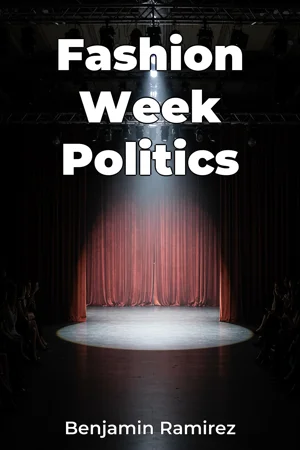
What truly dictates the trends and influences of the global fashion industry? "Fashion Week Politics" delves into the intricate network of power struggles underpinning the world’s most prestigious fashion weeks, revealing how political forces shape design trends, brand ascendancy, and cultural narratives. This book will explore not just the aesthetics on the runway, but the political maneuvering that determines who gets a seat at the table, which designers receive funding and exposure, and ultimately, what the world wears. The key topics addressed are the economic impact of fashion weeks on host cities and nations, the role of government policies and trade agreements in facilitating or hindering the fashion industry, and the influence of cultural diplomacy and soft power exerted through fashion events. These topics are crucial because they contextualize fashion as more than frivolous aesthetics; it is a multi-billion dollar industry deeply entwined with political agendas and societal values. Understanding fashion week politics requires appreciating the historical development of fashion capitals, from Paris's couture dominance to the rise of New York, Milan, and London. Furthermore, a basic comprehension of global economics, trade policies, and cultural studies provides a foundation for grasping the complexities detailed within. The central argument of "Fashion Week Politics" is that fashion weeks serve as strategic platforms for nations and corporations to wield influence, promote cultural identity, and negotiate economic advantages. This argument challenges the conventional perception of fashion weeks as purely artistic endeavors, positioning them instead as carefully orchestrated political events with far-reaching consequences. The book is structured to methodically unpack these power dynamics. It begins by introducing fashion weeks as global phenomena and outlining the main players involved: designers, brands, media conglomerates, government entities, and lobbying groups. Subsequently, the development of these ideas focuses on case studies of specific fashion weeks – New York, Paris, Milan, and London – analyzing their unique political landscapes, funding models, and relationships with their respective governments. It investigates how these events are leveraged to project national images and advance economic interests. The book then shifts to a broader exploration of sustainability, diversity, and inclusivity within fashion, examining how political pressures and social movements influence these agendas and, conversely, how the fashion industry can be used as a tool for political activism and social change. The conclusion synthesizes these insights, offering a framework for understanding the future of fashion weeks in an increasingly globalized and politically charged world. Evidence presented will include analysis of government funding reports, lobbying disclosures, trade agreements affecting the fashion industry, media coverage of fashion weeks, and interviews with industry insiders. Unique data sources will feature comparative analyses of fashion week budgets and their direct economic impact on host cities, alongside studies of media representation and its influence on brand perception. "Fashion Week Politics" connects to fields such as economics, political science, and cultural studies. The economic analysis reveals the financial impact of fashion weeks, while political science provides frameworks for understanding power dynamics and international relations. Cultural studies offers insights into how fashion reflects and shapes social identities and values. A unique aspect of this book is its application of political science methodologies to analyze fashion, a field often viewed through purely aesthetic or commercial lenses. This interdisciplinary approach provides a fresh perspective on the underlying power structures shaping the industry. The tone and writing style are academic yet accessible, aiming to engage both scholars and informed general readers. While grounded in rigorous research, the book avoids overly technical jargon, ensuring that the arguments are clear and engaging for a broad audience. The target audience includes students and scholars in fashion studies, political science, economics, and cultural studies; industry professionals seeking a deeper understanding of the forces shaping their field; and anyone interested in the intersection of fashion, politics, and global culture. As a work of non-fiction in ‘Design General, Design, Politics’, the book offers meticulous research, analysis, and credible sourcing. It maintains objectivity while addressing potentially contentious issues. The scope encompasses the four major fashion weeks (New York, London, Milan, Paris), with occasional references to emerging markets. It acknowledges that a comprehensive study of every fashion week worldwide is beyond the scope of a single volume. Understanding how political forces shape the fashion industry can empower designers, brands, and consumers to make more informed decisions and advocate for positive change. It can also inform policymakers seeking to leverage fashion as a tool for economic development and cultural diplomacy. The book addresses ongoing debates surrounding sustainability, diversity, and labor practices within the fashion industry, exploring how political pressure can be used to promote ethical and responsible practices.
What truly dictates the trends and influences of the global fashion industry? "Fashion Week Politics" delves into the intricate network of power struggles underpinning the world’s most prestigious fashion weeks, revealing how political forces shape design trends, brand ascendancy, and cultural narratives. This book will explore not just the aesthetics on the runway, but the political maneuvering that determines who gets a seat at the table, which designers receive funding and exposure, and ultimately, what the world wears. The key topics addressed are the economic impact of fashion weeks on host cities and nations, the role of government policies and trade agreements in facilitating or hindering the fashion industry, and the influence of cultural diplomacy and soft power exerted through fashion events. These topics are crucial because they contextualize fashion as more than frivolous aesthetics; it is a multi-billion dollar industry deeply entwined with political agendas and societal values. Understanding fashion week politics requires appreciating the historical development of fashion capitals, from Paris's couture dominance to the rise of New York, Milan, and London. Furthermore, a basic comprehension of global economics, trade policies, and cultural studies provides a foundation for grasping the complexities detailed within. The central argument of "Fashion Week Politics" is that fashion weeks serve as strategic platforms for nations and corporations to wield influence, promote cultural identity, and negotiate economic advantages. This argument challenges the conventional perception of fashion weeks as purely artistic endeavors, positioning them instead as carefully orchestrated political events with far-reaching consequences. The book is structured to methodically unpack these power dynamics. It begins by introducing fashion weeks as global phenomena and outlining the main players involved: designers, brands, media conglomerates, government entities, and lobbying groups. Subsequently, the development of these ideas focuses on case studies of specific fashion weeks – New York, Paris, Milan, and London – analyzing their unique political landscapes, funding models, and relationships with their respective governments. It investigates how these events are leveraged to project national images and advance economic interests. The book then shifts to a broader exploration of sustainability, diversity, and inclusivity within fashion, examining how political pressures and social movements influence these agendas and, conversely, how the fashion industry can be used as a tool for political activism and social change. The conclusion synthesizes these insights, offering a framework for understanding the future of fashion weeks in an increasingly globalized and politically charged world. Evidence presented will include analysis of government funding reports, lobbying disclosures, trade agreements affecting the fashion industry, media coverage of fashion weeks, and interviews with industry insiders. Unique data sources will feature comparative analyses of fashion week budgets and their direct economic impact on host cities, alongside studies of media representation and its influence on brand perception. "Fashion Week Politics" connects to fields such as economics, political science, and cultural studies. The economic analysis reveals the financial impact of fashion weeks, while political science provides frameworks for understanding power dynamics and international relations. Cultural studies offers insights into how fashion reflects and shapes social identities and values. A unique aspect of this book is its application of political science methodologies to analyze fashion, a field often viewed through purely aesthetic or commercial lenses. This interdisciplinary approach provides a fresh perspective on the underlying power structures shaping the industry. The tone and writing style are academic yet accessible, aiming to engage both scholars and informed general readers. While grounded in rigorous research, the book avoids overly technical jargon, ensuring that the arguments are clear and engaging for a broad audience. The target audience includes students and scholars in fashion studies, political science, economics, and cultural studies; industry professionals seeking a deeper understanding of the forces shaping their field; and anyone interested in the intersection of fashion, politics, and global culture. As a work of non-fiction in ‘Design General, Design, Politics’, the book offers meticulous research, analysis, and credible sourcing. It maintains objectivity while addressing potentially contentious issues. The scope encompasses the four major fashion weeks (New York, London, Milan, Paris), with occasional references to emerging markets. It acknowledges that a comprehensive study of every fashion week worldwide is beyond the scope of a single volume. Understanding how political forces shape the fashion industry can empower designers, brands, and consumers to make more informed decisions and advocate for positive change. It can also inform policymakers seeking to leverage fashion as a tool for economic development and cultural diplomacy. The book addresses ongoing debates surrounding sustainability, diversity, and labor practices within the fashion industry, exploring how political pressure can be used to promote ethical and responsible practices.
"Fashion Week Politics" reveals the surprising political undercurrents shaping the global fashion industry. Beyond the runway shows and designer collections, the book uncovers how government policies, trade agreements, and cultural diplomacy influence which designers gain prominence and what trends dominate. Fashion weeks, such as NYFW, PFW, MFW, and LFW, are presented not just as artistic events but as strategic platforms where nations and corporations exert influence. The book delves into the economic impact of fashion weeks, highlighting how these events contribute to host cities and national economies. It also examines how political pressures and social movements drive agendas related to sustainability, diversity, and inclusivity within the fashion industry. By exploring case studies of major fashion weeks and analyzing government funding reports, the book challenges traditional perceptions of fashion as purely aesthetic, revealing it as a field intertwined with political agendas and societal values. Structured methodically, the book begins by introducing fashion weeks as global phenomena before progressing across chapters to focus on case studies of specific fashion weeks, sustainability, diversity, and inclusivity within fashion. It provides a framework for understanding the future of fashion weeks in an increasingly globalized and politically charged world.
Book Details
ISBN
9788235216472
Publisher
Publifye AS
Your Licenses
You don't own any licenses for this book
Purchase a license below to unlock this book and download the EPUB.
Purchase License
Select a tier to unlock this book
Need bulk licensing?
Contact us for enterprise agreements.