
About This Book
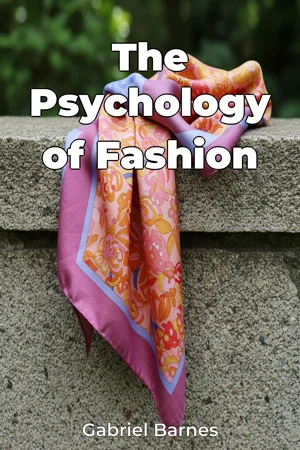
Have you ever considered the silent language your clothes speak to the world, and more importantly, to yourself? "The Psychology of Fashion" delves into the multifaceted relationship between clothing, perception, confidence, and identity, revealing how our sartorial choices profoundly impact our psychological well-being and social interactions. This book explores the core concepts of embodied cognition, self-perception theory, and the social psychology of appearance. Embodied cognition examines how clothing can physically and psychologically influence our thoughts and actions. Self-perception theory explains how we infer our attitudes and emotions by observing our own behavior – including our clothing choices. The social psychology of appearance investigates how clothing affects the perceptions and judgments of others, as well as our self-esteem. These topics are important because understanding them empowers readers to consciously harness the power of fashion to enhance their self-image, build confidence, and navigate social situations more effectively. Humans have adorned themselves for millennia, with clothing serving as functional protection and a potent form of communication. Historically, dress codes and sumptuary laws dictated permissible attire based on social status, gender, and occupation. Today, while overt rules have relaxed, the subtle yet powerful influence of clothing persists. No prior knowledge is required to understand this book, just an openness to examining the hidden psychological forces behind everyday wardrobe decisions. The central argument of "The Psychology of Fashion" is that clothing is not merely superficial; it's a powerful tool for self-expression, a catalyst for psychological change, and a significant factor in social dynamics. By understanding the underlying psychological principles at play, we can become more mindful consumers, more confident individuals, and more effective communicators. The book begins by introducing the foundational concepts of fashion psychology and outlining the bidirectional relationship between clothing and the mind. It then develops these ideas across three major sections. The first explores the impact of clothing on self-perception, covering topics such as the "enclothed cognition" effect, the role of uniforms and professional attire, and the influence of personal style on self-esteem. The second section examines how clothing affects others' perceptions, focusing on impression management, stereotyping based on appearance, and the dynamics of nonverbal communication through clothing. Finally, the third section looks at the broader societal implications of fashion, including its role in identity construction, cultural expression, and social movements. The book culminates by offering practical strategies for using fashion to enhance personal well-being, improve professional performance, and foster more meaningful social connections. The arguments presented are supported by a wide range of evidence, including empirical studies from psychology, sociology, and marketing research. The book draws upon experimental data, survey results, and case studies to illustrate key concepts. Furthermore, it incorporates insights from fashion history and cultural anthropology to provide a richer understanding of the historical and social context of clothing. "The Psychology of Fashion" connects to several other fields, including cognitive science (through the study of embodied cognition), sociology (through the analysis of social norms and identity), and business (through the examination of consumer behavior and branding). These interdisciplinary connections provide a more holistic and nuanced understanding of the complex relationship between clothing and human behavior. This book offers a unique perspective by combining rigorous academic research with practical advice and real-world examples. It moves beyond superficial discussions of fashion trends to explore the deeper psychological underpinnings of our clothing choices. The tone is informative and accessible, blending academic rigor with a conversational style. Complex concepts are explained clearly and concisely, making the book engaging and easy to understand for a broad audience. The target audience includes students of psychology, fashion, and marketing, as well as anyone interested in understanding the power of clothing and its impact on their lives. This book is valuable to anyone looking to improve their self-confidence, enhance their personal style, or gain a deeper understanding of social dynamics. As a self-help book grounded in psychology, the book includes practical exercises and reflective prompts. The scope of the book is intentionally broad, covering a wide range of topics related to fashion psychology. However, it does not delve into specific fashion trends or designer profiles. Instead, it focuses on the underlying psychological principles that drive our clothing choices. The information in this book can be applied in numerous real-world situations, from choosing the right outfit for a job interview to understanding the impact of clothing on children's self-esteem. It provides practical tools and strategies for using fashion to enhance personal and professional success. While the book aims to present a balanced view of fashion psychology, it acknowledges ongoing debates about the role of fashion in perpetuating unrealistic beauty standards and promoting consumerism. These controversies are addressed in a thoughtful and critical manner.
Have you ever considered the silent language your clothes speak to the world, and more importantly, to yourself? "The Psychology of Fashion" delves into the multifaceted relationship between clothing, perception, confidence, and identity, revealing how our sartorial choices profoundly impact our psychological well-being and social interactions. This book explores the core concepts of embodied cognition, self-perception theory, and the social psychology of appearance. Embodied cognition examines how clothing can physically and psychologically influence our thoughts and actions. Self-perception theory explains how we infer our attitudes and emotions by observing our own behavior – including our clothing choices. The social psychology of appearance investigates how clothing affects the perceptions and judgments of others, as well as our self-esteem. These topics are important because understanding them empowers readers to consciously harness the power of fashion to enhance their self-image, build confidence, and navigate social situations more effectively. Humans have adorned themselves for millennia, with clothing serving as functional protection and a potent form of communication. Historically, dress codes and sumptuary laws dictated permissible attire based on social status, gender, and occupation. Today, while overt rules have relaxed, the subtle yet powerful influence of clothing persists. No prior knowledge is required to understand this book, just an openness to examining the hidden psychological forces behind everyday wardrobe decisions. The central argument of "The Psychology of Fashion" is that clothing is not merely superficial; it's a powerful tool for self-expression, a catalyst for psychological change, and a significant factor in social dynamics. By understanding the underlying psychological principles at play, we can become more mindful consumers, more confident individuals, and more effective communicators. The book begins by introducing the foundational concepts of fashion psychology and outlining the bidirectional relationship between clothing and the mind. It then develops these ideas across three major sections. The first explores the impact of clothing on self-perception, covering topics such as the "enclothed cognition" effect, the role of uniforms and professional attire, and the influence of personal style on self-esteem. The second section examines how clothing affects others' perceptions, focusing on impression management, stereotyping based on appearance, and the dynamics of nonverbal communication through clothing. Finally, the third section looks at the broader societal implications of fashion, including its role in identity construction, cultural expression, and social movements. The book culminates by offering practical strategies for using fashion to enhance personal well-being, improve professional performance, and foster more meaningful social connections. The arguments presented are supported by a wide range of evidence, including empirical studies from psychology, sociology, and marketing research. The book draws upon experimental data, survey results, and case studies to illustrate key concepts. Furthermore, it incorporates insights from fashion history and cultural anthropology to provide a richer understanding of the historical and social context of clothing. "The Psychology of Fashion" connects to several other fields, including cognitive science (through the study of embodied cognition), sociology (through the analysis of social norms and identity), and business (through the examination of consumer behavior and branding). These interdisciplinary connections provide a more holistic and nuanced understanding of the complex relationship between clothing and human behavior. This book offers a unique perspective by combining rigorous academic research with practical advice and real-world examples. It moves beyond superficial discussions of fashion trends to explore the deeper psychological underpinnings of our clothing choices. The tone is informative and accessible, blending academic rigor with a conversational style. Complex concepts are explained clearly and concisely, making the book engaging and easy to understand for a broad audience. The target audience includes students of psychology, fashion, and marketing, as well as anyone interested in understanding the power of clothing and its impact on their lives. This book is valuable to anyone looking to improve their self-confidence, enhance their personal style, or gain a deeper understanding of social dynamics. As a self-help book grounded in psychology, the book includes practical exercises and reflective prompts. The scope of the book is intentionally broad, covering a wide range of topics related to fashion psychology. However, it does not delve into specific fashion trends or designer profiles. Instead, it focuses on the underlying psychological principles that drive our clothing choices. The information in this book can be applied in numerous real-world situations, from choosing the right outfit for a job interview to understanding the impact of clothing on children's self-esteem. It provides practical tools and strategies for using fashion to enhance personal and professional success. While the book aims to present a balanced view of fashion psychology, it acknowledges ongoing debates about the role of fashion in perpetuating unrealistic beauty standards and promoting consumerism. These controversies are addressed in a thoughtful and critical manner.
"The Psychology of Fashion" explores the profound impact of our clothing choices on our self-perception, social interactions, and overall psychological well-being. It delves into how clothing serves as a form of nonverbal communication, influencing both how others perceive us and how we perceive ourselves. For example, the book examines "enclothed cognition," revealing how wearing certain clothes can physically and psychologically influence our thoughts and actions. It also highlights the fascinating ways in which clothing impacts self-esteem and confidence, showing how personal style can be a powerful tool for self-expression. The book approaches this topic by blending rigorous academic research with practical advice and real-world examples. It begins by introducing core concepts like embodied cognition and the social psychology of appearance, before progressing through sections that explore the impact of clothing on self-perception, others' perceptions, and broader societal implications. Supported by empirical studies and insights from fashion history, the book offers a unique perspective on the hidden psychological forces behind our everyday wardrobe decisions, making it valuable for anyone seeking to enhance their self-image and navigate social dynamics more effectively.
Book Details
ISBN
9788235216458
Publisher
Publifye AS
Your Licenses
You don't own any licenses for this book
Purchase a license below to unlock this book and download the EPUB.
Purchase License
Select a tier to unlock this book
Need bulk licensing?
Contact us for enterprise agreements.