
About This Book
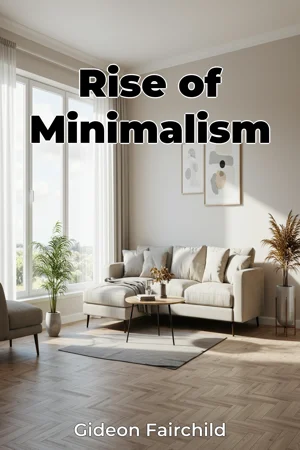
Why do we own so much, and is it truly making us happy? Rise of Minimalism explores how the minimalist movement has profoundly reshaped fashion, consumerism, and our understanding of value, offering a critical examination of its economic, design, and social implications. This book delves into the core tenets of minimalism, tracing its evolution from niche philosophy to a mainstream cultural phenomenon, examining both its benefits and potential pitfalls. The book addresses two key questions: First, how did a counter-cultural idea like minimalism gain such traction in a world driven by consumerism? Second, what are the long-term economic and social consequences of widespread adoption of minimalist principles? These questions are vital because they challenge fundamental assumptions about growth, success, and personal fulfillment within contemporary society. To fully understand the rise of minimalism, we’ll examine the historical context of post-World War II consumerism, the rise of fast fashion, and the environmental concerns that fueled a desire for more sustainable lifestyles. This context provides a backdrop against which the minimalist movement emerged as an alternative. No prior knowledge is required, as the book builds from foundational principles to more complex analyses. The central argument is that minimalism, while offering a path towards a more intentional and fulfilling life, also presents complex economic and design challenges. It forces us to reconsider the role of consumption in our economies and the aesthetics of necessity versus excess. This argument is significant because it prompts a re-evaluation of our values and priorities in a resource-constrained world. The book's structure unfolds in four parts. First, it introduces the core concepts of minimalism, defining its various forms from lifestyle choices to design aesthetics. Second, it traces the historical development of the movement, exploring its roots in art, architecture, and philosophy, and its subsequent adoption in fashion and consumer culture. Third, it analyzes the economic impacts of minimalism, examining its effects on various industries, supply chains, and patterns of consumption. Fourth, it examines the practical applications of minimalism, offering guidelines for adopting a more minimalist lifestyle. The analysis relies on diverse evidence, including historical accounts, economic data, design case studies, and sociological research on consumer behavior. It draws upon statistics from retail sales, studies on consumer satisfaction, and analyses of environmental impacts of different consumption patterns. Primary research includes interviews with designers, economists, and individuals who have embraced minimalist lifestyles. Rise of Minimalism connects to several other fields. Its analysis of consumer behavior intersects with psychology, exploring the motivations behind our purchasing habits and the impact of minimalism on mental well-being. Its discussion of sustainable design links it to environmental science, examining the environmental consequences of mass consumption. It connects with urban planning, considering how minimalist principles can inform the design of more efficient and sustainable cities. This book offers a fresh perspective by viewing minimalism not just as a lifestyle choice but as a complex economic and design force. It moves beyond subjective discussions of personal fulfillment to provide a rigorous analysis of its broader implications, offering a balanced assessment of its potential benefits and challenges.. The writing style is analytical and informative, aiming to provide a clear and unbiased examination of the topic. It avoids jargon and presents complex ideas in an accessible manner. This book is intended for a broad audience, including students, professionals, and anyone interested in understanding the cultural, economic, and environmental impacts of consumerism and the rise of alternative lifestyles. It is especially relevant to readers interested in economics, design, sustainability, and personal development. As a non-fiction work, the book adheres to principles of accuracy, objectivity, and thorough research. It cites sources meticulously and presents multiple perspectives on controversial issues. The book focuses primarily on the economic and design aspects of minimalism within Western societies, acknowledging that the movement manifests differently across cultures. It does not delve deeply into the psychological aspects of minimalism, focusing instead on its tangible impacts on markets and material culture. Readers will discover actionable strategies for incorporating minimalist principles into their own lives, from decluttering their homes to making more conscious purchasing decisions. Furthermore, it offers insights for businesses seeking to adapt to evolving consumer preferences. The book addresses the ongoing debate about whether minimalism is a genuine solution to overconsumption or simply another form of consumerism, where experiences and carefully curated minimalist products become status symbols. It explores criticisms that accuse minimalist influencers of profiting from promoting the lifestyle.
Why do we own so much, and is it truly making us happy? Rise of Minimalism explores how the minimalist movement has profoundly reshaped fashion, consumerism, and our understanding of value, offering a critical examination of its economic, design, and social implications. This book delves into the core tenets of minimalism, tracing its evolution from niche philosophy to a mainstream cultural phenomenon, examining both its benefits and potential pitfalls. The book addresses two key questions: First, how did a counter-cultural idea like minimalism gain such traction in a world driven by consumerism? Second, what are the long-term economic and social consequences of widespread adoption of minimalist principles? These questions are vital because they challenge fundamental assumptions about growth, success, and personal fulfillment within contemporary society. To fully understand the rise of minimalism, we’ll examine the historical context of post-World War II consumerism, the rise of fast fashion, and the environmental concerns that fueled a desire for more sustainable lifestyles. This context provides a backdrop against which the minimalist movement emerged as an alternative. No prior knowledge is required, as the book builds from foundational principles to more complex analyses. The central argument is that minimalism, while offering a path towards a more intentional and fulfilling life, also presents complex economic and design challenges. It forces us to reconsider the role of consumption in our economies and the aesthetics of necessity versus excess. This argument is significant because it prompts a re-evaluation of our values and priorities in a resource-constrained world. The book's structure unfolds in four parts. First, it introduces the core concepts of minimalism, defining its various forms from lifestyle choices to design aesthetics. Second, it traces the historical development of the movement, exploring its roots in art, architecture, and philosophy, and its subsequent adoption in fashion and consumer culture. Third, it analyzes the economic impacts of minimalism, examining its effects on various industries, supply chains, and patterns of consumption. Fourth, it examines the practical applications of minimalism, offering guidelines for adopting a more minimalist lifestyle. The analysis relies on diverse evidence, including historical accounts, economic data, design case studies, and sociological research on consumer behavior. It draws upon statistics from retail sales, studies on consumer satisfaction, and analyses of environmental impacts of different consumption patterns. Primary research includes interviews with designers, economists, and individuals who have embraced minimalist lifestyles. Rise of Minimalism connects to several other fields. Its analysis of consumer behavior intersects with psychology, exploring the motivations behind our purchasing habits and the impact of minimalism on mental well-being. Its discussion of sustainable design links it to environmental science, examining the environmental consequences of mass consumption. It connects with urban planning, considering how minimalist principles can inform the design of more efficient and sustainable cities. This book offers a fresh perspective by viewing minimalism not just as a lifestyle choice but as a complex economic and design force. It moves beyond subjective discussions of personal fulfillment to provide a rigorous analysis of its broader implications, offering a balanced assessment of its potential benefits and challenges.. The writing style is analytical and informative, aiming to provide a clear and unbiased examination of the topic. It avoids jargon and presents complex ideas in an accessible manner. This book is intended for a broad audience, including students, professionals, and anyone interested in understanding the cultural, economic, and environmental impacts of consumerism and the rise of alternative lifestyles. It is especially relevant to readers interested in economics, design, sustainability, and personal development. As a non-fiction work, the book adheres to principles of accuracy, objectivity, and thorough research. It cites sources meticulously and presents multiple perspectives on controversial issues. The book focuses primarily on the economic and design aspects of minimalism within Western societies, acknowledging that the movement manifests differently across cultures. It does not delve deeply into the psychological aspects of minimalism, focusing instead on its tangible impacts on markets and material culture. Readers will discover actionable strategies for incorporating minimalist principles into their own lives, from decluttering their homes to making more conscious purchasing decisions. Furthermore, it offers insights for businesses seeking to adapt to evolving consumer preferences. The book addresses the ongoing debate about whether minimalism is a genuine solution to overconsumption or simply another form of consumerism, where experiences and carefully curated minimalist products become status symbols. It explores criticisms that accuse minimalist influencers of profiting from promoting the lifestyle.
"Rise of Minimalism" explores the multifaceted phenomenon of minimalism, dissecting its evolution from a fringe concept to a significant cultural and economic force. It examines how this movement challenges traditional notions of consumerism and design, prompting a re-evaluation of values in a resource-constrained world. Interestingly, the book highlights how minimalism, while promoting intentional living, can ironically lead to new forms of consumption centered around curated minimalist products. The book progresses systematically, first defining minimalism's core tenets and tracing its historical roots in art, architecture, and philosophy. It then analyzes the economic impacts of minimalism on industries and consumption patterns, supported by diverse evidence including retail sales data and design case studies. Finally, it provides practical guidelines for adopting a minimalist lifestyle, offering insights for both individuals and businesses. This approach ensures a comprehensive understanding of minimalism's implications, making it valuable for anyone interested in economics, design, and sustainable living.
Book Details
ISBN
9788235216441
Publisher
Publifye AS
Your Licenses
You don't own any licenses for this book
Purchase a license below to unlock this book and download the EPUB.
Purchase License
Select a tier to unlock this book
Need bulk licensing?
Contact us for enterprise agreements.