
About This Book
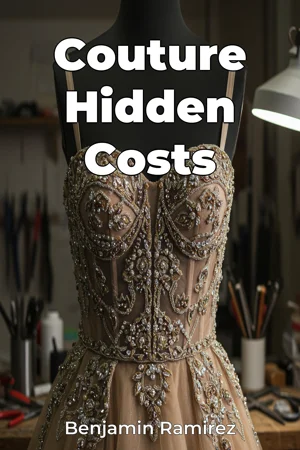
Ever wondered why a single haute couture garment can cost as much as a luxury car or a small house? "Couture Hidden Costs" delves into this fascinating and opaque world to reveal the intricate web of factors that contribute to the high price tags and the economic realities that allow this unique industry to persist. This book examines the financial underpinnings of haute couture, exploring not just the obvious costs of materials and labor, but also the hidden expenses related to design, marketing, maintaining exclusivity, and the very specific business models that allow couture houses to survive. The book revolves around three key areas: the economic structures that define haute couture, the societal perceptions and historical context that support its existence, and the intense creative process involved in the design and production of exclusive garments. Why does haute couture continue to exist in an era of mass-produced, readily available fashion? It's a question of more than just luxury; it touches on issues of artistry, heritage, and the psychology of exclusivity. To understand haute couture, one needs to consider its historical roots in 19th-century Paris, where it was conceived to cater to an exclusive clientele. Its modern form is heavily regulated, only available to a select few houses recognized by the Chambre Syndicale de la Haute Couture. We explore how this historical legacy shapes the current industry, influencing everything from design practices to marketing strategies. Prior knowledge of fashion history, basic economics, and marketing principles will be advantageous, but not essential, as the book provides foundational explanations where needed. The central argument of "Couture Hidden Costs" is that the seemingly exorbitant prices of haute couture are not merely a result of expensive materials and labor, but a reflection of the significant investments in brand prestige, skilled craftsmanship, and a carefully cultivated system of exclusivity that extends far beyond the production of individual garments. Critically, by understanding the unique economics of couture, we gain insights into the broader dynamics of luxury markets and aspirational consumption. The book is structured to progressively unveil the inner workings of haute couture. Initially describing the evolution of haute couture, the book then examines the economic mechanisms that support it, including how couture houses leverage ready-to-wear lines, fragrances, and accessories to offset the costs of their couture operations. Major points include detailed explorations of the costs associated with maintaining a Parisian atelier, the role of skilled artisans and their specialized knowledge, and the impact of celebrity endorsements and fashion shows on brand valuation. Culminating in an analysis of the future of haute couture in a rapidly changing global economy, the book also examines the practical implications of these economic realities, considering how designers, business strategists, and even consumers can learn from the haute couture model. The arguments presented are supported by extensive research, including financial analyses of leading couture houses, interviews with designers and industry professionals, and case studies of successful (and unsuccessful) couture ventures. The book also draws on publicly available data on luxury goods sales and consumer behavior. The book makes interdisciplinary connections, linking design with business strategy, cultural history, and economics. The design aspect focuses on the creative labor and aesthetic choices that define couture, while the business strategy aspects highlight the mechanisms through which couture houses generate revenue and maintain their brand image. Historically, the book examines haute couture's origins and its connection to societal trends and norms, and economically, it provides rigorous analyses of the cost structures and revenue streams of the industry. "Couture Hidden Costs" provides a novel perspective by deconstructing the myth surrounding haute couture, stripping away the glamour to reveal the underlying economic realities. The tone is analytical yet accessible, aiming to inform and engage readers without overwhelming them with technical jargon. The target audience includes students of fashion design, business, and marketing, as well as luxury brand managers, fashion enthusiasts, and anyone curious about the economics of exclusive industries. This book will provide readers with a deeper understanding of the high fashion world, debunk some popularly held ideas, and offer a framework for analyzing other luxury markets. The book adheres to the conventions of non-fiction, providing evidence-based analysis and clear, concise writing. The scope of the book is limited to the economic and business aspects of haute couture, focusing primarily on the established houses within the French system. While it acknowledges related areas such as ready-to-wear and streetwear, the in-depth focus remains on the exclusive realm of haute couture. The information presented has real-world applications for designers seeking to understand the business side of fashion, for marketers looking to create effective strategies for luxury brands, and for business analysts seeking to understand the dynamics of high-end markets. Examining the economic realities behind fashion's most luxurious offerings provides lessons in brand management, cost control, and the power of exclusivity. The book addresses ongoing debates within the fashion world, such as critiques about inclusivity, ethical sourcing, and sustainability. It addresses these controversies by examining the financial trade-offs and strategic decisions that couture houses must make in light of these concerns.
Ever wondered why a single haute couture garment can cost as much as a luxury car or a small house? "Couture Hidden Costs" delves into this fascinating and opaque world to reveal the intricate web of factors that contribute to the high price tags and the economic realities that allow this unique industry to persist. This book examines the financial underpinnings of haute couture, exploring not just the obvious costs of materials and labor, but also the hidden expenses related to design, marketing, maintaining exclusivity, and the very specific business models that allow couture houses to survive. The book revolves around three key areas: the economic structures that define haute couture, the societal perceptions and historical context that support its existence, and the intense creative process involved in the design and production of exclusive garments. Why does haute couture continue to exist in an era of mass-produced, readily available fashion? It's a question of more than just luxury; it touches on issues of artistry, heritage, and the psychology of exclusivity. To understand haute couture, one needs to consider its historical roots in 19th-century Paris, where it was conceived to cater to an exclusive clientele. Its modern form is heavily regulated, only available to a select few houses recognized by the Chambre Syndicale de la Haute Couture. We explore how this historical legacy shapes the current industry, influencing everything from design practices to marketing strategies. Prior knowledge of fashion history, basic economics, and marketing principles will be advantageous, but not essential, as the book provides foundational explanations where needed. The central argument of "Couture Hidden Costs" is that the seemingly exorbitant prices of haute couture are not merely a result of expensive materials and labor, but a reflection of the significant investments in brand prestige, skilled craftsmanship, and a carefully cultivated system of exclusivity that extends far beyond the production of individual garments. Critically, by understanding the unique economics of couture, we gain insights into the broader dynamics of luxury markets and aspirational consumption. The book is structured to progressively unveil the inner workings of haute couture. Initially describing the evolution of haute couture, the book then examines the economic mechanisms that support it, including how couture houses leverage ready-to-wear lines, fragrances, and accessories to offset the costs of their couture operations. Major points include detailed explorations of the costs associated with maintaining a Parisian atelier, the role of skilled artisans and their specialized knowledge, and the impact of celebrity endorsements and fashion shows on brand valuation. Culminating in an analysis of the future of haute couture in a rapidly changing global economy, the book also examines the practical implications of these economic realities, considering how designers, business strategists, and even consumers can learn from the haute couture model. The arguments presented are supported by extensive research, including financial analyses of leading couture houses, interviews with designers and industry professionals, and case studies of successful (and unsuccessful) couture ventures. The book also draws on publicly available data on luxury goods sales and consumer behavior. The book makes interdisciplinary connections, linking design with business strategy, cultural history, and economics. The design aspect focuses on the creative labor and aesthetic choices that define couture, while the business strategy aspects highlight the mechanisms through which couture houses generate revenue and maintain their brand image. Historically, the book examines haute couture's origins and its connection to societal trends and norms, and economically, it provides rigorous analyses of the cost structures and revenue streams of the industry. "Couture Hidden Costs" provides a novel perspective by deconstructing the myth surrounding haute couture, stripping away the glamour to reveal the underlying economic realities. The tone is analytical yet accessible, aiming to inform and engage readers without overwhelming them with technical jargon. The target audience includes students of fashion design, business, and marketing, as well as luxury brand managers, fashion enthusiasts, and anyone curious about the economics of exclusive industries. This book will provide readers with a deeper understanding of the high fashion world, debunk some popularly held ideas, and offer a framework for analyzing other luxury markets. The book adheres to the conventions of non-fiction, providing evidence-based analysis and clear, concise writing. The scope of the book is limited to the economic and business aspects of haute couture, focusing primarily on the established houses within the French system. While it acknowledges related areas such as ready-to-wear and streetwear, the in-depth focus remains on the exclusive realm of haute couture. The information presented has real-world applications for designers seeking to understand the business side of fashion, for marketers looking to create effective strategies for luxury brands, and for business analysts seeking to understand the dynamics of high-end markets. Examining the economic realities behind fashion's most luxurious offerings provides lessons in brand management, cost control, and the power of exclusivity. The book addresses ongoing debates within the fashion world, such as critiques about inclusivity, ethical sourcing, and sustainability. It addresses these controversies by examining the financial trade-offs and strategic decisions that couture houses must make in light of these concerns.
"Couture Hidden Costs" demystifies the exclusive world of haute couture, revealing the complex financial infrastructure that supports garments costing as much as luxury cars. Beyond the obvious expenses of materials and labor, the book illuminates the hidden costs associated with design, marketing, and maintaining the brand prestige essential for survival in this unique industry. Did you know that haute couture's roots trace back to 19th-century Paris, and that modern couture houses are heavily regulated by the Chambre Syndicale de la Haute Couture? This book uniquely blends design, business strategy, fashion history, and economic analysis to dissect the haute couture business model. The book argues that haute couture's exorbitant prices reflect substantial investments in skilled craftsmanship and exclusivity, extending far beyond garment production. It explains how couture houses leverage ready-to-wear lines and other products to offset costs. Progressing from haute couture's origins to its economic mechanisms, the book explores maintaining Parisian ateliers, the role of artisans, and the impact of celebrity endorsements. It culminates with an analysis of haute couture's future, offering insights applicable to luxury markets and aspirational consumption.
Book Details
ISBN
9788235216328
Publisher
Publifye AS
Your Licenses
You don't own any licenses for this book
Purchase a license below to unlock this book and download the EPUB.
Purchase License
Select a tier to unlock this book
Need bulk licensing?
Contact us for enterprise agreements.