
About This Book
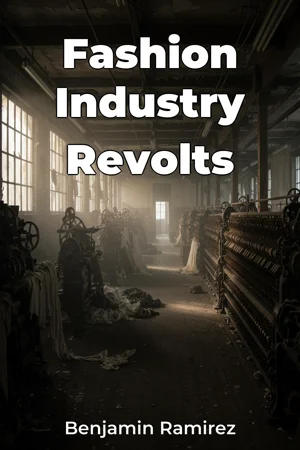
Has the fashion industry ever truly been revolutionized, or has it merely evolved through a series of calculated shifts? "Fashion Industry Revolts" explores significant moments of dissent, protest, and upheaval that have shaped the industry. This book examines not just stylistic changes, but also the social, economic, and political pressures that catalyzed these moments. The main topics addressed are the large-scale protests led by garment workers, the impact of counter-cultural movements on fashion trends, and the slow but persistent push for sustainable and ethical practices within the fashion industry. These topics are significant because they reveal the power dynamics at play in the creation, distribution, and consumption of fashion, and expose the complex interplay between aesthetics and ethics. This book provides a comprehensive understanding of fashion history beyond runway shows and designer biographies. It situates fashion within broader historical contexts, examining how events like the Industrial Revolution, the World Wars, and the rise of globalization have directly influenced clothing styles, production methods, and labor practices. Familiarity with basic economic principles and a general understanding of 20th and 21st-century social movements will enhance the reader's appreciation of the material. The central argument of "Fashion Industry Revolts" is that genuine change in the fashion industry arises not solely from designers' visions, but from collective action and the persistent challenging of established norms. This argument is important because it shifts the focus from individual genius to the collective power of workers, activists, and consumers, providing a more accurate and empowering understanding of how the fashion world can be reshaped. The book begins by laying the groundwork with an introduction to key concepts like fast fashion, planned obsolescence, and the historical roots of labor exploitation in the garment industry. It then develops its argument through three major sections. First, it analyzes historical protests and strikes by garment workers, from the early 20th century to contemporary movements for fair wages and safe working conditions. Second, it examines how counter-cultural movements, such as punk, grunge, and hip-hop, challenged mainstream fashion ideals and promoted alternative aesthetics that reflected social and political rebellion. Third, the book investigates the rise of sustainable and ethical fashion movements, exploring the challenges and successes of efforts to reduce the industry's environmental impact and promote fair labor practices. The book culminates by examining the practical implications of these "revolts," exploring how consumers, designers, and policymakers can contribute to a more just and sustainable fashion system. The book's arguments are supported by a range of evidence, including archival research of historical documents, analysis of primary source materials such as protest posters and manifestos, and case studies of specific fashion brands and activist campaigns. It also draws on interviews with fashion historians, designers, and activists currently working to transform the industry. "Fashion Industry Revolts" connects to other fields such as labor history, sociology, and environmental studies. By examining the fashion industry through the lens of labor history, the book reveals the parallels between garment worker struggles and broader movements for workers' rights. Connecting to sociology, the book explores how fashion reflects and reinforces social inequalities related to class, race, and gender. By connecting with environmental studies, the book highlights the devastating environmental consequences of fast fashion and the urgent need for sustainable alternatives. This book's unique approach lies in its focus on collective action and bottom-up change, rather than solely on the influence of individual designers or brands. It challenges the conventional narrative of fashion history by prioritizing the voices and experiences of those who have been marginalized or exploited by the industry. The book is written in a clear and accessible style, suitable for students, fashion enthusiasts, and anyone interested in social change. It avoids jargon and technical terms, providing clear explanations of complex concepts and historical events. The book aims to engage the reader with compelling storytelling and vivid examples, while maintaining a rigorous commitment to accuracy and objectivity. The target audience includes students of fashion design, fashion history, and cultural studies, as well as consumers interested in making more informed and ethical purchasing decisions. This book offers valuable inspiration and practical strategies for anyone seeking to create positive change in the fashion industry. As a work of non-fiction, "Fashion Industry Revolts" adheres to the standards of academic integrity and presents well-researched and verifiable information. The scope of the book is intentionally broad, covering a wide range of historical periods, geographical locations, and social movements. However, it does not attempt to provide an exhaustive account of every fashion-related protest or innovation. Rather, it focuses on the most significant and representative examples, aiming to provide a coherent and compelling narrative of change. Readers can apply the information in this book by supporting ethical and sustainable brands, advocating for fair labor practices, and challenging the culture of overconsumption that drives the fast fashion industry. The book aims to empower readers to become active participants in shaping a more just and sustainable fashion future. The book addresses ongoing debates about the effectiveness of different strategies for promoting ethical and sustainable fashion. It acknowledges the complexities and challenges involved in transforming a global industry with deeply entrenched power structures and conflicting interests.
Has the fashion industry ever truly been revolutionized, or has it merely evolved through a series of calculated shifts? "Fashion Industry Revolts" explores significant moments of dissent, protest, and upheaval that have shaped the industry. This book examines not just stylistic changes, but also the social, economic, and political pressures that catalyzed these moments. The main topics addressed are the large-scale protests led by garment workers, the impact of counter-cultural movements on fashion trends, and the slow but persistent push for sustainable and ethical practices within the fashion industry. These topics are significant because they reveal the power dynamics at play in the creation, distribution, and consumption of fashion, and expose the complex interplay between aesthetics and ethics. This book provides a comprehensive understanding of fashion history beyond runway shows and designer biographies. It situates fashion within broader historical contexts, examining how events like the Industrial Revolution, the World Wars, and the rise of globalization have directly influenced clothing styles, production methods, and labor practices. Familiarity with basic economic principles and a general understanding of 20th and 21st-century social movements will enhance the reader's appreciation of the material. The central argument of "Fashion Industry Revolts" is that genuine change in the fashion industry arises not solely from designers' visions, but from collective action and the persistent challenging of established norms. This argument is important because it shifts the focus from individual genius to the collective power of workers, activists, and consumers, providing a more accurate and empowering understanding of how the fashion world can be reshaped. The book begins by laying the groundwork with an introduction to key concepts like fast fashion, planned obsolescence, and the historical roots of labor exploitation in the garment industry. It then develops its argument through three major sections. First, it analyzes historical protests and strikes by garment workers, from the early 20th century to contemporary movements for fair wages and safe working conditions. Second, it examines how counter-cultural movements, such as punk, grunge, and hip-hop, challenged mainstream fashion ideals and promoted alternative aesthetics that reflected social and political rebellion. Third, the book investigates the rise of sustainable and ethical fashion movements, exploring the challenges and successes of efforts to reduce the industry's environmental impact and promote fair labor practices. The book culminates by examining the practical implications of these "revolts," exploring how consumers, designers, and policymakers can contribute to a more just and sustainable fashion system. The book's arguments are supported by a range of evidence, including archival research of historical documents, analysis of primary source materials such as protest posters and manifestos, and case studies of specific fashion brands and activist campaigns. It also draws on interviews with fashion historians, designers, and activists currently working to transform the industry. "Fashion Industry Revolts" connects to other fields such as labor history, sociology, and environmental studies. By examining the fashion industry through the lens of labor history, the book reveals the parallels between garment worker struggles and broader movements for workers' rights. Connecting to sociology, the book explores how fashion reflects and reinforces social inequalities related to class, race, and gender. By connecting with environmental studies, the book highlights the devastating environmental consequences of fast fashion and the urgent need for sustainable alternatives. This book's unique approach lies in its focus on collective action and bottom-up change, rather than solely on the influence of individual designers or brands. It challenges the conventional narrative of fashion history by prioritizing the voices and experiences of those who have been marginalized or exploited by the industry. The book is written in a clear and accessible style, suitable for students, fashion enthusiasts, and anyone interested in social change. It avoids jargon and technical terms, providing clear explanations of complex concepts and historical events. The book aims to engage the reader with compelling storytelling and vivid examples, while maintaining a rigorous commitment to accuracy and objectivity. The target audience includes students of fashion design, fashion history, and cultural studies, as well as consumers interested in making more informed and ethical purchasing decisions. This book offers valuable inspiration and practical strategies for anyone seeking to create positive change in the fashion industry. As a work of non-fiction, "Fashion Industry Revolts" adheres to the standards of academic integrity and presents well-researched and verifiable information. The scope of the book is intentionally broad, covering a wide range of historical periods, geographical locations, and social movements. However, it does not attempt to provide an exhaustive account of every fashion-related protest or innovation. Rather, it focuses on the most significant and representative examples, aiming to provide a coherent and compelling narrative of change. Readers can apply the information in this book by supporting ethical and sustainable brands, advocating for fair labor practices, and challenging the culture of overconsumption that drives the fast fashion industry. The book aims to empower readers to become active participants in shaping a more just and sustainable fashion future. The book addresses ongoing debates about the effectiveness of different strategies for promoting ethical and sustainable fashion. It acknowledges the complexities and challenges involved in transforming a global industry with deeply entrenched power structures and conflicting interests.
"Fashion Industry Revolts" uncovers the untold stories of dissent and upheaval that have shaped the fashion industry. Examining moments of protest, the book reveals how garment workers, counter-cultural movements, and advocates for ethical fashion have challenged the status quo. Did you know that the Industrial Revolution significantly impacted clothing styles and labor practices? Or that movements like punk rock directly influenced alternative aesthetics and social rebellion in fashion? This book offers a fresh perspective on fashion history, moving beyond designer biographies to explore the broader social, economic, and political forces at play. The book's unique value lies in its focus on collective action and bottom-up change, rather than solely on individual designers. It begins by introducing key concepts like fast fashion and labor exploitation. Then, it progresses through historical protests by garment workers, the impact of counter-cultural movements, and the rise of sustainable fashion. Drawing on archival research, primary sources, and interviews, it demonstrates that genuine change arises from challenging established norms. Ultimately, "Fashion Industry Revolts" connects fashion to labor history, sociology, and environmental studies, empowering readers to become active participants in creating a more just and sustainable fashion future. By understanding the revolts that have already occurred, consumers, designers, and policymakers can contribute to positive change within the fashion industry.
Book Details
ISBN
9788235216236
Publisher
Publifye AS
Your Licenses
You don't own any licenses for this book
Purchase a license below to unlock this book and download the EPUB.
Purchase License
Select a tier to unlock this book
Need bulk licensing?
Contact us for enterprise agreements.