
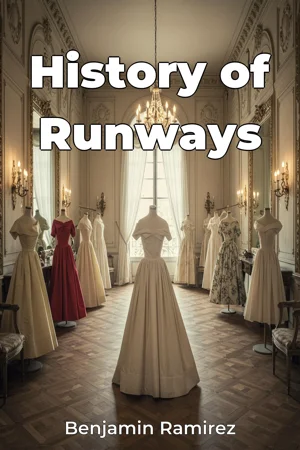
About This Book
How did the fashion show transform from an exclusive gathering for the elite to a global media phenomenon influencing trends worldwide? "History of Runways" examines this evolution, charting the trajectory of fashion shows from their obscure origins to their current status as integral components of the fashion industry and popular culture. This book explores the key elements that shaped the modern runway presentation, including the shifting dynamics of audience, the evolving role of designers, and the impact of technological advancements. The central argument posits that fashion shows are not merely platforms for displaying clothes; they are carefully constructed narratives that reflect and shape societal values, economic forces, and artistic expression. This argument is significant because it provides a lens through which to understand the multifaceted nature of fashion and its influence on culture. The book begins by establishing the historical context of early fashion presentations in private salons and ateliers, emphasizing figures like Charles Worth, whose vision laid the groundwork for organized fashion displays. Subsequently, it traces the development of runway shows through the 20th and 21st centuries, highlighting significant shifts in format, location, and purpose. Key chapters focus on the rise of ready-to-wear collections, the influence of celebrity culture, and the impact of globalization on runway aesthetics. The narrative culminates in an analysis of contemporary fashion shows as multimedia spectacles, examining the role of digital media, live streaming, and social media in democratizing and amplifying the reach of these events. Supporting this analysis is a diverse range of evidence, including archival photographs, historical accounts, and industry interviews. The book draws upon primary documents such as designer sketches, show invitations, and reviews from fashion publications to provide a detailed and nuanced understanding of runway history. Furthermore, it analyzes the economic data related to fashion show production, marketing, and sales to illustrate their financial significance. "History of Runways" also explores the interdisciplinary connections between fashion, art history, sociology, and economics. The book explores how fashion shows function as performance art, reflecting broader cultural trends and anxieties. It examines the sociological aspects of audience behavior and its impact on trend adoption. The economic implications of fashion weeks and their influence on consumer behavior are examined. A unique aspect of this book is its focus on the experiential elements of fashion shows. It analyzes the ways in which designers employ staging, music, and lighting to create immersive environments that evoke specific emotions and convey brand identity. It examines how fashion shows are constructed beyond the garments presented. Written in an accessible and engaging style, "History of Runways" appeals to a diverse audience, including fashion students, industry professionals, and anyone with an interest in the history and cultural significance of fashion. The book will provide valuable insights for designers seeking to understand the historical precedents of their craft, marketers aiming to leverage runway shows for brand building, and cultural critics interested in the broader implications of fashion as a form of social expression. While the book provides a comprehensive overview of runway history, it primarily focuses on the Western fashion tradition, acknowledging the need for further research into the contributions of designers and fashion weeks in non-Western contexts. The insights provided can be used for a range of real-world applications, including the design and production of fashion shows, the development of marketing strategies, and the analysis of fashion trends. Finally, the book acknowledges ongoing debates surrounding issues of inclusivity, sustainability, and ethical labor practices within the fashion industry, and examines how these debates are reflected in the evolving landscape of runway presentations.
How did the fashion show transform from an exclusive gathering for the elite to a global media phenomenon influencing trends worldwide? "History of Runways" examines this evolution, charting the trajectory of fashion shows from their obscure origins to their current status as integral components of the fashion industry and popular culture. This book explores the key elements that shaped the modern runway presentation, including the shifting dynamics of audience, the evolving role of designers, and the impact of technological advancements. The central argument posits that fashion shows are not merely platforms for displaying clothes; they are carefully constructed narratives that reflect and shape societal values, economic forces, and artistic expression. This argument is significant because it provides a lens through which to understand the multifaceted nature of fashion and its influence on culture. The book begins by establishing the historical context of early fashion presentations in private salons and ateliers, emphasizing figures like Charles Worth, whose vision laid the groundwork for organized fashion displays. Subsequently, it traces the development of runway shows through the 20th and 21st centuries, highlighting significant shifts in format, location, and purpose. Key chapters focus on the rise of ready-to-wear collections, the influence of celebrity culture, and the impact of globalization on runway aesthetics. The narrative culminates in an analysis of contemporary fashion shows as multimedia spectacles, examining the role of digital media, live streaming, and social media in democratizing and amplifying the reach of these events. Supporting this analysis is a diverse range of evidence, including archival photographs, historical accounts, and industry interviews. The book draws upon primary documents such as designer sketches, show invitations, and reviews from fashion publications to provide a detailed and nuanced understanding of runway history. Furthermore, it analyzes the economic data related to fashion show production, marketing, and sales to illustrate their financial significance. "History of Runways" also explores the interdisciplinary connections between fashion, art history, sociology, and economics. The book explores how fashion shows function as performance art, reflecting broader cultural trends and anxieties. It examines the sociological aspects of audience behavior and its impact on trend adoption. The economic implications of fashion weeks and their influence on consumer behavior are examined. A unique aspect of this book is its focus on the experiential elements of fashion shows. It analyzes the ways in which designers employ staging, music, and lighting to create immersive environments that evoke specific emotions and convey brand identity. It examines how fashion shows are constructed beyond the garments presented. Written in an accessible and engaging style, "History of Runways" appeals to a diverse audience, including fashion students, industry professionals, and anyone with an interest in the history and cultural significance of fashion. The book will provide valuable insights for designers seeking to understand the historical precedents of their craft, marketers aiming to leverage runway shows for brand building, and cultural critics interested in the broader implications of fashion as a form of social expression. While the book provides a comprehensive overview of runway history, it primarily focuses on the Western fashion tradition, acknowledging the need for further research into the contributions of designers and fashion weeks in non-Western contexts. The insights provided can be used for a range of real-world applications, including the design and production of fashion shows, the development of marketing strategies, and the analysis of fashion trends. Finally, the book acknowledges ongoing debates surrounding issues of inclusivity, sustainability, and ethical labor practices within the fashion industry, and examines how these debates are reflected in the evolving landscape of runway presentations.
"History of Runways" explores how fashion shows evolved from exclusive gatherings to global media events, shaping fashion trends and reflecting societal values. The book argues that runways are more than just platforms for displaying clothes; they are carefully constructed narratives. For instance, early fashion presentations in private salons, spearheaded by figures like Charles Worth, laid the groundwork for organized fashion displays. This evolution involved shifts in audience dynamics, designer roles, and technological impacts, including the rise of ready-to-wear and celebrity culture. The book traces the development of runway shows through the 20th and 21st centuries, highlighting the impact of globalization and digital media. Contemporary fashion shows are analyzed as multimedia spectacles, using digital media, live streaming, and social media to amplify their reach. The book uses archival photographs, historical accounts, and industry interviews to provide a nuanced understanding of runway history. It uniquely focuses on the experiential elements of fashion shows, examining how designers employ staging, music, and lighting to create immersive environments. The book progresses chronologically, beginning with the historical context of early fashion presentations and culminating in an analysis of contemporary fashion shows. This approach offers valuable insights for designers, marketers, and cultural critics, making it a significant contribution to design history and fashion culture.
Book Details
ISBN
9788235216090
Publisher
Publifye AS
Your Licenses
You don't own any licenses for this book
Purchase a license below to unlock this book and download the EPUB.
Purchase License
Select a tier to unlock this book
Need bulk licensing?
Contact us for enterprise agreements.