
About This Book
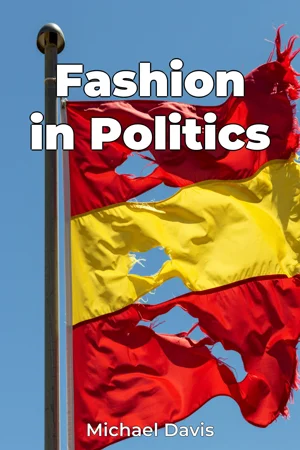
Can a dress code truly change the course of history, or a specific color become a symbol of revolution? This book, *Fashion in Politics*, delves into the multifaceted relationship between fashion and power, revealing how clothing has served not merely as adornment but as a potent instrument for political messaging and social activism across eras and cultures. This exploration focuses primarily on three key areas: first, the deliberate use of fashion by political figures to cultivate a specific image and communicate ideologies. Second, the adoption of particular styles by social movements to express solidarity, resistance, and collective identity. Third, the ways in which fashion trends reflect and reinforce existing power structures, or challenge them through subversion and innovation. Understanding these dynamics is crucial for anyone seeking to decipher the visual language of politics and its impact on public perception. Historically, fashion has always been intertwined with social status and authority. From the sumptuary laws of ancient civilizations to the elaborate court attire of European monarchies, clothing has visually demarcated hierarchies and reinforced social order. However, this book moves beyond a simple study of elite fashion to examine how marginalized groups have strategically employed clothing to challenge dominant narratives and demand social change. The central argument of *Fashion in Politics* is that clothing acts as a nonverbal form of political discourse, capable of conveying complex ideas, uniting diverse groups, and challenging the status quo. This argument is significant because it highlights the agency of individuals and communities in shaping political narratives through everyday choices, moving beyond traditional analyses of political rhetoric and policy. The book is structured to provide a comprehensive overview of this dynamic relationship. It begins by introducing the theoretical framework for understanding fashion as a form of political communication, drawing upon semiotics, sociology, and cultural studies. The subsequent sections explore specific historical case studies, examining how fashion has been deployed in various political contexts: the French Revolution, the Suffragette movement, the Civil Rights era, and contemporary protest movements. Each case study analyzes the specific sartorial choices made by individuals and groups, decoding the messages they conveyed and assessing their impact on public opinion and political outcomes. The book culminates in an analysis of the current landscape, exploring the role of social media and globalization in amplifying the political significance of fashion. The evidence presented includes visual analyses of clothing and accessories, historical documents such as photographs, posters, and newspaper articles, and first-hand accounts from participants in social movements. The research methodology combines historical analysis with contemporary approaches to visual culture, providing a rich and nuanced understanding of the subject. *Fashion in Politics* draws connections to several related fields, including history, sociology, and art history. By examining fashion through a political lens, the book offers a unique perspective that complements existing scholarship in these areas. Furthermore, the book contributes to the broader field of communication studies by highlighting the importance of nonverbal communication in shaping political discourse. A unique aspect of this book is its emphasis on the agency of ordinary individuals in using fashion to express their political beliefs. While acknowledging the influence of designers and trends, it focuses on how people adapt and subvert these elements to create their own forms of political expression. The tone of the book is academic yet accessible, aiming to engage both scholars and general readers interested in the intersection of fashion and politics. The target audience includes students and researchers in political science, sociology, fashion studies, and history, as well as anyone interested in the role of visual culture in shaping social and political change. This book would be valuable to readers seeking a deeper understanding of the hidden messages embedded in everyday clothing and the power of fashion to challenge the status quo. As a work of social science, *Fashion in Politics* adheres to the principles of objectivity and evidence-based analysis. While acknowledging the subjective nature of fashion and aesthetics, the book focuses on the verifiable impact of clothing on political discourse and social movements. The scope of the book is broad, encompassing a wide range of historical periods and geographical locations. However, it is limited by its focus on Western fashion traditions and its inability to provide an exhaustive analysis of every political movement. The information in this book can be practically applied by readers seeking to better understand the visual cues that shape political discourse and social interactions. By learning to decode the messages embedded in clothing, readers can become more discerning consumers of information and more effective communicators of their own political beliefs. The book also addresses ongoing debates about the commodification of political activism and the appropriation of cultural symbols by mainstream fashion. It seeks to provide a nuanced perspective on these issues, acknowledging the potential for both empowerment and exploitation in the relationship between fashion and politics.
Can a dress code truly change the course of history, or a specific color become a symbol of revolution? This book, *Fashion in Politics*, delves into the multifaceted relationship between fashion and power, revealing how clothing has served not merely as adornment but as a potent instrument for political messaging and social activism across eras and cultures. This exploration focuses primarily on three key areas: first, the deliberate use of fashion by political figures to cultivate a specific image and communicate ideologies. Second, the adoption of particular styles by social movements to express solidarity, resistance, and collective identity. Third, the ways in which fashion trends reflect and reinforce existing power structures, or challenge them through subversion and innovation. Understanding these dynamics is crucial for anyone seeking to decipher the visual language of politics and its impact on public perception. Historically, fashion has always been intertwined with social status and authority. From the sumptuary laws of ancient civilizations to the elaborate court attire of European monarchies, clothing has visually demarcated hierarchies and reinforced social order. However, this book moves beyond a simple study of elite fashion to examine how marginalized groups have strategically employed clothing to challenge dominant narratives and demand social change. The central argument of *Fashion in Politics* is that clothing acts as a nonverbal form of political discourse, capable of conveying complex ideas, uniting diverse groups, and challenging the status quo. This argument is significant because it highlights the agency of individuals and communities in shaping political narratives through everyday choices, moving beyond traditional analyses of political rhetoric and policy. The book is structured to provide a comprehensive overview of this dynamic relationship. It begins by introducing the theoretical framework for understanding fashion as a form of political communication, drawing upon semiotics, sociology, and cultural studies. The subsequent sections explore specific historical case studies, examining how fashion has been deployed in various political contexts: the French Revolution, the Suffragette movement, the Civil Rights era, and contemporary protest movements. Each case study analyzes the specific sartorial choices made by individuals and groups, decoding the messages they conveyed and assessing their impact on public opinion and political outcomes. The book culminates in an analysis of the current landscape, exploring the role of social media and globalization in amplifying the political significance of fashion. The evidence presented includes visual analyses of clothing and accessories, historical documents such as photographs, posters, and newspaper articles, and first-hand accounts from participants in social movements. The research methodology combines historical analysis with contemporary approaches to visual culture, providing a rich and nuanced understanding of the subject. *Fashion in Politics* draws connections to several related fields, including history, sociology, and art history. By examining fashion through a political lens, the book offers a unique perspective that complements existing scholarship in these areas. Furthermore, the book contributes to the broader field of communication studies by highlighting the importance of nonverbal communication in shaping political discourse. A unique aspect of this book is its emphasis on the agency of ordinary individuals in using fashion to express their political beliefs. While acknowledging the influence of designers and trends, it focuses on how people adapt and subvert these elements to create their own forms of political expression. The tone of the book is academic yet accessible, aiming to engage both scholars and general readers interested in the intersection of fashion and politics. The target audience includes students and researchers in political science, sociology, fashion studies, and history, as well as anyone interested in the role of visual culture in shaping social and political change. This book would be valuable to readers seeking a deeper understanding of the hidden messages embedded in everyday clothing and the power of fashion to challenge the status quo. As a work of social science, *Fashion in Politics* adheres to the principles of objectivity and evidence-based analysis. While acknowledging the subjective nature of fashion and aesthetics, the book focuses on the verifiable impact of clothing on political discourse and social movements. The scope of the book is broad, encompassing a wide range of historical periods and geographical locations. However, it is limited by its focus on Western fashion traditions and its inability to provide an exhaustive analysis of every political movement. The information in this book can be practically applied by readers seeking to better understand the visual cues that shape political discourse and social interactions. By learning to decode the messages embedded in clothing, readers can become more discerning consumers of information and more effective communicators of their own political beliefs. The book also addresses ongoing debates about the commodification of political activism and the appropriation of cultural symbols by mainstream fashion. It seeks to provide a nuanced perspective on these issues, acknowledging the potential for both empowerment and exploitation in the relationship between fashion and politics.
"Fashion in Politics" explores the powerful connection between clothing and political expression, revealing how fashion serves as a potent tool for communication, activism, and challenging established power structures. The book argues that clothing functions as a nonverbal form of political discourse, capable of conveying complex ideas and uniting diverse groups. Intriguingly, fashion choices have historically demarcated social hierarchies, from ancient sumptuary laws to elaborate royal attire. Moreover, marginalized groups have strategically used clothing to defy dominant narratives and demand social change, demonstrating the agency individuals possess in shaping political discourse through everyday sartorial choices. The book approaches this dynamic relationship by first establishing a theoretical framework, drawing from semiotics, sociology, and cultural studies. It then delves into historical case studies, such as the French Revolution and the Suffragette movement, analyzing specific sartorial choices and their impact on public opinion. Visual analyses, historical documents, and firsthand accounts support the book's arguments. Ultimately, "Fashion in Politics" culminates in an examination of social media's role in amplifying the political significance of fashion, offering readers a deeper understanding of visual cues in political discourse.
Book Details
ISBN
9788235216052
Publisher
Publifye AS
Your Licenses
You don't own any licenses for this book
Purchase a license below to unlock this book and download the EPUB.
Purchase License
Select a tier to unlock this book
Need bulk licensing?
Contact us for enterprise agreements.