
About This Book
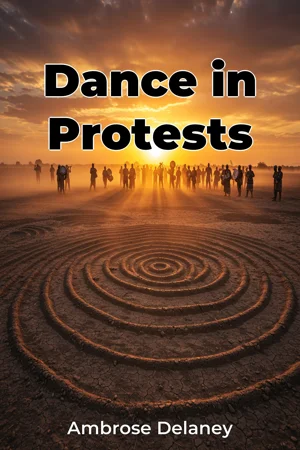
Can movement truly change the world? "Dance in Protests" explores the potent and often overlooked role of dance as a form of resistance and activism throughout history. It examines how embodied expression has served as a powerful tool for marginalized communities and political movements to challenge oppressive systems, voice dissent, and foster solidarity. This book argues that dance is not merely a form of artistic expression, but a vital mode of communication, community building, and political action. The book focuses on three central themes: dance as a means of reclaiming cultural identity and challenging dominant narratives, dance as a tool for mobilizing collective action and building community, and dance as a form of embodied protest that directly confronts power structures. These themes are important because they highlight the agency of individuals and groups who have historically been excluded from traditional political processes. To understand the significance of dance in protests, the book provides a historical context, tracing the use of movement in resistance from ancient rituals to contemporary social movements. It acknowledges that dance is a culturally specific practice. "Dance in Protests" argues that dance provides an avenue for those without conventional power to speak truth to power and create alternative narratives through movement and rhythm. The book will demonstrate that dance allows participants to bypass traditional forms of communication and directly challenge dominant ideologies through symbolic gestures and collective embodiment. The book is structured in three parts. Part One introduces the theoretical framework, defining key concepts such as embodied protest, choreographies of resistance, and the politics of movement. It examines how dance operates as a form of symbolic action. Part Two presents case studies from different historical and geographical contexts, showcasing the diverse ways in which dance has been used in protests. These case studies will include examples from indigenous communities, labor movements, civil rights struggles, and environmental activism. Part Three analyzes the impact of dance on social and political change, exploring its role in shaping public opinion, fostering solidarity, and creating lasting social movements. The arguments are supported by historical accounts, ethnographic studies, and movement analysis. It draws upon archival materials, oral histories, and visual documentation of protests to reconstruct the embodied experiences of activists and participants. The book also incorporates perspectives from dance studies, performance studies, sociology, and political science. This book connects to other fields through its examination of the intersections between art and politics, exploring how cultural expression can serve as a catalyst for social change. It draws connections to sociology by studying the impact of collective action, performance studies through the lens of embodied action, and history by examining protest movements. "Dance in Protests" offers an innovative perspective by focusing on the agency of the body in political discourse. It moves beyond traditional analyses of protest that prioritize verbal and written communication, emphasizing the importance of nonverbal forms of expression, highlighting the unique contributions of dance to social and political movements. The book adopts an academic yet accessible tone, striving to present complex theoretical concepts in a clear and engaging manner. It seeks to bridge the gap between scholarly research and practical application. The target audience includes students and scholars in dance studies, performance studies, history, sociology, and political science, as well as activists, artists, and anyone interested in the intersection of art and social change. This book would be valuable because it provides a comprehensive overview of dance as a form of resistance and offers new insights into the power of embodied expression. As a work of non-fiction, "Dance in Protests" adheres to the conventions of academic scholarship, providing rigorous evidence and analysis to support its central arguments. It is limited in scope by its focus on dance as a form of protest, acknowledging that other forms of artistic expression also play a significant role in social and political movements. The information in this book can be applied practically by activists, artists, and educators who seek to incorporate dance into their work for social change. It offers strategies for using movement to build community, mobilize collective action, and challenge oppressive systems. While the use of dance in protests is often seen as a positive expression of dissent, some critics argue that it can be ineffective or even co-opted by power structures. The book acknowledges these debates and explores the complexities of using dance as a form of resistance.
Can movement truly change the world? "Dance in Protests" explores the potent and often overlooked role of dance as a form of resistance and activism throughout history. It examines how embodied expression has served as a powerful tool for marginalized communities and political movements to challenge oppressive systems, voice dissent, and foster solidarity. This book argues that dance is not merely a form of artistic expression, but a vital mode of communication, community building, and political action. The book focuses on three central themes: dance as a means of reclaiming cultural identity and challenging dominant narratives, dance as a tool for mobilizing collective action and building community, and dance as a form of embodied protest that directly confronts power structures. These themes are important because they highlight the agency of individuals and groups who have historically been excluded from traditional political processes. To understand the significance of dance in protests, the book provides a historical context, tracing the use of movement in resistance from ancient rituals to contemporary social movements. It acknowledges that dance is a culturally specific practice. "Dance in Protests" argues that dance provides an avenue for those without conventional power to speak truth to power and create alternative narratives through movement and rhythm. The book will demonstrate that dance allows participants to bypass traditional forms of communication and directly challenge dominant ideologies through symbolic gestures and collective embodiment. The book is structured in three parts. Part One introduces the theoretical framework, defining key concepts such as embodied protest, choreographies of resistance, and the politics of movement. It examines how dance operates as a form of symbolic action. Part Two presents case studies from different historical and geographical contexts, showcasing the diverse ways in which dance has been used in protests. These case studies will include examples from indigenous communities, labor movements, civil rights struggles, and environmental activism. Part Three analyzes the impact of dance on social and political change, exploring its role in shaping public opinion, fostering solidarity, and creating lasting social movements. The arguments are supported by historical accounts, ethnographic studies, and movement analysis. It draws upon archival materials, oral histories, and visual documentation of protests to reconstruct the embodied experiences of activists and participants. The book also incorporates perspectives from dance studies, performance studies, sociology, and political science. This book connects to other fields through its examination of the intersections between art and politics, exploring how cultural expression can serve as a catalyst for social change. It draws connections to sociology by studying the impact of collective action, performance studies through the lens of embodied action, and history by examining protest movements. "Dance in Protests" offers an innovative perspective by focusing on the agency of the body in political discourse. It moves beyond traditional analyses of protest that prioritize verbal and written communication, emphasizing the importance of nonverbal forms of expression, highlighting the unique contributions of dance to social and political movements. The book adopts an academic yet accessible tone, striving to present complex theoretical concepts in a clear and engaging manner. It seeks to bridge the gap between scholarly research and practical application. The target audience includes students and scholars in dance studies, performance studies, history, sociology, and political science, as well as activists, artists, and anyone interested in the intersection of art and social change. This book would be valuable because it provides a comprehensive overview of dance as a form of resistance and offers new insights into the power of embodied expression. As a work of non-fiction, "Dance in Protests" adheres to the conventions of academic scholarship, providing rigorous evidence and analysis to support its central arguments. It is limited in scope by its focus on dance as a form of protest, acknowledging that other forms of artistic expression also play a significant role in social and political movements. The information in this book can be applied practically by activists, artists, and educators who seek to incorporate dance into their work for social change. It offers strategies for using movement to build community, mobilize collective action, and challenge oppressive systems. While the use of dance in protests is often seen as a positive expression of dissent, some critics argue that it can be ineffective or even co-opted by power structures. The book acknowledges these debates and explores the complexities of using dance as a form of resistance.
"Dance in Protests" illuminates the dynamic relationship between dance, social movements, and political action, revealing how embodied expression acts as a potent tool for resistance. This exploration of dance history highlights its crucial role in challenging oppressive systems and fostering solidarity within marginalized communities. The book emphasizes that dance is more than just an art form; it's a vital means of communication and community building. Discover how dance serves as embodied protest, directly confronting power structures and enabling individuals to voice dissent through movement and rhythm. The book examines dance as a means of reclaiming cultural identity, mobilizing collective action, and challenging dominant narratives. For instance, the book highlights how indigenous communities have historically used dance to preserve their heritage and resist cultural assimilation. Structured in three parts, the book first introduces the theoretical framework before presenting diverse case studies from different historical and geographical contexts. Finally, it analyzes dance's impact on shaping public opinion and creating lasting social change. Through historical accounts, ethnographic studies, and movement analysis, "Dance in Protests" offers a comprehensive overview of dance as a form of resistance. It provides valuable insights for students, scholars, activists, and artists interested in the intersection of performing arts, history, and social change, emphasizing the unique contributions of dance to social and political movements.
Book Details
ISBN
9788235215925
Publisher
Publifye AS
Your Licenses
You don't own any licenses for this book
Purchase a license below to unlock this book and download the EPUB.
Purchase License
Select a tier to unlock this book
Need bulk licensing?
Contact us for enterprise agreements.