
About This Book
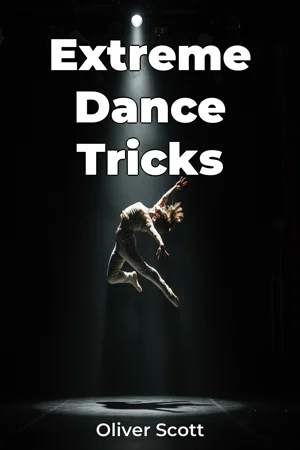
Have you ever wondered what pushes dancers to the absolute limits of human capability, risking life and limb for a breathtaking performance? "Extreme Dance Tricks" delves into the captivating world of high-risk choreography, exploring the most dangerous and technically demanding moves ever conceived. We examine not only the mechanics and artistry of these feats, but also the physical and mental fortitude required to execute them. This book will primarily explore the biomechanics of extreme dance, the evolution of risk-taking in performance, and the psychological factors driving dancers to attempt increasingly difficult maneuvers. These topics are crucial for understanding the dedication it takes to push boundaries in performing arts, and the very real dangers that lie beyond those limits. We will also explore the ethical considerations surrounding dangerous dance, particularly concerning the safety of performers. Understanding the development of dance technique, particularly in the 20th and 21st centuries, is critical to understanding what allows dancers to achieve these feats. Therefore, we will look at the history of dance training and the increasing specialization within different dance styles. No prior knowledge of dance is required, though a general appreciation for athleticism will enhance your understanding. The central argument of "Extreme Dance Tricks" posits that the pursuit of increasingly complex dance moves represents a significant evolution in human performance, driven by a complex interplay of artistic expression, athletic competition, and technological advancement. This progression presents both inspiring possibilities and inherent dangers that the dance community must confront responsibly. The book begins by defining "extreme dance," establishing a framework for analysis that incorporates difficulty, risk, and innovation (a). Next, we’ll move into case studies of specific extreme tricks across various dance genres, from ballet and contemporary to breakdancing and acrobatics. Here, the physics behind these moves is explained, utilizing diagrams and analysis of key muscle groups and movements (b). We then analyze the injuries associated with these tricks, drawing from medical studies and interviews with dancers and physicians, culminating in a discussion of safety protocols and preventative training methods(c). Finally, “Extreme Dance Tricks” will suggest ways of thinking about the future incorporating technological advances like motion capture feedback and augmented reality for safer training experiences. Evidence will be drawn from a range of sources, including kinesiological studies, analyses of dance notation and video recordings, interviews with dancers and choreographers, and reports from sports medicine journals. We will also utilize publicly available performance data and competition results to identify trends in extreme dance. "Extreme Dance Tricks” extends its reach by connecting to the fields of sports medicine, biomechanics, and psychology. Sports medicine informs the discussion concerning injury prevention and rehabilitation. Biomechanics provides the scientific framework for understanding the physical demands of these movements. Insights from psychology shed light on the mental processes and motivations of dancers pushing their limits. This book provides a never-before-seen perspective on the extreme end of dance – it is the first to catalog and scientifically analyze the most dangerous moves across various dance genres. It objectively analyzes risk versus reward in dance to suggest a more sustainable, healthy, and safe way forward for dancers. The tone is informative yet accessible, blending technical analysis with engaging storytelling. Complex concepts are explained in plain language to appeal to both dance professionals and casual enthusiasts. The ideal reader includes dancers and choreographers seeking to understand the risks and rewards of extreme choreography, sports medicine professionals interested in dance-related injuries, and dance enthusiasts curious about the limits of human performance. As a Performing Arts and Sports focused book, it's expected to include high-quality photographs and illustrations, detailed anatomical diagrams, and clear explanations of complex movements. The book will adhere to established principles of sports science and dance pedagogy. While the book aims to cover a broad range of dangerous dance tricks, it will focus primarily on those with established documentation and available data. It does not aim to be an exhaustive catalog of every possible extreme move, but rather a representative analysis of the genre. The information presented can be applied practically by dancers and choreographers to inform training and choreography decisions, by sports medicine professionals to improve injury prevention strategies, and by dance educators to promote safe and responsible training practices. The book will address the ongoing debate within the dance community regarding the balance between artistic expression and performer safety, exploring different perspectives on risk-taking in performance.
Have you ever wondered what pushes dancers to the absolute limits of human capability, risking life and limb for a breathtaking performance? "Extreme Dance Tricks" delves into the captivating world of high-risk choreography, exploring the most dangerous and technically demanding moves ever conceived. We examine not only the mechanics and artistry of these feats, but also the physical and mental fortitude required to execute them. This book will primarily explore the biomechanics of extreme dance, the evolution of risk-taking in performance, and the psychological factors driving dancers to attempt increasingly difficult maneuvers. These topics are crucial for understanding the dedication it takes to push boundaries in performing arts, and the very real dangers that lie beyond those limits. We will also explore the ethical considerations surrounding dangerous dance, particularly concerning the safety of performers. Understanding the development of dance technique, particularly in the 20th and 21st centuries, is critical to understanding what allows dancers to achieve these feats. Therefore, we will look at the history of dance training and the increasing specialization within different dance styles. No prior knowledge of dance is required, though a general appreciation for athleticism will enhance your understanding. The central argument of "Extreme Dance Tricks" posits that the pursuit of increasingly complex dance moves represents a significant evolution in human performance, driven by a complex interplay of artistic expression, athletic competition, and technological advancement. This progression presents both inspiring possibilities and inherent dangers that the dance community must confront responsibly. The book begins by defining "extreme dance," establishing a framework for analysis that incorporates difficulty, risk, and innovation (a). Next, we’ll move into case studies of specific extreme tricks across various dance genres, from ballet and contemporary to breakdancing and acrobatics. Here, the physics behind these moves is explained, utilizing diagrams and analysis of key muscle groups and movements (b). We then analyze the injuries associated with these tricks, drawing from medical studies and interviews with dancers and physicians, culminating in a discussion of safety protocols and preventative training methods(c). Finally, “Extreme Dance Tricks” will suggest ways of thinking about the future incorporating technological advances like motion capture feedback and augmented reality for safer training experiences. Evidence will be drawn from a range of sources, including kinesiological studies, analyses of dance notation and video recordings, interviews with dancers and choreographers, and reports from sports medicine journals. We will also utilize publicly available performance data and competition results to identify trends in extreme dance. "Extreme Dance Tricks” extends its reach by connecting to the fields of sports medicine, biomechanics, and psychology. Sports medicine informs the discussion concerning injury prevention and rehabilitation. Biomechanics provides the scientific framework for understanding the physical demands of these movements. Insights from psychology shed light on the mental processes and motivations of dancers pushing their limits. This book provides a never-before-seen perspective on the extreme end of dance – it is the first to catalog and scientifically analyze the most dangerous moves across various dance genres. It objectively analyzes risk versus reward in dance to suggest a more sustainable, healthy, and safe way forward for dancers. The tone is informative yet accessible, blending technical analysis with engaging storytelling. Complex concepts are explained in plain language to appeal to both dance professionals and casual enthusiasts. The ideal reader includes dancers and choreographers seeking to understand the risks and rewards of extreme choreography, sports medicine professionals interested in dance-related injuries, and dance enthusiasts curious about the limits of human performance. As a Performing Arts and Sports focused book, it's expected to include high-quality photographs and illustrations, detailed anatomical diagrams, and clear explanations of complex movements. The book will adhere to established principles of sports science and dance pedagogy. While the book aims to cover a broad range of dangerous dance tricks, it will focus primarily on those with established documentation and available data. It does not aim to be an exhaustive catalog of every possible extreme move, but rather a representative analysis of the genre. The information presented can be applied practically by dancers and choreographers to inform training and choreography decisions, by sports medicine professionals to improve injury prevention strategies, and by dance educators to promote safe and responsible training practices. The book will address the ongoing debate within the dance community regarding the balance between artistic expression and performer safety, exploring different perspectives on risk-taking in performance.
"Extreme Dance Tricks" explores the captivating, and often perilous, world of high-risk choreography in dance. Delving into the biomechanics, artistry, and evolution of extreme dance, the book examines what drives dancers to push their physical and mental limits. One intriguing fact is that the pursuit of increasingly complex moves represents a significant evolution in human performance. The book also analyzes the ethical considerations surrounding dangerous dance, particularly the safety of performers. The book progresses by first defining "extreme dance" before moving into case studies of specific tricks across various genres, explaining the physics behind these moves with diagrams. It then analyzes injuries, drawing from medical studies and interviews, culminating in safety protocols. By connecting to sports medicine, biomechanics, and psychology, "Extreme Dance Tricks" provides a never-before-seen perspective.
Book Details
ISBN
9788235215833
Publisher
Publifye AS
Your Licenses
You don't own any licenses for this book
Purchase a license below to unlock this book and download the EPUB.
Purchase License
Select a tier to unlock this book
Need bulk licensing?
Contact us for enterprise agreements.