
About This Book
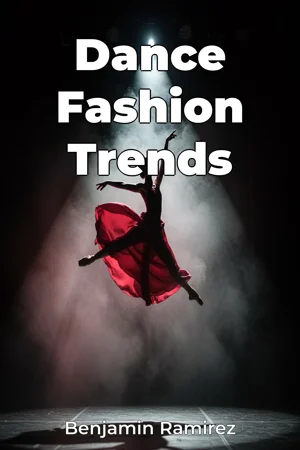
Have you ever considered the silent language spoken by a dancer's costume, a language that transcends mere aesthetics and directly impacts the performance itself? "Dance Fashion Trends" explores the dynamic evolution of dancewear, revealing the profound influence of costumes on the artistry, technique, and cultural significance of dance. This book delves into two central themes: the historical trajectory of dance attire and the integral role costumes play in shaping a dancer's movement and a performance's narrative. These topics are crucial because they illuminate the symbiotic relationship between fashion and dance, often overlooked in traditional performance analyses. We begin by establishing a context, tracing the evolution of dance from its ritualistic origins to its current multifaceted forms. Understanding the socio-cultural milieu surrounding dance is essential; for instance, the restrictive nature of Baroque-era garments contrasted sharply with the freedom sought by early modern dancers. No prior expertise is required; we will explain all necessary concepts, and clarify any required information. The central argument of "Dance Fashion Trends" is that dancewear is not merely decorative; it is a functional element that has historically dictated movement possibilities and continues to inform choreographic choices and audience interpretation. This argument's importance lies in prompting a more holistic appreciation of dance as a fusion of physical expression and visual storytelling. Our content unfolds as follows: First, we introduce the foundational principles of dance fashion, examining early examples of costumes and their effects on movement. Next, we explore major periods and styles, such as the Romantic tutu's impact on ballet or the flapper dress's influence on jazz. These sections analyze how design innovations, societal shifts, and technological advancements have shaped dance attire. Culminating, we analyze contemporary dancewear, examining its diverse forms and functions in modern performances. We look to sustainable fabrics and inclusive designs. Finally, practical insights are offered through case studies of iconic costumes, providing designers, dancers, and enthusiasts with a richer understanding of how dance fashion can enhance artistic expression. To support our arguments, we will draw upon a variety of evidence, including historical records, costume designs, photographs, and critiques of notable dance performances. Unique data sources include interviews with costume designers, dancers, and choreographers, offering firsthand accounts of the creative process. "Dance Fashion Trends" is interdisciplinary, connecting dance with fashion history, cultural studies, and material culture. These connections enrich the book's argument by revealing how dancewear reflects broader social trends and aesthetic ideals. Our unique approach centers on a detailed examination of the practical implications of costume design on physical expression, moving beyond superficial aesthetics to explore the functional dialogue between attire and movement. The tone is both scholarly and accessible, balancing rigorous research with engaging storytelling. The overall approach is informative, aiming to educate and inspire readers with a blend of historical context and contemporary insights. The book is intended for dance students, performers, choreographers, costume designers, fashion historians, and dance enthusiasts. It is valuable to them because it offers a comprehensive understanding of the evolution and significance of dance fashion, enhancing their ability to appreciate, create, and analyze dance performances. As a work in the Performing Arts genre, this book adheres to conventions of clear and precise analysis, supported by visual aids and credible sources. The scope is broad, covering a wide range of dance styles and historical periods, while the limitations are intentional, focusing primarily on Western theatrical dance traditions. The information in the book can be applied in practical ways, such as informing costume design choices, enhancing dance training by understanding the historical limitations and possibilities of movement, and providing a deeper analysis of performance. While dance is largely seen as interpretive, the book will discuss debates and controversies surrounding cultural appropriation in dance costumes.
Have you ever considered the silent language spoken by a dancer's costume, a language that transcends mere aesthetics and directly impacts the performance itself? "Dance Fashion Trends" explores the dynamic evolution of dancewear, revealing the profound influence of costumes on the artistry, technique, and cultural significance of dance. This book delves into two central themes: the historical trajectory of dance attire and the integral role costumes play in shaping a dancer's movement and a performance's narrative. These topics are crucial because they illuminate the symbiotic relationship between fashion and dance, often overlooked in traditional performance analyses. We begin by establishing a context, tracing the evolution of dance from its ritualistic origins to its current multifaceted forms. Understanding the socio-cultural milieu surrounding dance is essential; for instance, the restrictive nature of Baroque-era garments contrasted sharply with the freedom sought by early modern dancers. No prior expertise is required; we will explain all necessary concepts, and clarify any required information. The central argument of "Dance Fashion Trends" is that dancewear is not merely decorative; it is a functional element that has historically dictated movement possibilities and continues to inform choreographic choices and audience interpretation. This argument's importance lies in prompting a more holistic appreciation of dance as a fusion of physical expression and visual storytelling. Our content unfolds as follows: First, we introduce the foundational principles of dance fashion, examining early examples of costumes and their effects on movement. Next, we explore major periods and styles, such as the Romantic tutu's impact on ballet or the flapper dress's influence on jazz. These sections analyze how design innovations, societal shifts, and technological advancements have shaped dance attire. Culminating, we analyze contemporary dancewear, examining its diverse forms and functions in modern performances. We look to sustainable fabrics and inclusive designs. Finally, practical insights are offered through case studies of iconic costumes, providing designers, dancers, and enthusiasts with a richer understanding of how dance fashion can enhance artistic expression. To support our arguments, we will draw upon a variety of evidence, including historical records, costume designs, photographs, and critiques of notable dance performances. Unique data sources include interviews with costume designers, dancers, and choreographers, offering firsthand accounts of the creative process. "Dance Fashion Trends" is interdisciplinary, connecting dance with fashion history, cultural studies, and material culture. These connections enrich the book's argument by revealing how dancewear reflects broader social trends and aesthetic ideals. Our unique approach centers on a detailed examination of the practical implications of costume design on physical expression, moving beyond superficial aesthetics to explore the functional dialogue between attire and movement. The tone is both scholarly and accessible, balancing rigorous research with engaging storytelling. The overall approach is informative, aiming to educate and inspire readers with a blend of historical context and contemporary insights. The book is intended for dance students, performers, choreographers, costume designers, fashion historians, and dance enthusiasts. It is valuable to them because it offers a comprehensive understanding of the evolution and significance of dance fashion, enhancing their ability to appreciate, create, and analyze dance performances. As a work in the Performing Arts genre, this book adheres to conventions of clear and precise analysis, supported by visual aids and credible sources. The scope is broad, covering a wide range of dance styles and historical periods, while the limitations are intentional, focusing primarily on Western theatrical dance traditions. The information in the book can be applied in practical ways, such as informing costume design choices, enhancing dance training by understanding the historical limitations and possibilities of movement, and providing a deeper analysis of performance. While dance is largely seen as interpretive, the book will discuss debates and controversies surrounding cultural appropriation in dance costumes.
"Dance Fashion Trends" explores the captivating evolution of dancewear and its profound influence on dance as an art form. It reveals how costumes are not merely decorative but integral to a dancer's movement and a performance's narrative. For example, the restrictive Baroque-era garments sharply contrasted with the freedom sought by early modern dancers, impacting choreography and technique. The book uniquely examines the practical implications of costume design, emphasizing the functional dialogue between attire and movement rather than superficial aesthetics. The book traces dance fashion from its ritualistic origins to modern expressions, connecting it with fashion history, cultural studies, and material culture. Major periods and styles, such as the Romantic tutu's impact on ballet and the flapper dress's influence on jazz, are explored in detail. It also delves into contemporary dancewear, examining sustainable fabrics and inclusive designs. Through historical records, costume designs, and interviews with costume designers, dancers, and choreographers, "Dance Fashion Trends" provides a comprehensive understanding of how dance fashion enhances artistic expression.
Book Details
ISBN
9788235215789
Publisher
Publifye AS
Your Licenses
You don't own any licenses for this book
Purchase a license below to unlock this book and download the EPUB.
Purchase License
Select a tier to unlock this book
Need bulk licensing?
Contact us for enterprise agreements.