
About This Book
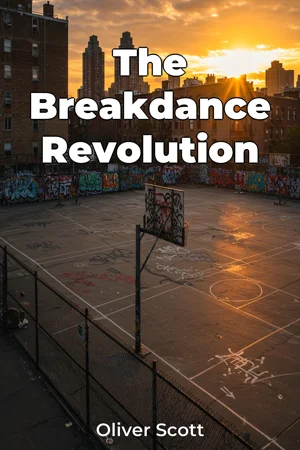
How did a spontaneous form of street expression born in the Bronx transform into a global phenomenon, and ultimately, a medal sport in the Olympic Games? "The Breakdance Revolution" charts the captivating journey of breakdancing, or breaking, from its grassroots origins to its current status as a recognized athletic discipline. This book examines the key cultural, social, and athletic elements responsible for its widespread adoption and evolution. Understanding this trajectory requires exploring several key areas: first, the socio-economic conditions of the 1970s Bronx that fostered breaking’s birth and initial development. Second, the media’s role in amplifying and disseminating breaking culture throughout the world. Finally, the complex process of standardization and institutionalization inherent in becoming an Olympic sport. Each of these elements profoundly shaped breaking, and their interconnectedness is crucial to understanding the present state of the dance. The central argument of "The Breakdance Revolution" is that breaking's evolution represents a dynamic negotiation between preserving its authentic, improvisational roots and adapting to the demands of mainstream acceptance and competitive structures. This negotiation has involved tensions between original breakers and new generations, between street credibility and commercial appeal, and between artistic expression and athletic performance. Understanding this tension is vital for appreciating the complexities surrounding breaking today. This book unfolds in three major sections. The first section contextualizes breaking's emergence in the 1970s, delving into the economic hardship, gang culture, and vibrant music scene of the Bronx. It examines the foundational moves, the early crews, and the crucial role of DJs and parties in establishing breaking as a form of community expression and competition. The second section focuses on the 1980s, detailing breaking's spread through music videos, films, and international tours. It analyzes how media representation both popularized and, arguably, commercialized the dance. This section also addresses regional variations and the emergence of distinct breaking styles. The third and final section explores breaking's resurgence in the 21st century, its formalization as a competitive sport, and its inclusion in the 2024 Paris Olympics. It examines the rules, judging criteria, training methods, and the debates surrounding the impact of institutionalization on breaking's artistic integrity. The narrative is supported by archival research, including newspaper articles, interviews with original breakers, and analysis of early hip-hop documentaries and films. It also draws upon ethnographic studies of breaking communities around the world and sports science research related to the physical demands of breaking. This book connects to several fields, including sociology (examining the social context of breaking), media studies (analyzing the representation and dissemination of breaking culture), and sports history (placing breaking within the broader landscape of competitive dance and athletics). By analyzing breaking as both a cultural phenomenon and an athletic discipline, the book offers a unique perspective. "The Breakdance Revolution" is written in an accessible and engaging style, aiming to inform and entertain both those familiar with breaking and those new to the dance. The primary audience includes students of dance, hip-hop culture, and sports history, as well as breakers themselves and anyone interested in the evolution of popular culture. As a work of historical and sports non-fiction, this book adheres to principles of accuracy, objectivity, and thorough research. While the book aims to provide a comprehensive overview of breaking's history, it acknowledges certain limitations in scope. It primarily focuses on breaking's development in the United States and its subsequent global spread, without delving into exhaustive detail on regional variations beyond broad examples. The discussions surrounding breaking’s inclusion in the Olympics – related to authenticity, judging criteria and cultural appropriation - are addressed head-on. By exploring these debates, "The Breakdance Revolution" provides a nuanced understanding of the challenges and opportunities facing breaking today.
How did a spontaneous form of street expression born in the Bronx transform into a global phenomenon, and ultimately, a medal sport in the Olympic Games? "The Breakdance Revolution" charts the captivating journey of breakdancing, or breaking, from its grassroots origins to its current status as a recognized athletic discipline. This book examines the key cultural, social, and athletic elements responsible for its widespread adoption and evolution. Understanding this trajectory requires exploring several key areas: first, the socio-economic conditions of the 1970s Bronx that fostered breaking’s birth and initial development. Second, the media’s role in amplifying and disseminating breaking culture throughout the world. Finally, the complex process of standardization and institutionalization inherent in becoming an Olympic sport. Each of these elements profoundly shaped breaking, and their interconnectedness is crucial to understanding the present state of the dance. The central argument of "The Breakdance Revolution" is that breaking's evolution represents a dynamic negotiation between preserving its authentic, improvisational roots and adapting to the demands of mainstream acceptance and competitive structures. This negotiation has involved tensions between original breakers and new generations, between street credibility and commercial appeal, and between artistic expression and athletic performance. Understanding this tension is vital for appreciating the complexities surrounding breaking today. This book unfolds in three major sections. The first section contextualizes breaking's emergence in the 1970s, delving into the economic hardship, gang culture, and vibrant music scene of the Bronx. It examines the foundational moves, the early crews, and the crucial role of DJs and parties in establishing breaking as a form of community expression and competition. The second section focuses on the 1980s, detailing breaking's spread through music videos, films, and international tours. It analyzes how media representation both popularized and, arguably, commercialized the dance. This section also addresses regional variations and the emergence of distinct breaking styles. The third and final section explores breaking's resurgence in the 21st century, its formalization as a competitive sport, and its inclusion in the 2024 Paris Olympics. It examines the rules, judging criteria, training methods, and the debates surrounding the impact of institutionalization on breaking's artistic integrity. The narrative is supported by archival research, including newspaper articles, interviews with original breakers, and analysis of early hip-hop documentaries and films. It also draws upon ethnographic studies of breaking communities around the world and sports science research related to the physical demands of breaking. This book connects to several fields, including sociology (examining the social context of breaking), media studies (analyzing the representation and dissemination of breaking culture), and sports history (placing breaking within the broader landscape of competitive dance and athletics). By analyzing breaking as both a cultural phenomenon and an athletic discipline, the book offers a unique perspective. "The Breakdance Revolution" is written in an accessible and engaging style, aiming to inform and entertain both those familiar with breaking and those new to the dance. The primary audience includes students of dance, hip-hop culture, and sports history, as well as breakers themselves and anyone interested in the evolution of popular culture. As a work of historical and sports non-fiction, this book adheres to principles of accuracy, objectivity, and thorough research. While the book aims to provide a comprehensive overview of breaking's history, it acknowledges certain limitations in scope. It primarily focuses on breaking's development in the United States and its subsequent global spread, without delving into exhaustive detail on regional variations beyond broad examples. The discussions surrounding breaking’s inclusion in the Olympics – related to authenticity, judging criteria and cultural appropriation - are addressed head-on. By exploring these debates, "The Breakdance Revolution" provides a nuanced understanding of the challenges and opportunities facing breaking today.
"The Breakdance Revolution" tells the dynamic story of breaking, from its emergence in the 1970s Bronx as a form of street dance born from socio-economic hardship and vibrant hip-hop culture, to its global spread and ultimate recognition as an Olympic sport. This book traces the dance's evolution, exploring how media representation in the 1980s significantly shaped its identity and how competitions evolved from informal street battles to formal athletic events. It is a cultural phenomenon that balances preserving its improvisational roots with adapting to mainstream acceptance. The book uniquely presents this history in three distinct sections. It begins by contextualizing breaking’s Bronx origins, then examines its spread via music videos and films, and finally analyzes the debates surrounding its Olympic inclusion. Through archival research and interviews, the book highlights the tensions between street credibility and commercial appeal, artistic expression and athletic performance. It aims to provide a nuanced understanding of the challenges and opportunities facing breaking today, making it valuable for anyone interested in sports history, dance, and the cultural evolution of popular culture.
Book Details
ISBN
9788235215772
Publisher
Publifye AS
Your Licenses
You don't own any licenses for this book
Purchase a license below to unlock this book and download the EPUB.
Purchase License
Select a tier to unlock this book
Need bulk licensing?
Contact us for enterprise agreements.