
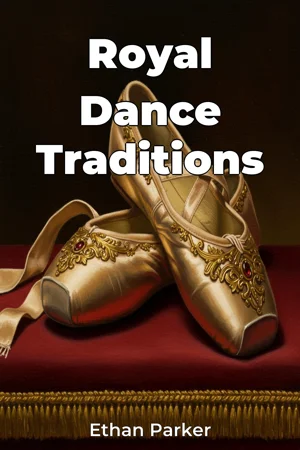
About This Book
How did the whims and desires of monarchs shape one of humanity's most expressive art forms? "Royal Dance Traditions" delves into the intricate relationship between royalty and dance, exploring how royal patronage influenced the evolution, preservation, and dissemination of dance across diverse cultures and historical periods. This book is more than a history of dance; it is an examination of power, culture, and the symbiotic relationship between those who ruled and those who moved. We will explore two critical themes: first, the financial investment of royal courts in dance, and second, the role of monarchs as arbiters of taste and style. Royal funding provided the resources necessary for choreographers to experiment, dancers to train, and elaborate productions to be staged. Simultaneously, royal preferences dictated trends, shaping aesthetic ideals and influencing the social function of dance. These topics are significant because they reveal how artistic expression can be both empowered and constrained by political and economic forces, offering insights into patronage's complex impact on artistic development. To understand this dynamic fully, we will consider the historical context of various royal courts, examining the social hierarchies, political agendas, and cultural values that informed their engagement with dance. Readers will benefit from a basic understanding of European history, courtly etiquette, and the evolution of dance forms such as ballet, court dances, and various folk traditions adapted for royal performance. The central argument of "Royal Dance Traditions" posits that royal patronage was not merely a financial transaction but a fundamental force in shaping the trajectory of dance history. By investing in dance, monarchs sought to project power, legitimize their rule, and define their cultural legacy, profoundly influencing the art form's aesthetic and social functions. The book unfolds in a structured manner, beginning with an introduction to the fundamental concepts of royal patronage and dance. We will then investigate the early European courts, tracing the development of ballet from its Italian Renaissance roots to its consolidation as a French courtly art. The subsequent sections will broaden the scope to include case studies from Asian and African royal traditions, examining how different cultural contexts shaped the relationship between royalty and dance. We will analyze the patronage systems, artistic innovations, and symbolic meanings associated with dance in these diverse settings. The book culminates in a discussion of the lasting impact of royal influence on contemporary dance, exploring how these historical traditions continue to resonate in modern performance and choreography. The arguments presented in this book are supported by a range of evidence, including primary sources such as royal decrees, letters, and diaries, as well as secondary sources such as scholarly articles, dance treatises, and historical analyses. Unique data sources include costume designs, musical scores, and archival footage of royal performances, providing a multi-faceted perspective on the subject. "Royal Dance Traditions" also intersects with other fields of study, including political science (examining the use of art as a tool for political legitimacy), sociology (analyzing the social functions of dance in royal courts), and art history (tracing the evolution of dance as a visual and performative art form). These interdisciplinary connections enrich the analysis and provide a more comprehensive understanding of the complex relationship between royalty and dance. This book offers a fresh perspective by examining the intersection of power, culture, and artistic expression through the lens of dance history. It moves beyond a simple chronological account to explore the underlying dynamics that shaped the art form's development. Written in a clear and accessible style, "Royal Dance Traditions" aims to engage a broad audience, including dance enthusiasts, history buffs, students, and scholars. Whether one is interested in the history of ballet, the role of art in shaping cultural identity, or the dynamics of power and patronage, this book offers valuable insights and perspectives. As a work of non-fiction history and performing arts, this book adheres to the conventions of scholarly research, providing detailed citations, in-depth analysis, and a balanced presentation of evidence. While the book aims to provide a broad overview of royal dance traditions across different cultures and historical periods, it acknowledges the limitations imposed by the availability of sources and the complexity of the subject matter. The focus narrows in on specific courts where influence was demonstrable and well-documented. The information presented in "Royal Dance Traditions" has practical applications for contemporary dancers, choreographers, and arts administrators, providing a deeper understanding of the historical context of their art form and informing their creative choices. This knowledge can also be applied to the study of contemporary arts funding and the role of patronage in shaping artistic expression today. While this book seeks to offer a comprehensive overview, debates regarding artistic autonomy versus political influence, and the interpretation of dance as a form of cultural expression, are touched upon, but focus primarily on the specific relationship between royal patronage and dance, without delving into the complex arguments surrounding cultural appropriation or the definition of "art."
How did the whims and desires of monarchs shape one of humanity's most expressive art forms? "Royal Dance Traditions" delves into the intricate relationship between royalty and dance, exploring how royal patronage influenced the evolution, preservation, and dissemination of dance across diverse cultures and historical periods. This book is more than a history of dance; it is an examination of power, culture, and the symbiotic relationship between those who ruled and those who moved. We will explore two critical themes: first, the financial investment of royal courts in dance, and second, the role of monarchs as arbiters of taste and style. Royal funding provided the resources necessary for choreographers to experiment, dancers to train, and elaborate productions to be staged. Simultaneously, royal preferences dictated trends, shaping aesthetic ideals and influencing the social function of dance. These topics are significant because they reveal how artistic expression can be both empowered and constrained by political and economic forces, offering insights into patronage's complex impact on artistic development. To understand this dynamic fully, we will consider the historical context of various royal courts, examining the social hierarchies, political agendas, and cultural values that informed their engagement with dance. Readers will benefit from a basic understanding of European history, courtly etiquette, and the evolution of dance forms such as ballet, court dances, and various folk traditions adapted for royal performance. The central argument of "Royal Dance Traditions" posits that royal patronage was not merely a financial transaction but a fundamental force in shaping the trajectory of dance history. By investing in dance, monarchs sought to project power, legitimize their rule, and define their cultural legacy, profoundly influencing the art form's aesthetic and social functions. The book unfolds in a structured manner, beginning with an introduction to the fundamental concepts of royal patronage and dance. We will then investigate the early European courts, tracing the development of ballet from its Italian Renaissance roots to its consolidation as a French courtly art. The subsequent sections will broaden the scope to include case studies from Asian and African royal traditions, examining how different cultural contexts shaped the relationship between royalty and dance. We will analyze the patronage systems, artistic innovations, and symbolic meanings associated with dance in these diverse settings. The book culminates in a discussion of the lasting impact of royal influence on contemporary dance, exploring how these historical traditions continue to resonate in modern performance and choreography. The arguments presented in this book are supported by a range of evidence, including primary sources such as royal decrees, letters, and diaries, as well as secondary sources such as scholarly articles, dance treatises, and historical analyses. Unique data sources include costume designs, musical scores, and archival footage of royal performances, providing a multi-faceted perspective on the subject. "Royal Dance Traditions" also intersects with other fields of study, including political science (examining the use of art as a tool for political legitimacy), sociology (analyzing the social functions of dance in royal courts), and art history (tracing the evolution of dance as a visual and performative art form). These interdisciplinary connections enrich the analysis and provide a more comprehensive understanding of the complex relationship between royalty and dance. This book offers a fresh perspective by examining the intersection of power, culture, and artistic expression through the lens of dance history. It moves beyond a simple chronological account to explore the underlying dynamics that shaped the art form's development. Written in a clear and accessible style, "Royal Dance Traditions" aims to engage a broad audience, including dance enthusiasts, history buffs, students, and scholars. Whether one is interested in the history of ballet, the role of art in shaping cultural identity, or the dynamics of power and patronage, this book offers valuable insights and perspectives. As a work of non-fiction history and performing arts, this book adheres to the conventions of scholarly research, providing detailed citations, in-depth analysis, and a balanced presentation of evidence. While the book aims to provide a broad overview of royal dance traditions across different cultures and historical periods, it acknowledges the limitations imposed by the availability of sources and the complexity of the subject matter. The focus narrows in on specific courts where influence was demonstrable and well-documented. The information presented in "Royal Dance Traditions" has practical applications for contemporary dancers, choreographers, and arts administrators, providing a deeper understanding of the historical context of their art form and informing their creative choices. This knowledge can also be applied to the study of contemporary arts funding and the role of patronage in shaping artistic expression today. While this book seeks to offer a comprehensive overview, debates regarding artistic autonomy versus political influence, and the interpretation of dance as a form of cultural expression, are touched upon, but focus primarily on the specific relationship between royal patronage and dance, without delving into the complex arguments surrounding cultural appropriation or the definition of "art."
"Royal Dance Traditions" explores the profound connection between monarchs and dance, revealing how royal patronage shaped the evolution of this art form. Royal courts often dictated trends, influencing aesthetic ideals and the social function of dance. The book argues that royal investment served not only as financial support but also as a means for monarchs to project power and legitimize their rule, thus defining their cultural legacy. The book begins by introducing the core concepts of royal patronage and dance, then traces ballet's development from the Italian Renaissance to its establishment in the French court. It broadens its scope to include case studies from Asian and African royal traditions, examining varied patronage systems and artistic innovations. By using primary sources like royal decrees and costume designs, alongside secondary scholarly articles, the book offers a multifaceted view of the subject. The book concludes by discussing the enduring impact of royal influence on modern dance, highlighting how historical traditions resonate in contemporary performance and choreography, presenting a fresh perspective on power dynamics and artistic expression.
Book Details
ISBN
9788235215482
Publisher
Publifye AS
Your Licenses
You don't own any licenses for this book
Purchase a license below to unlock this book and download the EPUB.
Purchase License
Select a tier to unlock this book
Need bulk licensing?
Contact us for enterprise agreements.