
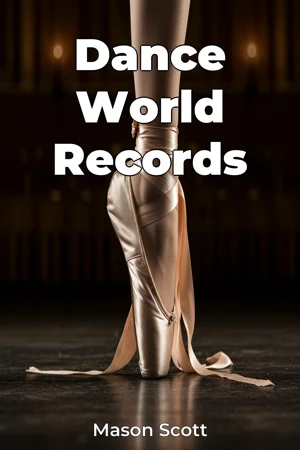
About This Book
Have you ever wondered what the absolute limits of human capability are when expressed through the art of dance? "Dance World Records" delves into the captivating realm of dance and explores the pinnacle of achievement in this demanding performing art and sport, documenting the most impressive feats of endurance, skill, and artistry ever recorded. This book examines two primary areas of interest: firstly, the physical extremes of dance, evidenced by record-breaking performances of length and repetition; and secondly, the technical mastery required to execute complex movements with unparalleled precision. These topics hold significance because they not only showcase the dedication and talent of dancers worldwide but also offer insights into the human body's capacity for adaptation and the mental fortitude needed to overcome seemingly insurmountable challenges. Understanding these records provides a tangible measure of progress within the art form and inspires future generations to push their own boundaries. Dance, throughout history, has served as a form of expression, ritual, and athleticism. From ancient ceremonial dances to contemporary competitive forms, it reflects cultural values and evolving physical capabilities. Readers should ideally possess a basic understanding of common dance terminology and various dance genres (ballet, contemporary, hip-hop, etc.) to fully appreciate the nuances of the records presented. The central argument of "Dance World Records" is that the pursuit of excellence in dance, as demonstrated by record-breaking achievements, reveals the depth of human potential when passion and discipline converge. This argument matters because it challenges conventional notions of what is physically and mentally attainable, demonstrating that the boundaries are constantly being redefined through dedicated practice and innovation. The book begins with an introduction to the concept of dance records and their significance. It then systematically explores different categories of records, such as longest dance performances (examining factors like style, number of performers and location), most consecutive pirouettes, fastest tap-dancing speeds, and highest leaps, each with its own dedicated chapter. Each chapter will detail the existing record, the dancer(s) that achieved it, its historical context, any associated controversies and the evidence used to ratify the record. It culminates by considering the future of dance records, potentially involving technological integration, and discusses the ethical considerations of pushing dancers to their absolute limits. The evidence presented within this book comes from a variety of sources, including official adjudicators (such as Guinness World Records), dance organizations, reputable news archives, and verifiable video recordings. In instances where quantifiable objective measures are impossible, expert opinions from dance critics, historians, and choreographers will be considered. "Dance World Records" connects to several disciplines: sports science (analyzing the biomechanics and physiology involved in record-breaking performances), history (tracing the evolution of dance styles and records over time), and psychology (understanding the mental resilience and motivation of record-holders). These connections enrich the understanding of dance accomplishments by providing a holistic view of the art and the individuals who have set new benchmarks. The book takes a data-driven yet accessible approach, presenting records with contextual information and human-interest stories to engage readers. It avoids overly technical jargon, making it appealing to both dance enthusiasts and a wider audience. The target audience includes dance students, professional dancers, dance instructors, dance historians, sports enthusiasts and anyone interested in extraordinary human achievements. This book offers a comprehensive overview of dance records, providing both factual information and inspiring stories. As a work of non-fiction in the performing arts and sports genres, "Dance World Records" adheres to the conventions of accuracy, objectivity, and verifiable sources. It aims to inform and entertain, presenting facts in a clear and engaging manner. The book's scope is limited to documented and verifiable dance records. While there may be anecdotal tales of undocumented achievements, this book focuses on those that can be substantiated with credible evidence. The information in "Dance World Records" can be applied practically by dancers seeking to improve their performance, choreographers looking for inspiration, and dance historians documenting the evolution of the art form. It also provides valuable insights for sports scientists studying human movement and athletic achievement. While dance records are generally celebrated, the book also acknowledges the controversies surrounding the ethics of pushing dancers for records. Should there be limits? Are the risks worth the rewards? Addressing these questions provides a balanced perspective on the pursuit of dance world records.
Have you ever wondered what the absolute limits of human capability are when expressed through the art of dance? "Dance World Records" delves into the captivating realm of dance and explores the pinnacle of achievement in this demanding performing art and sport, documenting the most impressive feats of endurance, skill, and artistry ever recorded. This book examines two primary areas of interest: firstly, the physical extremes of dance, evidenced by record-breaking performances of length and repetition; and secondly, the technical mastery required to execute complex movements with unparalleled precision. These topics hold significance because they not only showcase the dedication and talent of dancers worldwide but also offer insights into the human body's capacity for adaptation and the mental fortitude needed to overcome seemingly insurmountable challenges. Understanding these records provides a tangible measure of progress within the art form and inspires future generations to push their own boundaries. Dance, throughout history, has served as a form of expression, ritual, and athleticism. From ancient ceremonial dances to contemporary competitive forms, it reflects cultural values and evolving physical capabilities. Readers should ideally possess a basic understanding of common dance terminology and various dance genres (ballet, contemporary, hip-hop, etc.) to fully appreciate the nuances of the records presented. The central argument of "Dance World Records" is that the pursuit of excellence in dance, as demonstrated by record-breaking achievements, reveals the depth of human potential when passion and discipline converge. This argument matters because it challenges conventional notions of what is physically and mentally attainable, demonstrating that the boundaries are constantly being redefined through dedicated practice and innovation. The book begins with an introduction to the concept of dance records and their significance. It then systematically explores different categories of records, such as longest dance performances (examining factors like style, number of performers and location), most consecutive pirouettes, fastest tap-dancing speeds, and highest leaps, each with its own dedicated chapter. Each chapter will detail the existing record, the dancer(s) that achieved it, its historical context, any associated controversies and the evidence used to ratify the record. It culminates by considering the future of dance records, potentially involving technological integration, and discusses the ethical considerations of pushing dancers to their absolute limits. The evidence presented within this book comes from a variety of sources, including official adjudicators (such as Guinness World Records), dance organizations, reputable news archives, and verifiable video recordings. In instances where quantifiable objective measures are impossible, expert opinions from dance critics, historians, and choreographers will be considered. "Dance World Records" connects to several disciplines: sports science (analyzing the biomechanics and physiology involved in record-breaking performances), history (tracing the evolution of dance styles and records over time), and psychology (understanding the mental resilience and motivation of record-holders). These connections enrich the understanding of dance accomplishments by providing a holistic view of the art and the individuals who have set new benchmarks. The book takes a data-driven yet accessible approach, presenting records with contextual information and human-interest stories to engage readers. It avoids overly technical jargon, making it appealing to both dance enthusiasts and a wider audience. The target audience includes dance students, professional dancers, dance instructors, dance historians, sports enthusiasts and anyone interested in extraordinary human achievements. This book offers a comprehensive overview of dance records, providing both factual information and inspiring stories. As a work of non-fiction in the performing arts and sports genres, "Dance World Records" adheres to the conventions of accuracy, objectivity, and verifiable sources. It aims to inform and entertain, presenting facts in a clear and engaging manner. The book's scope is limited to documented and verifiable dance records. While there may be anecdotal tales of undocumented achievements, this book focuses on those that can be substantiated with credible evidence. The information in "Dance World Records" can be applied practically by dancers seeking to improve their performance, choreographers looking for inspiration, and dance historians documenting the evolution of the art form. It also provides valuable insights for sports scientists studying human movement and athletic achievement. While dance records are generally celebrated, the book also acknowledges the controversies surrounding the ethics of pushing dancers for records. Should there be limits? Are the risks worth the rewards? Addressing these questions provides a balanced perspective on the pursuit of dance world records.
"Dance World Records" explores the extraordinary achievements within the world of dance, showcasing peak human performance in this demanding art form and sport. It delves into record-breaking feats of endurance, such as the longest dance performances, and highlights the unparalleled skill required for complex movements. One intriguing aspect is how these records serve as tangible benchmarks of progress, inspiring dancers to push their limits. The book emphasizes the convergence of passion and discipline that allows dancers to achieve what seems physically and mentally impossible. This exploration isn't just about the physical extremes. It also examines the artistry behind these achievements, drawing from dance history and sports science to provide a holistic view. For instance, understanding the biomechanics behind consecutive pirouettes or the mental resilience needed for extreme dance endurance adds depth to appreciating these records. The book progresses systematically through categories like longest performances, fastest tap-dancing, and highest leaps, providing historical context and addressing potential controversies. Using a data-driven yet accessible approach, "Dance World Records" presents information suitable for a broad audience, from dance students to sports enthusiasts. The book avoids technical jargon, instead focusing on contextualizing the records with human-interest stories. Ultimately, this book celebrates the dedication and talent of dancers worldwide while acknowledging the ethical considerations of pursuing dance records.
Book Details
ISBN
9788235215468
Publisher
Publifye AS
Your Licenses
You don't own any licenses for this book
Purchase a license below to unlock this book and download the EPUB.
Purchase License
Select a tier to unlock this book
Need bulk licensing?
Contact us for enterprise agreements.