
About This Book
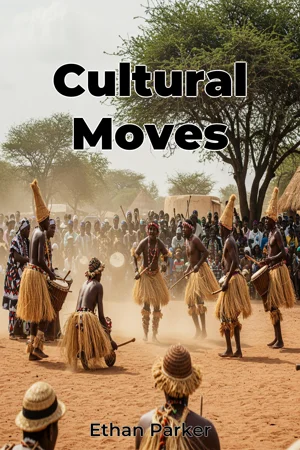
Can the human body in motion serve as a living archive, a repository of cultural memory? "Cultural Moves: Explore how different cultures have used dance to tell stories and preserve history" argues precisely that, revealing how dance functions not merely as entertainment or artistic expression, but as a vital conduit for transmitting historical narratives, social structures, and cultural values across generations. This book delves into the rich tapestry of global dance traditions, examining their roles in shaping collective identity and preserving cultural heritage amid social change. This exploration hinges on three central concepts: dance as embodied history, dance as a social script, and dance as a tool for cultural resilience. First, the book posits that dance movements encode historical events, embodying narratives of origin, migration, conflict, and celebration. Second, dance is examined as a social script, reflecting and reinforcing societal norms, gender roles, and power dynamics. Finally, the book recognizes the capacity of dance to facilitate cultural resilience, by promoting cohesion in communities undergoing rapid transformation, preserving shared identity after displacement, creating opportunities for cultural expression, and inspiring social change. "Cultural Moves" draws upon a wide range of historical and anthropological research, presenting case studies from diverse cultural contexts. The book builds its argument through a logical sequence. It begins by establishing the theoretical framework, introducing concepts of embodied knowledge, performative history, and cultural transmission. Following this introductory section, the book develops its argument through focused explorations of specific dance traditions. One chapter examines Indigenous Australian dance practices, revealing how intricate movements and songlines map ancestral lands and transmit creation stories. Another chapter analyzes West African dance forms, illustrating their roles in preserving oral histories, marking rites of passage, and articulating resistance to colonialism. A further section explores the evolution of ballet, from its origins in European courts to its modern expressions, analyzing how it reflects shifting social ideals and power structures. The evidence presented draws from ethnographic fieldwork, archival research, and performance analysis. The book integrates historical accounts, dance notation, oral traditions, and visual records to provide a comprehensive understanding of each dance form. "Cultural Moves" connects to the fields of anthropology, history, and performance studies by offering a multidisciplinary perspective on the interplay between culture, history, and the body. It also intersects with sociology through its examination of dance as a form of social expression and identity formation. This interdisciplinary approach provides a richer and more nuanced understanding of dance as a cultural practice. The book distinguishes itself through its emphasis on dance as a dynamic and evolving form of cultural memory. Rather than treating dance as a static artifact, it explores how dance traditions adapt and transform in response to social, political, and economic changes. It is written in an accessible tone, balancing scholarly rigor with engaging prose, aimed at students, dance enthusiasts, and general readers interested in cultural history and the performing arts. "Cultural Moves" offers a global overview, with select case studies providing in-depth analysis. While acknowledging the vast diversity of dance traditions worldwide, it focuses on examples that best illustrate the core themes of embodied history, social scripting, and cultural resilience. The practical applications of this knowledge are far-reaching. Understanding how dance functions as a form of cultural memory can inform heritage preservation efforts, promote cross-cultural understanding, and empower communities to reclaim and celebrate their cultural identities. While the book does not shy away from discussing cultural appropriation, it approaches the topic with sensitivity and nuance, encouraging respectful engagement with diverse dance traditions. "Cultural Moves" ultimately reveals the profound power of dance to connect us to the past, shape our present, and inspire our future.
Can the human body in motion serve as a living archive, a repository of cultural memory? "Cultural Moves: Explore how different cultures have used dance to tell stories and preserve history" argues precisely that, revealing how dance functions not merely as entertainment or artistic expression, but as a vital conduit for transmitting historical narratives, social structures, and cultural values across generations. This book delves into the rich tapestry of global dance traditions, examining their roles in shaping collective identity and preserving cultural heritage amid social change. This exploration hinges on three central concepts: dance as embodied history, dance as a social script, and dance as a tool for cultural resilience. First, the book posits that dance movements encode historical events, embodying narratives of origin, migration, conflict, and celebration. Second, dance is examined as a social script, reflecting and reinforcing societal norms, gender roles, and power dynamics. Finally, the book recognizes the capacity of dance to facilitate cultural resilience, by promoting cohesion in communities undergoing rapid transformation, preserving shared identity after displacement, creating opportunities for cultural expression, and inspiring social change. "Cultural Moves" draws upon a wide range of historical and anthropological research, presenting case studies from diverse cultural contexts. The book builds its argument through a logical sequence. It begins by establishing the theoretical framework, introducing concepts of embodied knowledge, performative history, and cultural transmission. Following this introductory section, the book develops its argument through focused explorations of specific dance traditions. One chapter examines Indigenous Australian dance practices, revealing how intricate movements and songlines map ancestral lands and transmit creation stories. Another chapter analyzes West African dance forms, illustrating their roles in preserving oral histories, marking rites of passage, and articulating resistance to colonialism. A further section explores the evolution of ballet, from its origins in European courts to its modern expressions, analyzing how it reflects shifting social ideals and power structures. The evidence presented draws from ethnographic fieldwork, archival research, and performance analysis. The book integrates historical accounts, dance notation, oral traditions, and visual records to provide a comprehensive understanding of each dance form. "Cultural Moves" connects to the fields of anthropology, history, and performance studies by offering a multidisciplinary perspective on the interplay between culture, history, and the body. It also intersects with sociology through its examination of dance as a form of social expression and identity formation. This interdisciplinary approach provides a richer and more nuanced understanding of dance as a cultural practice. The book distinguishes itself through its emphasis on dance as a dynamic and evolving form of cultural memory. Rather than treating dance as a static artifact, it explores how dance traditions adapt and transform in response to social, political, and economic changes. It is written in an accessible tone, balancing scholarly rigor with engaging prose, aimed at students, dance enthusiasts, and general readers interested in cultural history and the performing arts. "Cultural Moves" offers a global overview, with select case studies providing in-depth analysis. While acknowledging the vast diversity of dance traditions worldwide, it focuses on examples that best illustrate the core themes of embodied history, social scripting, and cultural resilience. The practical applications of this knowledge are far-reaching. Understanding how dance functions as a form of cultural memory can inform heritage preservation efforts, promote cross-cultural understanding, and empower communities to reclaim and celebrate their cultural identities. While the book does not shy away from discussing cultural appropriation, it approaches the topic with sensitivity and nuance, encouraging respectful engagement with diverse dance traditions. "Cultural Moves" ultimately reveals the profound power of dance to connect us to the past, shape our present, and inspire our future.
"Cultural Moves" explores the dynamic role of dance as a living archive, revealing how cultures worldwide use movement to preserve history, transmit social structures, and foster cultural resilience. Going beyond mere entertainment, the book argues that dance embodies historical narratives, acting as a social script that reinforces societal norms and a powerful tool for communities navigating change. For instance, Indigenous Australian dance practices intricately map ancestral lands and transmit creation stories, highlighting dance's capacity to encode history. The book's unique value lies in its interdisciplinary approach, drawing from anthropology, history, and performance studies to examine the interplay between culture, history, and the body. It examines diverse dance traditions, such as West African dance forms and the evolution of ballet, to illustrate the core themes of embodied history, social scripting, and cultural resilience. By presenting case studies and integrating historical accounts with performance analysis, "Cultural Moves" offers a comprehensive understanding of dance as a cultural practice, progressing from theoretical frameworks to focused explorations of specific dance traditions across its chapters.
Book Details
ISBN
9788235215321
Publisher
Publifye AS
Your Licenses
You don't own any licenses for this book
Purchase a license below to unlock this book and download the EPUB.
Purchase License
Select a tier to unlock this book
Need bulk licensing?
Contact us for enterprise agreements.