
About This Book
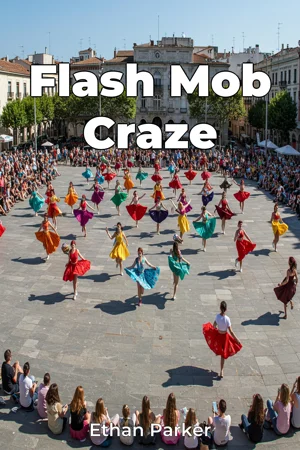
Have you ever stumbled upon a seemingly spontaneous eruption of choreographed movement in a public space, leaving you wondering about its origins and purpose? "Flash Mob Craze" delves into this fascinating phenomenon, exploring how flash mobs transitioned from internet-fueled pranks to a recognized form of artistic expression and social commentary. This book examines the social, cultural, and technological factors that propelled flash mobs into the global consciousness, analyzing their evolution and lasting impact. The book is structured around three key themes: the genesis of flash mobs as a form of social experimentation, their appropriation as marketing tools and vehicles for activism, and their establishment as a legitimate performance art. We will investigate the initial motivations behind flash mobs, examining how individuals utilized nascent social media platforms to coordinate these events. Furthermore, we will analyze how corporations and activist groups adopted the flash mob format to promote their messages, sometimes blurring the lines between spontaneity and calculated orchestration. Finally, "Flash Mob Craze" assesses the artistic merit of flash mobs, considering their choreographic complexity, thematic resonance, and contribution to public art. Understanding flash mobs requires a grounding in the history of performance art and the evolution of internet culture. Prior knowledge of the Situationist International and happenings of the 1960s will provide context for the anti-establishment roots of some flash mob activities. Similarly, understanding the functionalities and limitations of early social media platforms is crucial for grasping how flash mobs were organized and disseminated. The central argument of "Flash Mob Craze" posits that flash mobs represent a unique intersection of technology, social behavior, and artistic expression. They demonstrate how ordinary individuals can utilize readily available tools to create ephemeral public spectacles that challenge conventional notions of performance and public space. This argument is significant because it illuminates the democratizing potential of technology in the arts and underscores the evolving relationship between online and offline social interactions. The book begins by tracing the origins of flash mobs, examining the motivations and strategies of the early participants. It then dedicates chapters to analyzing the commercialization and politicization of flash mobs, providing case studies of successful and unsuccessful implementations. A subsequent section explores the choreographic aspects of flash mobs, analyzing their artistic merit and the creative processes involved. The book culminates in an assessment of the legacy of flash mobs, discussing their continued relevance in the age of social media and their potential for future artistic and social interventions. The research presented in "Flash Mob Craze" draws on a variety of sources, including online archives, video recordings of flash mobs, interviews with participants and organizers, and academic literature on performance art, social media, and collective behavior. The book also incorporates unique data gathered through online surveys and network analysis, providing insights into the social dynamics of flash mob communities. Interdisciplinary connections enhance the book's analysis. Firstly, "Flash Mob Craze" intersects with sociology by examining group behavior, social norms, and the impact of technology on social interactions. Secondly, the book relates to marketing and communication studies by analyzing how flash mobs are used as promotional tools and viral marketing strategies. Thirdly, the book connects to urban studies by considering how flash mobs transform public spaces and challenge established notions of urban order. "Flash Mob Craze" offers a unique perspective by examining flash mobs as a form of emergent art, driven by collective creativity and technological affordances. The book avoids romanticizing the phenomenon, instead providing a balanced assessment of its potential and limitations, its artistic merit and exploitative applications. Written in an accessible yet scholarly style, "Flash Mob Craze" is geared toward students and scholars of media studies, sociology, performance studies, and art history, as well as anyone interested in the intersection of technology, culture, and social activism. The book provides valuable insights into the dynamics of online communities, the evolution of performance art, and the changing nature of public space. As a work of non-fiction within the performing arts and social science, "Flash Mob Craze" adheres to the standards of academic rigor while also engaging with broader cultural trends. The book's scope is limited to the period from the early 2000s to the present, focusing primarily on flash mobs in Western cultures. The information presented in "Flash Mob Craze" has practical applications for artists, activists, marketers, and urban planners. Artists can draw inspiration from the collaborative and participatory nature of flash mobs. Activists can learn how to harness the power of collective action to raise awareness about social issues. Marketers can gain insights into the dynamics of viral marketing and the challenges of authentic engagement. Urban planners can consider how public spaces can be designed to accommodate spontaneous and creative interventions. While flash mobs are often seen as harmless entertainment, debates exist regarding their potential for disruption and their susceptibility to commercial exploitation. "Flash Mob Craze" addresses these controversies, providing a nuanced perspective on the ethical and social implications of this unique phenomenon.
Have you ever stumbled upon a seemingly spontaneous eruption of choreographed movement in a public space, leaving you wondering about its origins and purpose? "Flash Mob Craze" delves into this fascinating phenomenon, exploring how flash mobs transitioned from internet-fueled pranks to a recognized form of artistic expression and social commentary. This book examines the social, cultural, and technological factors that propelled flash mobs into the global consciousness, analyzing their evolution and lasting impact. The book is structured around three key themes: the genesis of flash mobs as a form of social experimentation, their appropriation as marketing tools and vehicles for activism, and their establishment as a legitimate performance art. We will investigate the initial motivations behind flash mobs, examining how individuals utilized nascent social media platforms to coordinate these events. Furthermore, we will analyze how corporations and activist groups adopted the flash mob format to promote their messages, sometimes blurring the lines between spontaneity and calculated orchestration. Finally, "Flash Mob Craze" assesses the artistic merit of flash mobs, considering their choreographic complexity, thematic resonance, and contribution to public art. Understanding flash mobs requires a grounding in the history of performance art and the evolution of internet culture. Prior knowledge of the Situationist International and happenings of the 1960s will provide context for the anti-establishment roots of some flash mob activities. Similarly, understanding the functionalities and limitations of early social media platforms is crucial for grasping how flash mobs were organized and disseminated. The central argument of "Flash Mob Craze" posits that flash mobs represent a unique intersection of technology, social behavior, and artistic expression. They demonstrate how ordinary individuals can utilize readily available tools to create ephemeral public spectacles that challenge conventional notions of performance and public space. This argument is significant because it illuminates the democratizing potential of technology in the arts and underscores the evolving relationship between online and offline social interactions. The book begins by tracing the origins of flash mobs, examining the motivations and strategies of the early participants. It then dedicates chapters to analyzing the commercialization and politicization of flash mobs, providing case studies of successful and unsuccessful implementations. A subsequent section explores the choreographic aspects of flash mobs, analyzing their artistic merit and the creative processes involved. The book culminates in an assessment of the legacy of flash mobs, discussing their continued relevance in the age of social media and their potential for future artistic and social interventions. The research presented in "Flash Mob Craze" draws on a variety of sources, including online archives, video recordings of flash mobs, interviews with participants and organizers, and academic literature on performance art, social media, and collective behavior. The book also incorporates unique data gathered through online surveys and network analysis, providing insights into the social dynamics of flash mob communities. Interdisciplinary connections enhance the book's analysis. Firstly, "Flash Mob Craze" intersects with sociology by examining group behavior, social norms, and the impact of technology on social interactions. Secondly, the book relates to marketing and communication studies by analyzing how flash mobs are used as promotional tools and viral marketing strategies. Thirdly, the book connects to urban studies by considering how flash mobs transform public spaces and challenge established notions of urban order. "Flash Mob Craze" offers a unique perspective by examining flash mobs as a form of emergent art, driven by collective creativity and technological affordances. The book avoids romanticizing the phenomenon, instead providing a balanced assessment of its potential and limitations, its artistic merit and exploitative applications. Written in an accessible yet scholarly style, "Flash Mob Craze" is geared toward students and scholars of media studies, sociology, performance studies, and art history, as well as anyone interested in the intersection of technology, culture, and social activism. The book provides valuable insights into the dynamics of online communities, the evolution of performance art, and the changing nature of public space. As a work of non-fiction within the performing arts and social science, "Flash Mob Craze" adheres to the standards of academic rigor while also engaging with broader cultural trends. The book's scope is limited to the period from the early 2000s to the present, focusing primarily on flash mobs in Western cultures. The information presented in "Flash Mob Craze" has practical applications for artists, activists, marketers, and urban planners. Artists can draw inspiration from the collaborative and participatory nature of flash mobs. Activists can learn how to harness the power of collective action to raise awareness about social issues. Marketers can gain insights into the dynamics of viral marketing and the challenges of authentic engagement. Urban planners can consider how public spaces can be designed to accommodate spontaneous and creative interventions. While flash mobs are often seen as harmless entertainment, debates exist regarding their potential for disruption and their susceptibility to commercial exploitation. "Flash Mob Craze" addresses these controversies, providing a nuanced perspective on the ethical and social implications of this unique phenomenon.
"Flash Mob Craze" explores the evolution of flash mobs, from their beginnings as internet-fueled pranks to their establishment as a form of performance art and social activism. The book examines how these spontaneous gatherings in urban spaces, often coordinated through social media, have become a unique blend of collective behavior and public art. One intriguing aspect is how quickly corporations adopted flash mobs for viral marketing, blurring the line between genuine expression and commercial promotion. Another insight is the way flash mobs challenge established social norms and transform public spaces into temporary stages for choreographed expression. The book approaches the topic by tracing the origins, commercialization, and artistic merit of flash mobs. It analyzes how early participants used nascent social media platforms to organize events, and how activist groups harnessed the flash mob format to promote their messages. The study also considers the choreographic complexity and thematic resonance of flash mobs as performance art. The book progresses by first examining the genesis of flash mobs, then dedicating later chapters to analyzing their commercialization and politicization, and concluding with an assessment of their legacy. This book is valuable because it provides a balanced perspective on the phenomenon, avoiding romanticization while offering insights into the dynamics of online communities and the changing nature of public space. It delves into the intersection of technology, social behavior, and artistic expression, revealing how ordinary individuals can use readily available tools to create ephemeral spectacles.
Book Details
ISBN
9788235215284
Publisher
Publifye AS
Your Licenses
You don't own any licenses for this book
Purchase a license below to unlock this book and download the EPUB.
Purchase License
Select a tier to unlock this book
Need bulk licensing?
Contact us for enterprise agreements.