
About This Book
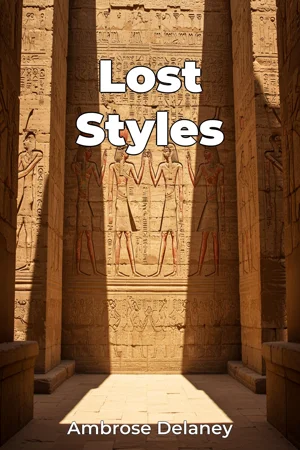
What if the key to understanding a culture lay not in its monuments or wars, but in the rhythm of its movements, now lost to time? "Lost Styles" delves into the captivating world of ancient and forgotten dance forms, exploring how these movements once served as profound expressions of cultural identity, social structure, and spiritual belief. This book isn't simply a history; it's an excavation of motion, revealing the stories etched in the bodies of dancers from vanished civilizations. We will uncover the significance of dance as a historical record, social commentary, and a means of preserving communal memory. The book addresses why these dance styles disappeared – factors like colonization, religious suppression, and cultural shifts. It reveals the vital role dance played, offering a unique lens through which to view societies that existed centuries ago. The central argument of "Lost Styles" is that these vanished dance traditions hold invaluable insights into the worldviews, values, and daily lives of past cultures, offering a richer and more nuanced understanding of human history than traditional historical accounts alone. By reconstructing the movements and contexts of these dances, we can unlock a deeper connection to our shared human heritage. The book begins by establishing the theoretical framework for understanding dance as a form of cultural expression and historical documentation. It then proceeds with in-depth explorations of specific dance styles from diverse geographical regions and historical periods. One section focuses on the ritualistic dances of ancient Egypt, examining their connection to religious beliefs and funerary practices. Another section explores the dynamic, acrobatic dances of pre-Columbian Mesoamerica, arguing that these dances served as both entertainment and a means of reinforcing social hierarchies. We continue by looking at the influence of religious reformations on dance in Europe, showing how many forms were lost. The journey culminates with a discussion of how the rediscovery and reconstruction of these lost styles can inform contemporary dance practices and cultural preservation efforts. The evidence presented includes archaeological findings (depictions of dance in art and architecture), historical texts (descriptions of dance in literature and travelogues), and ethnomusicological research (analysis of musical forms associated with dance). We engage with primary source material, drawing on the insights of dance notation and the accounts of early travelers. Our examination connects with the fields of anthropology, archeology, and musicology. Interdisciplinary connections are vital to our approach. The book draws on anthropological theories of ritual and performance, archaeological evidence of dance spaces and iconography, and musicological analysis of accompanying musical forms. These interdisciplinary connections enrich our understanding of the cultural context and significance of the dances. "Lost Styles" provides a fresh perspective by combining rigorous historical research with a practical understanding of dance movement. The book is written in a clear, engaging style, avoiding technical jargon where possible, making it accessible to both dance specialists and general readers interested in history and culture. The target audience includes dance historians, students of anthropology and cultural studies, dance practitioners seeking inspiration from historical sources, and anyone with a general interest in history and the performing arts. This book offers a valuable resource for understanding the cultural significance of dance throughout history. While the book aims to provide a broad overview of lost dance styles, it acknowledges the limitations of available evidence and focuses on a selection of representative examples. The geographical scope is global, but the depth of analysis varies depending on the availability of historical sources. The knowledge gained from "Lost Styles" can be applied to contemporary dance practice, cultural heritage preservation, and historical education. Dancers can draw inspiration from historical styles, while cultural organizations can use this research to inform the reconstruction and preservation of endangered dance traditions. The book also illuminates ongoing debates about the role of cultural appropriation in dance and the ethics of reconstructing lost traditions.
What if the key to understanding a culture lay not in its monuments or wars, but in the rhythm of its movements, now lost to time? "Lost Styles" delves into the captivating world of ancient and forgotten dance forms, exploring how these movements once served as profound expressions of cultural identity, social structure, and spiritual belief. This book isn't simply a history; it's an excavation of motion, revealing the stories etched in the bodies of dancers from vanished civilizations. We will uncover the significance of dance as a historical record, social commentary, and a means of preserving communal memory. The book addresses why these dance styles disappeared – factors like colonization, religious suppression, and cultural shifts. It reveals the vital role dance played, offering a unique lens through which to view societies that existed centuries ago. The central argument of "Lost Styles" is that these vanished dance traditions hold invaluable insights into the worldviews, values, and daily lives of past cultures, offering a richer and more nuanced understanding of human history than traditional historical accounts alone. By reconstructing the movements and contexts of these dances, we can unlock a deeper connection to our shared human heritage. The book begins by establishing the theoretical framework for understanding dance as a form of cultural expression and historical documentation. It then proceeds with in-depth explorations of specific dance styles from diverse geographical regions and historical periods. One section focuses on the ritualistic dances of ancient Egypt, examining their connection to religious beliefs and funerary practices. Another section explores the dynamic, acrobatic dances of pre-Columbian Mesoamerica, arguing that these dances served as both entertainment and a means of reinforcing social hierarchies. We continue by looking at the influence of religious reformations on dance in Europe, showing how many forms were lost. The journey culminates with a discussion of how the rediscovery and reconstruction of these lost styles can inform contemporary dance practices and cultural preservation efforts. The evidence presented includes archaeological findings (depictions of dance in art and architecture), historical texts (descriptions of dance in literature and travelogues), and ethnomusicological research (analysis of musical forms associated with dance). We engage with primary source material, drawing on the insights of dance notation and the accounts of early travelers. Our examination connects with the fields of anthropology, archeology, and musicology. Interdisciplinary connections are vital to our approach. The book draws on anthropological theories of ritual and performance, archaeological evidence of dance spaces and iconography, and musicological analysis of accompanying musical forms. These interdisciplinary connections enrich our understanding of the cultural context and significance of the dances. "Lost Styles" provides a fresh perspective by combining rigorous historical research with a practical understanding of dance movement. The book is written in a clear, engaging style, avoiding technical jargon where possible, making it accessible to both dance specialists and general readers interested in history and culture. The target audience includes dance historians, students of anthropology and cultural studies, dance practitioners seeking inspiration from historical sources, and anyone with a general interest in history and the performing arts. This book offers a valuable resource for understanding the cultural significance of dance throughout history. While the book aims to provide a broad overview of lost dance styles, it acknowledges the limitations of available evidence and focuses on a selection of representative examples. The geographical scope is global, but the depth of analysis varies depending on the availability of historical sources. The knowledge gained from "Lost Styles" can be applied to contemporary dance practice, cultural heritage preservation, and historical education. Dancers can draw inspiration from historical styles, while cultural organizations can use this research to inform the reconstruction and preservation of endangered dance traditions. The book also illuminates ongoing debates about the role of cultural appropriation in dance and the ethics of reconstructing lost traditions.
"Lost Styles" explores the fascinating world of ancient and forgotten dance forms, revealing them as vital expressions of cultural identity, social structure, and spiritual belief. More than just a history lesson, this book excavates motion, uncovering stories etched in the bodies of dancers from vanished civilizations. It examines dance as a historical record and social commentary, illustrating how movements served as communal memory. The book argues that these lost dance traditions offer invaluable insights into the worldviews and daily lives of past cultures, enriching our understanding of human history. For example, the ritualistic dances of ancient Egypt reveal their religious beliefs and funerary practices, while the acrobatic dances of pre-Columbian Mesoamerica highlight social hierarchies. By reconstructing these dances and their contexts, readers gain a deeper connection to our shared human heritage. Beginning with a theoretical framework for understanding dance as cultural expression, "Lost Styles" progresses through in-depth explorations of specific dance styles from diverse regions and periods. It examines the reasons these dances disappeared, often due to colonization, religious suppression, or cultural shifts. Ultimately, the book demonstrates how rediscovering and reconstructing these lost styles can inform contemporary dance practices and cultural preservation efforts, providing fresh perspectives for both dance specialists and general readers interested in history and culture.
Book Details
ISBN
9788235215178
Publisher
Publifye AS
Your Licenses
You don't own any licenses for this book
Purchase a license below to unlock this book and download the EPUB.
Purchase License
Select a tier to unlock this book
Need bulk licensing?
Contact us for enterprise agreements.