
About This Book
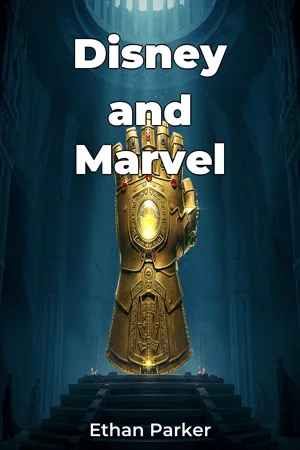
How did a seemingly improbable merger between a family-friendly entertainment giant and a comic book powerhouse reshape the landscape of both Hollywood and global popular culture? "Disney and Marvel" delves into the intricate details of Disney's acquisition of Marvel Entertainment, examining the strategic decisions, financial implications, and creative transformations that followed. This book is essential for anyone seeking to understand the modern entertainment industry, corporate strategy, and the evolution of superhero storytelling. The central argument of "Disney and Marvel" is that Disney's acquisition of Marvel was not merely a business transaction but a calculated move to secure intellectual property that would fuel its expansion into new markets and solidify its dominance in the entertainment sector. This argument is crucial because it demonstrates how companies can leverage content ownership to build lasting competitive advantages in a rapidly changing media environment. The book’s content unfolds in three major parts. First, it provides a detailed history of both Disney and Marvel, tracing their respective rises to prominence and highlighting the challenges each faced before the merger. This includes Marvel's near-bankruptcy in the 1990s and Disney's need to revitalize its film offerings in the early 2000s. Second, the book scrutinizes the acquisition itself, dissecting the negotiation process, the financial terms, and the key players involved. It analyzes the strategic rationale behind the deal from Disney's perspective and how it aligned with their long-term goals. This section also examines the initial reactions from fans, industry analysts, and competitors. Finally, the book explores the post-acquisition era, focusing on how Disney integrated Marvel into its corporate structure and leveraged its intellectual property to create a string of blockbuster films and television shows. It analyzes the creative choices made in adapting Marvel's characters and stories for the big screen, the impact on the comic book industry, and the broader cultural phenomenon of the Marvel Cinematic Universe (MCU). "Disney and Marvel" relies on a variety of sources, including financial reports, industry publications, interviews with key executives and creatives, and extensive analysis of film and television productions. It also draws upon academic research in media studies, business strategy, and cultural studies to provide a comprehensive understanding of the subject. The book connects to several other fields of study, including economics (analyzing the financial impact of the acquisition), sociology (examining the cultural influence of superhero films), and management (studying Disney's corporate strategy). These interdisciplinary connections enrich the book's analysis and provide readers with a broader perspective on the complex forces at play. One unique aspect of "Disney and Marvel" is its focus on both the business and creative aspects of the merger. While many books examine the financial side of corporate acquisitions, this book also delves into the creative decisions that shaped the MCU and its impact on superhero storytelling. This dual focus provides a more complete and nuanced understanding of the Disney-Marvel phenomenon. Written in a professional yet accessible style, "Disney and Marvel" is targeted towards readers interested in business, film, and popular culture. This includes students, industry professionals, fans of superhero films, and anyone seeking to understand the inner workings of the entertainment industry. It offers valuable insights for those looking to understand modern media trends and the power of intellectual property. The scope of the book is limited to Disney's acquisition of Marvel Entertainment and its immediate aftermath, focusing primarily on the film and television divisions. It does not delve into other Marvel properties or explore broader trends in the comic book industry beyond their direct relevance to the Disney-Marvel story. The information presented in "Disney and Marvel" has real-world applications for business leaders, media executives, and anyone involved in the creation, distribution, or consumption of entertainment content. It offers valuable lessons about corporate strategy, intellectual property management, and the importance of understanding audience preferences. While the success of the Disney-Marvel merger is undeniable, the book also addresses some of the controversies and debates surrounding the MCU, such as concerns about creative control, the homogenization of superhero storytelling, and the impact on independent comic book creators. By acknowledging these debates, the book provides a balanced and nuanced perspective on the Disney-Marvel phenomenon.
How did a seemingly improbable merger between a family-friendly entertainment giant and a comic book powerhouse reshape the landscape of both Hollywood and global popular culture? "Disney and Marvel" delves into the intricate details of Disney's acquisition of Marvel Entertainment, examining the strategic decisions, financial implications, and creative transformations that followed. This book is essential for anyone seeking to understand the modern entertainment industry, corporate strategy, and the evolution of superhero storytelling. The central argument of "Disney and Marvel" is that Disney's acquisition of Marvel was not merely a business transaction but a calculated move to secure intellectual property that would fuel its expansion into new markets and solidify its dominance in the entertainment sector. This argument is crucial because it demonstrates how companies can leverage content ownership to build lasting competitive advantages in a rapidly changing media environment. The book’s content unfolds in three major parts. First, it provides a detailed history of both Disney and Marvel, tracing their respective rises to prominence and highlighting the challenges each faced before the merger. This includes Marvel's near-bankruptcy in the 1990s and Disney's need to revitalize its film offerings in the early 2000s. Second, the book scrutinizes the acquisition itself, dissecting the negotiation process, the financial terms, and the key players involved. It analyzes the strategic rationale behind the deal from Disney's perspective and how it aligned with their long-term goals. This section also examines the initial reactions from fans, industry analysts, and competitors. Finally, the book explores the post-acquisition era, focusing on how Disney integrated Marvel into its corporate structure and leveraged its intellectual property to create a string of blockbuster films and television shows. It analyzes the creative choices made in adapting Marvel's characters and stories for the big screen, the impact on the comic book industry, and the broader cultural phenomenon of the Marvel Cinematic Universe (MCU). "Disney and Marvel" relies on a variety of sources, including financial reports, industry publications, interviews with key executives and creatives, and extensive analysis of film and television productions. It also draws upon academic research in media studies, business strategy, and cultural studies to provide a comprehensive understanding of the subject. The book connects to several other fields of study, including economics (analyzing the financial impact of the acquisition), sociology (examining the cultural influence of superhero films), and management (studying Disney's corporate strategy). These interdisciplinary connections enrich the book's analysis and provide readers with a broader perspective on the complex forces at play. One unique aspect of "Disney and Marvel" is its focus on both the business and creative aspects of the merger. While many books examine the financial side of corporate acquisitions, this book also delves into the creative decisions that shaped the MCU and its impact on superhero storytelling. This dual focus provides a more complete and nuanced understanding of the Disney-Marvel phenomenon. Written in a professional yet accessible style, "Disney and Marvel" is targeted towards readers interested in business, film, and popular culture. This includes students, industry professionals, fans of superhero films, and anyone seeking to understand the inner workings of the entertainment industry. It offers valuable insights for those looking to understand modern media trends and the power of intellectual property. The scope of the book is limited to Disney's acquisition of Marvel Entertainment and its immediate aftermath, focusing primarily on the film and television divisions. It does not delve into other Marvel properties or explore broader trends in the comic book industry beyond their direct relevance to the Disney-Marvel story. The information presented in "Disney and Marvel" has real-world applications for business leaders, media executives, and anyone involved in the creation, distribution, or consumption of entertainment content. It offers valuable lessons about corporate strategy, intellectual property management, and the importance of understanding audience preferences. While the success of the Disney-Marvel merger is undeniable, the book also addresses some of the controversies and debates surrounding the MCU, such as concerns about creative control, the homogenization of superhero storytelling, and the impact on independent comic book creators. By acknowledging these debates, the book provides a balanced and nuanced perspective on the Disney-Marvel phenomenon.
"Disney and Marvel" explores the groundbreaking merger between Disney, a family entertainment giant, and Marvel, a comic book powerhouse, and how this alliance reshaped Hollywood and global popular culture. The book explains how Disney strategically acquired Marvel to secure valuable intellectual property, fueling expansion into new markets and cementing dominance in the entertainment industry. For example, Marvel's near-bankruptcy in the 1990s highlights the precariousness that Disney helped overcome. The book uniquely balances both the business and creative angles of the merger, examining financial implications alongside creative transformations, like adapting comic characters for blockbuster films. The book unfolds in three parts, beginning with a detailed history of Disney and Marvel before the merger, highlighting their respective challenges. It then scrutinizes the acquisition itself, dissecting the negotiation process and strategic rationale from Disney's perspective. Finally, it explores the post-acquisition era, focusing on Disney's integration of Marvel, the creation of the Marvel Cinematic Universe (MCU), and the broader cultural phenomenon of superhero films, making it essential for those seeking to understand corporate strategy, media trends, and the evolution of superhero storytelling.
Book Details
ISBN
9788235214881
Publisher
Publifye AS
Your Licenses
You don't own any licenses for this book
Purchase a license below to unlock this book and download the EPUB.
Purchase License
Select a tier to unlock this book
Need bulk licensing?
Contact us for enterprise agreements.