
About This Book
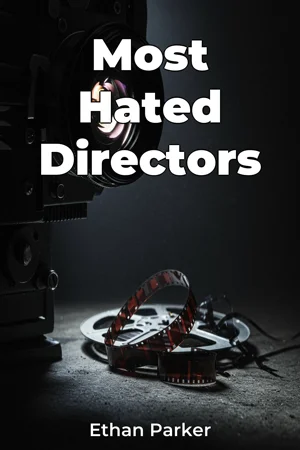
Why do some film directors elicit such passionate, often polarized, reactions from audiences and critics alike? "Most Hated Directors" delves into the careers of filmmakers whose work sparked intense debate, exploring the complex relationship between artistic vision, public reception, and critical assessment. This book is significant because it examines not only the films themselves but also the cultural and industrial forces that shape opinions and reputations in the film world. The book's core argument is that a director's perceived "failure" is rarely a simple matter of artistic merit. Instead, it is the result of a potent mixture of factors, including evolving social norms, studio interference, marketing missteps, and the director's own personality and public image. We unpack how these elements coalesce to create a director’s status, often solidifying opinions for years to come. To provide context, we begin by exploring the historical development of film criticism and the rise of auteur theory, which initially lionized directors as the primary creative force behind a film. We analyze how this perspective, while influential, could also create unrealistic expectations and set the stage for inevitable backlash when directors failed to meet those expectations. Key to understanding this subject is the insight into the power dynamics between the director, the studio, and the audience. The book’s structure unfolds in three major sections. First, we introduce the concept of directorial "hate," classifying the different types of negative reactions directors can face. This involves analyzing critical pans, box-office disappointments, and audience revolts. The second section features in-depth case studies of several directors. These case studies examine their filmographies, looking for patterns in their successes and failures and analyzing the specific controversies surrounding their most divisive works. The final section draws conclusions about the nature of film criticism, the role of the audience, and the enduring power of auteurism. Our research draws upon a wide range of sources, including film reviews, box-office data, studio memos, and interviews with filmmakers, actors, and critics. We also utilize archival materials to provide historical context for the debates surrounding these directors. "Most Hated Directors" sits at the intersection of film studies, cultural studies, and media psychology. It connects to film studies by analyzing directorial choices and cinematic techniques; to cultural studies by examining how films reflect and shape social values; and to media psychology by exploring how audiences form opinions and engage with media content. This book provides a unique perspective by moving beyond simple judgments of "good" or "bad" films. It strives to understand *why* certain directors become lightning rods for controversy and how their careers reflect broader trends in the film industry and society. The tone is analytical and objective, presenting evidence and arguments in a clear and accessible manner. The target audience includes film students, film enthusiasts, and anyone interested in the behind-the-scenes dynamics of the movie industry. It will also appeal to scholars in related fields, such as media studies and cultural studies. For readers already familiar with film history, this book offers fresh insights and challenging perspectives. For those new to the subject, it provides a comprehensive introduction to the complex world of film criticism and directorial reputation. As a work of film & television non-fiction, “Most Hated Directors” adheres to the conventions of rigorous research, factual accuracy, and balanced presentation. While focusing on directors who have faced significant criticism, it aims to provide a fair and nuanced portrayal of their work and careers. The book's scope is limited to directors working in mainstream cinema, primarily in the United States and Europe, with a focus on those whose careers have spanned multiple decades. This focus allows for in-depth analysis of their evolving styles and reputations. The insights in this book have practical applications for aspiring filmmakers, film critics, and anyone interested in understanding the complexities of the film industry. By examining the factors that contribute to a director's perceived "failure," readers can learn valuable lessons about artistic vision, audience expectations, and the power of public perception. The book also touches on ongoing debates about artistic freedom versus commercial viability, the role of criticism in shaping film culture, and the ethics of judging creative work.
Why do some film directors elicit such passionate, often polarized, reactions from audiences and critics alike? "Most Hated Directors" delves into the careers of filmmakers whose work sparked intense debate, exploring the complex relationship between artistic vision, public reception, and critical assessment. This book is significant because it examines not only the films themselves but also the cultural and industrial forces that shape opinions and reputations in the film world. The book's core argument is that a director's perceived "failure" is rarely a simple matter of artistic merit. Instead, it is the result of a potent mixture of factors, including evolving social norms, studio interference, marketing missteps, and the director's own personality and public image. We unpack how these elements coalesce to create a director’s status, often solidifying opinions for years to come. To provide context, we begin by exploring the historical development of film criticism and the rise of auteur theory, which initially lionized directors as the primary creative force behind a film. We analyze how this perspective, while influential, could also create unrealistic expectations and set the stage for inevitable backlash when directors failed to meet those expectations. Key to understanding this subject is the insight into the power dynamics between the director, the studio, and the audience. The book’s structure unfolds in three major sections. First, we introduce the concept of directorial "hate," classifying the different types of negative reactions directors can face. This involves analyzing critical pans, box-office disappointments, and audience revolts. The second section features in-depth case studies of several directors. These case studies examine their filmographies, looking for patterns in their successes and failures and analyzing the specific controversies surrounding their most divisive works. The final section draws conclusions about the nature of film criticism, the role of the audience, and the enduring power of auteurism. Our research draws upon a wide range of sources, including film reviews, box-office data, studio memos, and interviews with filmmakers, actors, and critics. We also utilize archival materials to provide historical context for the debates surrounding these directors. "Most Hated Directors" sits at the intersection of film studies, cultural studies, and media psychology. It connects to film studies by analyzing directorial choices and cinematic techniques; to cultural studies by examining how films reflect and shape social values; and to media psychology by exploring how audiences form opinions and engage with media content. This book provides a unique perspective by moving beyond simple judgments of "good" or "bad" films. It strives to understand *why* certain directors become lightning rods for controversy and how their careers reflect broader trends in the film industry and society. The tone is analytical and objective, presenting evidence and arguments in a clear and accessible manner. The target audience includes film students, film enthusiasts, and anyone interested in the behind-the-scenes dynamics of the movie industry. It will also appeal to scholars in related fields, such as media studies and cultural studies. For readers already familiar with film history, this book offers fresh insights and challenging perspectives. For those new to the subject, it provides a comprehensive introduction to the complex world of film criticism and directorial reputation. As a work of film & television non-fiction, “Most Hated Directors” adheres to the conventions of rigorous research, factual accuracy, and balanced presentation. While focusing on directors who have faced significant criticism, it aims to provide a fair and nuanced portrayal of their work and careers. The book's scope is limited to directors working in mainstream cinema, primarily in the United States and Europe, with a focus on those whose careers have spanned multiple decades. This focus allows for in-depth analysis of their evolving styles and reputations. The insights in this book have practical applications for aspiring filmmakers, film critics, and anyone interested in understanding the complexities of the film industry. By examining the factors that contribute to a director's perceived "failure," readers can learn valuable lessons about artistic vision, audience expectations, and the power of public perception. The book also touches on ongoing debates about artistic freedom versus commercial viability, the role of criticism in shaping film culture, and the ethics of judging creative work.
"Most Hated Directors" explores why some filmmakers ignite such strong reactions, diving into the complex interplay of artistic vision, public opinion, and critical analysis. The book argues that a director's perceived "failure" goes beyond mere artistic merit, often stemming from evolving social norms, studio interference, or even the director's public persona. For example, marketing missteps can significantly impact a film's reception, regardless of its artistic quality. The book begins by examining the historical development of film criticism and the rise of auteur theory, which initially celebrated directors as the primary creative force. It then delves into case studies of directors, analyzing their filmographies to identify patterns in their successes and failures, and scrutinizes the controversies surrounding their most divisive works. The book concludes by considering the nature of film criticism, the audience's role, and the enduring influence of auteurism, all while drawing upon film reviews, box-office data, and interviews.
Book Details
ISBN
9788235214720
Publisher
Publifye AS
Your Licenses
You don't own any licenses for this book
Purchase a license below to unlock this book and download the EPUB.
Purchase License
Select a tier to unlock this book
Need bulk licensing?
Contact us for enterprise agreements.