
About This Book
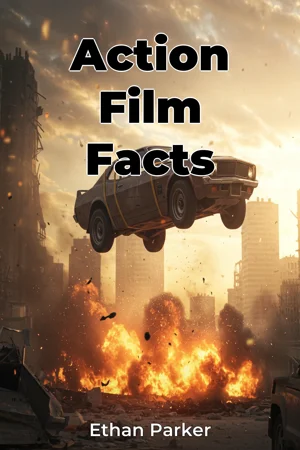
Ever wondered how they pulled off that seemingly impossible car jump or orchestrated that building-leveling explosion? *Action Film Facts* delves into the meticulously planned and often surprisingly complex world behind action cinema’s most memorable moments, exploring the physics, history, and artistry that combine to create thrilling spectacle. This book examines the core components of action filmmaking, dissecting the creation and execution of stunts, the science of explosive effects, and the often-overlooked contribution of visual and practical effects artists. These elements are crucial not just for entertainment but also for pushing the boundaries of cinematic possibility and shaping audience expectations of realism and spectacle. We examine how historical context, technological advancements, and changing audience tastes have influenced the evolution of action sequences. No prior knowledge of filmmaking is required; explanations are provided for specialized terminology. The central argument of *Action Film Facts* asserts that the best action sequences are not simply chaotic displays of destruction but are instead carefully constructed narratives that rely on a combination of scientific principles, artistic vision, and practical problem-solving. This book demonstrates how these elements work in tandem, creating moments that are both viscerally exciting and intellectually stimulating. The book is structured in three parts. The first section introduces the fundamental principles of action filmmaking, covering the history of stunts from their early, often dangerous beginnings to the sophisticated safety measures employed today. The second section analyzes the science behind explosions, from the chemistry of propellants to the physics of shockwaves, alongside the historical context of advancements in pyrotechnics. The final section examines the world of visual and practical effects, revealing the secrets behind creating believable environments and creatures, and the artistry that goes into seamlessly blending these effects with live-action footage. This culminates in a discussion of how these elements function cohesively to create believable and impactful moments, and consideration of the ethical implications of representing violence and destruction on screen. Throughout the book, detailed case studies of specific films and sequences will illustrate key concepts, drawing from production notes, interviews with filmmakers and stunt performers, and analysis of behind-the-scenes footage. Original diagrams and illustrations clarify complex scientific principles and demonstrate the mechanics of various stunts and effects. *Action Film Facts* connects to fields such as engineering (in the design of stunts and special effects), history (in the evolution of action filmmaking techniques), and psychology (in understanding audience reactions to violence and spectacle). These interdisciplinary connections enrich the discussion, offering a more nuanced understanding of action cinema’s cultural impact. This book adopts a fact-based and analytical approach. While celebrating the creativity and skill of action filmmakers, it also presents a critical examination of the techniques they employ. The target audience includes film students, aspiring filmmakers, and avid movie fans interested in learning more about how their favorite action sequences are created. The book provides valuable insights into the filmmaking process and deeper appreciation for the artistry and technical expertise involved. As a work of non-fiction, *Action Film Facts* adheres to standards of accuracy and objectivity, presenting information in a clear and unbiased manner. The scope of this book is limited to live-action action films, with a focus on major Hollywood productions. Animated action films are not covered in detail. The information presented in *Action Film Facts* can be applied practically by aspiring filmmakers seeking to improve their understanding of action filmmaking techniques. It can also be used by film critics and scholars to analyze action sequences with greater depth and insight. While action films are often seen as pure entertainment, the book also acknowledges the ongoing debate about their potential influence on audience behavior, particularly regarding violence.
Ever wondered how they pulled off that seemingly impossible car jump or orchestrated that building-leveling explosion? *Action Film Facts* delves into the meticulously planned and often surprisingly complex world behind action cinema’s most memorable moments, exploring the physics, history, and artistry that combine to create thrilling spectacle. This book examines the core components of action filmmaking, dissecting the creation and execution of stunts, the science of explosive effects, and the often-overlooked contribution of visual and practical effects artists. These elements are crucial not just for entertainment but also for pushing the boundaries of cinematic possibility and shaping audience expectations of realism and spectacle. We examine how historical context, technological advancements, and changing audience tastes have influenced the evolution of action sequences. No prior knowledge of filmmaking is required; explanations are provided for specialized terminology. The central argument of *Action Film Facts* asserts that the best action sequences are not simply chaotic displays of destruction but are instead carefully constructed narratives that rely on a combination of scientific principles, artistic vision, and practical problem-solving. This book demonstrates how these elements work in tandem, creating moments that are both viscerally exciting and intellectually stimulating. The book is structured in three parts. The first section introduces the fundamental principles of action filmmaking, covering the history of stunts from their early, often dangerous beginnings to the sophisticated safety measures employed today. The second section analyzes the science behind explosions, from the chemistry of propellants to the physics of shockwaves, alongside the historical context of advancements in pyrotechnics. The final section examines the world of visual and practical effects, revealing the secrets behind creating believable environments and creatures, and the artistry that goes into seamlessly blending these effects with live-action footage. This culminates in a discussion of how these elements function cohesively to create believable and impactful moments, and consideration of the ethical implications of representing violence and destruction on screen. Throughout the book, detailed case studies of specific films and sequences will illustrate key concepts, drawing from production notes, interviews with filmmakers and stunt performers, and analysis of behind-the-scenes footage. Original diagrams and illustrations clarify complex scientific principles and demonstrate the mechanics of various stunts and effects. *Action Film Facts* connects to fields such as engineering (in the design of stunts and special effects), history (in the evolution of action filmmaking techniques), and psychology (in understanding audience reactions to violence and spectacle). These interdisciplinary connections enrich the discussion, offering a more nuanced understanding of action cinema’s cultural impact. This book adopts a fact-based and analytical approach. While celebrating the creativity and skill of action filmmakers, it also presents a critical examination of the techniques they employ. The target audience includes film students, aspiring filmmakers, and avid movie fans interested in learning more about how their favorite action sequences are created. The book provides valuable insights into the filmmaking process and deeper appreciation for the artistry and technical expertise involved. As a work of non-fiction, *Action Film Facts* adheres to standards of accuracy and objectivity, presenting information in a clear and unbiased manner. The scope of this book is limited to live-action action films, with a focus on major Hollywood productions. Animated action films are not covered in detail. The information presented in *Action Film Facts* can be applied practically by aspiring filmmakers seeking to improve their understanding of action filmmaking techniques. It can also be used by film critics and scholars to analyze action sequences with greater depth and insight. While action films are often seen as pure entertainment, the book also acknowledges the ongoing debate about their potential influence on audience behavior, particularly regarding violence.
"Action Film Facts" explores the intricate world of action filmmaking, revealing the artistry and technical expertise behind cinema's most thrilling moments. The book highlights how meticulously planned stunts, explosions, and visual effects combine to create spectacular and believable sequences. Readers will discover how advancements in pyrotechnics have shaped cinematic destruction and how early stunts, often perilous, have evolved into sophisticated, safe practices. The book takes a fact-based, analytical approach, examining the core components of action filmmaking. It's structured in three parts, beginning with the history of stunts, moving to the science behind explosions, and concluding with an exploration of visual and practical effects. Case studies of specific films and sequences will illustrate key concepts, drawing from production notes, interviews with filmmakers and stunt performers, and analysis of behind-the-scenes footage. This exploration isn't just about entertainment; it delves into the engineering, history, and psychology that influence action cinema's cultural impact. Aspiring filmmakers, film students, and movie fans will gain valuable insights into the filmmaking process, appreciating the blend of science, art, and problem-solving that makes action films so compelling.
Book Details
ISBN
9788235214508
Publisher
Publifye AS
Your Licenses
You don't own any licenses for this book
Purchase a license below to unlock this book and download the EPUB.
Purchase License
Select a tier to unlock this book
Need bulk licensing?
Contact us for enterprise agreements.