
About This Book
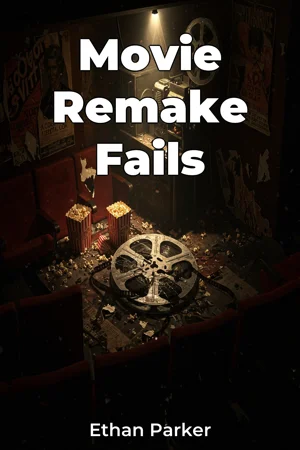
Why do some movie remakes soar while others crash and burn, leaving audiences and critics alike wondering what went wrong? *Movie Remake Fails* delves into the complex world of cinematic reimaginings to dissect the elements that lead to critical and commercial disappointment. This book explores how studios, directors, and screenwriters grapple with the challenge of updating classic stories for modern audiences while staying true to the source material's essence, or choosing to deviate entirely. Two central themes examined are the pitfalls of misinterpreting audience expectations and the challenges of recapturing the original film's distinctive atmosphere or tone. The book highlights the significance of understanding the cultural moment in which a remake is released. Factors such as evolving social values, technological advancements in filmmaking, and the audience's pre-existing relationship with the original greatly influence a remake's reception. The book argues that a fundamental reason behind many remake failures lies in a lack of understanding regarding what made the original film resonate with its initial audience. This includes misjudging the story's core themes, caricaturing beloved characters, or failing to adapt the narrative to contemporary sensibilities without sacrificing its integrity. *Movie Remake Fails* is structured to provide a comprehensive analysis of this complex phenomenon. Beginning with an introduction to the concept of remakes and their historical trajectory, the book then examines case studies of notable failures across various genres. These cases expose the specific creative and business decisions that contributed to each film's downfall. The book is divided into three major sections: "Misinterpreted Nostalgia," focusing on remakes that failed to capture the spirit of the original, "Technical Misfires," analyzing remakes plagued by poor direction, casting, or special effects, and "The Curse of Expectation," delving into the remakes that buckled under the weight of fan anticipation and scrutiny. The examination culminates in an analysis of best practices for approaching remakes, drawing lessons from both successes and failures. The evidence presented throughout the book draws from film reviews, box office data, interviews with filmmakers and actors, and audience surveys. The book also utilizes comparative analysis, contrasting the original films with their remakes to pinpoint the areas where the new iterations diverged and ultimately faltered. This book also incorporates concepts from media studies, examining the role of nostalgia and cultural memory in shaping audience perceptions of remakes. It also touches on economic factors within the film industry, analyzing how studio pressures and financial incentives can sometimes lead to misguided creative choices. This book distinguishes itself by providing a balanced perspective that goes beyond simple criticism. It offers a structured framework for understanding the factors that affect a remake's success or failure, moving beyond subjective opinions to provide actionable insights. The tone is informative and analytical, aiming to educate readers rather than simply entertain them. The book's target audience includes film students, aspiring filmmakers, film critics, and avid moviegoers interested in the creative and business aspects of the film industry. For those involved in creating or analyzing films, the book is of particular interest as it reveals how to avoid repeating past mistakes when reimagining existing stories. While the book covers a wide array of remakes from various genres and eras, it focuses primarily on films released within the past few decades to ensure relevance. The book does not aim to provide an exhaustive list of every remake failure but rather to highlight representative examples that illuminate key trends and principles. The information presented in *Movie Remake Fails* can be applied to the broader context of creative adaptations across different media, providing valuable insights for anyone involved in adapting stories for new audiences. The book also addresses ongoing debates about the merits and ethics of remaking classic films, offering a nuanced perspective on this controversial topic.
Why do some movie remakes soar while others crash and burn, leaving audiences and critics alike wondering what went wrong? *Movie Remake Fails* delves into the complex world of cinematic reimaginings to dissect the elements that lead to critical and commercial disappointment. This book explores how studios, directors, and screenwriters grapple with the challenge of updating classic stories for modern audiences while staying true to the source material's essence, or choosing to deviate entirely. Two central themes examined are the pitfalls of misinterpreting audience expectations and the challenges of recapturing the original film's distinctive atmosphere or tone. The book highlights the significance of understanding the cultural moment in which a remake is released. Factors such as evolving social values, technological advancements in filmmaking, and the audience's pre-existing relationship with the original greatly influence a remake's reception. The book argues that a fundamental reason behind many remake failures lies in a lack of understanding regarding what made the original film resonate with its initial audience. This includes misjudging the story's core themes, caricaturing beloved characters, or failing to adapt the narrative to contemporary sensibilities without sacrificing its integrity. *Movie Remake Fails* is structured to provide a comprehensive analysis of this complex phenomenon. Beginning with an introduction to the concept of remakes and their historical trajectory, the book then examines case studies of notable failures across various genres. These cases expose the specific creative and business decisions that contributed to each film's downfall. The book is divided into three major sections: "Misinterpreted Nostalgia," focusing on remakes that failed to capture the spirit of the original, "Technical Misfires," analyzing remakes plagued by poor direction, casting, or special effects, and "The Curse of Expectation," delving into the remakes that buckled under the weight of fan anticipation and scrutiny. The examination culminates in an analysis of best practices for approaching remakes, drawing lessons from both successes and failures. The evidence presented throughout the book draws from film reviews, box office data, interviews with filmmakers and actors, and audience surveys. The book also utilizes comparative analysis, contrasting the original films with their remakes to pinpoint the areas where the new iterations diverged and ultimately faltered. This book also incorporates concepts from media studies, examining the role of nostalgia and cultural memory in shaping audience perceptions of remakes. It also touches on economic factors within the film industry, analyzing how studio pressures and financial incentives can sometimes lead to misguided creative choices. This book distinguishes itself by providing a balanced perspective that goes beyond simple criticism. It offers a structured framework for understanding the factors that affect a remake's success or failure, moving beyond subjective opinions to provide actionable insights. The tone is informative and analytical, aiming to educate readers rather than simply entertain them. The book's target audience includes film students, aspiring filmmakers, film critics, and avid moviegoers interested in the creative and business aspects of the film industry. For those involved in creating or analyzing films, the book is of particular interest as it reveals how to avoid repeating past mistakes when reimagining existing stories. While the book covers a wide array of remakes from various genres and eras, it focuses primarily on films released within the past few decades to ensure relevance. The book does not aim to provide an exhaustive list of every remake failure but rather to highlight representative examples that illuminate key trends and principles. The information presented in *Movie Remake Fails* can be applied to the broader context of creative adaptations across different media, providing valuable insights for anyone involved in adapting stories for new audiences. The book also addresses ongoing debates about the merits and ethics of remaking classic films, offering a nuanced perspective on this controversial topic.
"Movie Remake Fails" explores why some cinematic reimaginings resonate while others flop. The book dissects the delicate balance between honoring the original film and updating it for modern audiences. One crucial aspect explored is how misinterpreting audience expectations can doom a remake. Another is the challenge of recreating a film's unique atmosphere. The book argues that understanding why the original resonated is key to a successful remake. The book's analysis progresses through case studies, divided into sections like "Misinterpreted Nostalgia," "Technical Misfires," and "The Curse of Expectation." These cases highlight creative and business decisions that led to failure. For example, remakes that misunderstand the original's core themes or caricature beloved characters often struggle. By examining film reviews, box office data, and filmmaker interviews, the book provides a balanced perspective beyond simple criticism. It offers a structured framework for understanding failure in film adaptations.
Book Details
ISBN
9788235214331
Publisher
Publifye AS
Your Licenses
You don't own any licenses for this book
Purchase a license below to unlock this book and download the EPUB.
Purchase License
Select a tier to unlock this book
Need bulk licensing?
Contact us for enterprise agreements.