
About This Book
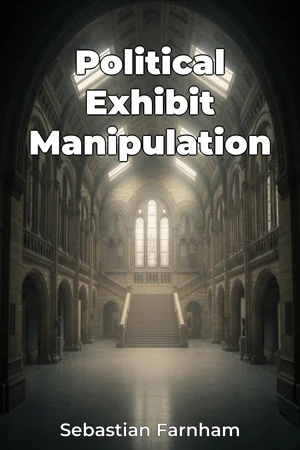
How much of what you see in a museum is history, and how much is politics? "Political Exhibit Manipulation" delves into the intricate relationship between governments and museum exhibits, revealing how national identity and public perception are deliberately shaped through curated displays. This book exposes the subtle and not-so-subtle ways in which museums become battlegrounds for ideological control, highlighting the critical need for informed and critical engagement with these powerful institutions. This book focuses on three central themes: the utilization of museum exhibits as tools for nation-building, the propagation of specific narratives through selective historical representation, and the impact of political agendas on the interpretation of cultural artifacts. These themes are crucial because they underscore the precariousness of objective truth in public spaces and the potential for museums to become instruments of propaganda. The book provides the historical, social, and political context necessary to comprehend the mechanisms of influence. Readers should have a rudimentary understanding of political science concepts such as nationalism, ideology, and power dynamics to fully appreciate the depth of the analysis. The central argument is that museum exhibits are rarely neutral or unbiased representations of the past but are often deliberately crafted to serve specific political purposes, whether to foster national unity, legitimize government policies, or promote a particular worldview. This argument is significant because it challenges the conventional understanding of museums as objective sources of knowledge and prompts a more critical evaluation of the narratives they present. The book progresses systematically, beginning with an introduction to the theoretical framework of political influence in museums. It then explores case studies from various countries and historical periods, demonstrating how governments have manipulated exhibits to promote specific agendas. One major section examines the use of museums to construct and reinforce national myths, while another analyzes how controversial historical events are presented (or suppressed) to shape public memory. The book culminates in a discussion of the ethical implications of political exhibit manipulation and proposes strategies for fostering greater transparency and accountability in museum practices. The analysis will incorporate a broad range of evidence, including archival documents, museum records, government publications, and critical analyses of museum exhibits. Methodologies include comparative analysis, discourse analysis, and historical contextualization. The book connects to fields such as political science, cultural studies, and art history, enhancing its argument by drawing on diverse perspectives and analytical tools. What sets this book apart is its comparative approach, examining cases across different political systems and historical periods. The book adopts an academic approach while remaining accessible to a broad audience. It is intended for students, researchers, museum professionals, and anyone interested in the intersection of politics, culture, and history. This book is valuable because it provides critical tools for understanding the political forces that shape our understanding of the past. As a work in history and politics, it adheres to the standards of rigorous scholarship, including thorough research, clear argumentation, and balanced presentation of evidence. The scope of the book is intentionally broad, covering a wide range of geographic regions and historical periods, but it does not attempt to provide an exhaustive survey of every instance of political exhibit manipulation. Instead, it focuses on representative cases that illustrate key themes and patterns. The information presented has real-world applications for museum visitors, who can use it to critically evaluate exhibits and recognize potential biases. It also has implications for museum professionals, who can use it to develop more ethical and transparent practices. The book acknowledges ongoing debates surrounding the role of museums in society and engages with different perspectives on the issue of political influence.
How much of what you see in a museum is history, and how much is politics? "Political Exhibit Manipulation" delves into the intricate relationship between governments and museum exhibits, revealing how national identity and public perception are deliberately shaped through curated displays. This book exposes the subtle and not-so-subtle ways in which museums become battlegrounds for ideological control, highlighting the critical need for informed and critical engagement with these powerful institutions. This book focuses on three central themes: the utilization of museum exhibits as tools for nation-building, the propagation of specific narratives through selective historical representation, and the impact of political agendas on the interpretation of cultural artifacts. These themes are crucial because they underscore the precariousness of objective truth in public spaces and the potential for museums to become instruments of propaganda. The book provides the historical, social, and political context necessary to comprehend the mechanisms of influence. Readers should have a rudimentary understanding of political science concepts such as nationalism, ideology, and power dynamics to fully appreciate the depth of the analysis. The central argument is that museum exhibits are rarely neutral or unbiased representations of the past but are often deliberately crafted to serve specific political purposes, whether to foster national unity, legitimize government policies, or promote a particular worldview. This argument is significant because it challenges the conventional understanding of museums as objective sources of knowledge and prompts a more critical evaluation of the narratives they present. The book progresses systematically, beginning with an introduction to the theoretical framework of political influence in museums. It then explores case studies from various countries and historical periods, demonstrating how governments have manipulated exhibits to promote specific agendas. One major section examines the use of museums to construct and reinforce national myths, while another analyzes how controversial historical events are presented (or suppressed) to shape public memory. The book culminates in a discussion of the ethical implications of political exhibit manipulation and proposes strategies for fostering greater transparency and accountability in museum practices. The analysis will incorporate a broad range of evidence, including archival documents, museum records, government publications, and critical analyses of museum exhibits. Methodologies include comparative analysis, discourse analysis, and historical contextualization. The book connects to fields such as political science, cultural studies, and art history, enhancing its argument by drawing on diverse perspectives and analytical tools. What sets this book apart is its comparative approach, examining cases across different political systems and historical periods. The book adopts an academic approach while remaining accessible to a broad audience. It is intended for students, researchers, museum professionals, and anyone interested in the intersection of politics, culture, and history. This book is valuable because it provides critical tools for understanding the political forces that shape our understanding of the past. As a work in history and politics, it adheres to the standards of rigorous scholarship, including thorough research, clear argumentation, and balanced presentation of evidence. The scope of the book is intentionally broad, covering a wide range of geographic regions and historical periods, but it does not attempt to provide an exhaustive survey of every instance of political exhibit manipulation. Instead, it focuses on representative cases that illustrate key themes and patterns. The information presented has real-world applications for museum visitors, who can use it to critically evaluate exhibits and recognize potential biases. It also has implications for museum professionals, who can use it to develop more ethical and transparent practices. The book acknowledges ongoing debates surrounding the role of museums in society and engages with different perspectives on the issue of political influence.
"Political Exhibit Manipulation" uncovers the hidden political agendas embedded within museum exhibits, revealing how these institutions can be used to shape national identity and public perception. The book explores how governments utilize museums for nation-building, often propagating specific narratives through the selective representation of history. For instance, cultural artifacts can be interpreted in ways that reinforce a particular ideology, turning museums into subtle yet powerful tools of propaganda. The book argues that museum exhibits are rarely neutral, challenging the conventional view of museums as objective sources of knowledge. The book systematically examines the theoretical framework of political influence in museums before delving into case studies from various countries and historical periods. These examples illustrate how exhibits are manipulated to promote specific agendas, such as constructing national myths or suppressing controversial historical events. Ultimately, "Political Exhibit Manipulation" discusses the ethical implications of such practices and proposes strategies for greater transparency in museums, offering readers critical tools for understanding the political forces shaping our understanding of the past.
Book Details
ISBN
9788235214188
Publisher
Publifye AS
Your Licenses
You don't own any licenses for this book
Purchase a license below to unlock this book and download the EPUB.
Purchase License
Select a tier to unlock this book
Need bulk licensing?
Contact us for enterprise agreements.