
About This Book
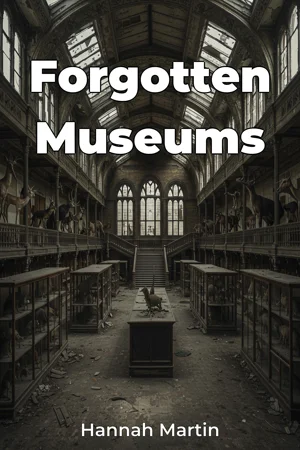
What happens when the doors close on institutions dedicated to preserving history and art? *Forgotten Museums* delves into the captivating stories of museums that, despite noble beginnings and valuable collections, have succumbed to the relentless pressures of time, changing tastes, and economic realities. This book explores not just their demise, but the lessons they offer about cultural preservation, institutional resilience, and the evolving relationship between society and its heritage. This work examines three central themes: the lifecycle of cultural institutions, the factors contributing to their decline, and the ethical considerations surrounding the deaccessioning and dispersal of collections. Understanding the lifecycle of museums—from inception and flourishing to stagnation and closure—provides a crucial framework for analyzing their vulnerabilities. By identifying the recurring pitfalls, such as inadequate funding models, shifts in public interest, and failures of leadership, we can better equip existing institutions to navigate an uncertain future. The book also grapples with the complex ethical questions that arise when museums close, particularly concerning the fate of their collections and the responsibility to maintain public access to cultural heritage. The narrative unfolds against a backdrop of significant societal shifts. The rise and fall of these museums often mirrors broader trends in patronage, education, and cultural values. For example, the decline of some specialized historical societies may reflect changing academic priorities or a fragmentation of community identity. Similarly, the closure of certain art museums may be linked to fluctuations in the art market or evolving definitions of artistic relevance. To fully appreciate these dynamics, the reader should have a basic understanding of museum administration, art history, and the principles of historical preservation, though these concepts will be clearly defined throughout the book. The central argument of *Forgotten Museums* is that the stories of these defunct institutions are not simply chronicles of failure, but valuable case studies that can inform contemporary museum practices and contribute to a more sustainable future for cultural heritage. By analyzing what went wrong, we can identify strategies for enhancing institutional adaptability, diversifying funding sources, and fostering stronger community engagement. The book begins by introducing the concept of museum mortality and outlining the methodology for selecting the featured case studies. It then explores the primary factors contributing to museum closures, including financial instability, curatorial mismanagement, and a failure to adapt to changing audience expectations. Each chapter focuses on 2-3 specific "forgotten museums" chosen to exemplify these challenges, providing detailed accounts of their history, collections, and eventual decline. The conclusion synthesizes the lessons learned and offers practical recommendations for museum professionals, policymakers, and anyone interested in safeguarding cultural heritage. The book relies on diverse sources, including archival records, institutional reports, news articles, and interviews with former staff members and community stakeholders. Statistical data on museum attendance, funding trends, and collection sizes is also incorporated to provide a quantitative perspective. *Forgotten Museums* intersects with several other fields, including economics (analyzing the economic impact of museum closures), sociology (examining the role of museums in shaping community identity), and public policy (evaluating the effectiveness of government support for cultural institutions). These interdisciplinary connections enrich the analysis and offer a more holistic understanding of the complex forces shaping the museum landscape. This book takes a novel approach by focusing on the negative space—the museums that no longer exist—to illuminate the challenges facing the museum sector as a whole. It moves beyond celebratory narratives of success to confront the uncomfortable realities of institutional vulnerability and the potential loss of cultural heritage. Written in a narrative non-fiction style, *Forgotten Museums* aims to be both informative and engaging, appealing to a broad audience interested in history, art, and cultural preservation. The target audience includes museum professionals, students in museum studies programs, cultural heritage advocates, and general readers with an interest in history and the arts. This book offers valuable insights for those seeking to understand the challenges facing museums today and to develop strategies for ensuring their long-term survival. As a work of history and art, *Forgotten Museums* adheres to established principles of factual accuracy, objectivity, and source citation. It also acknowledges the inherent limitations of historical research and the potential for multiple interpretations of events. The book’s scope is intentionally limited to museums in the United States and Europe, allowing for a more in-depth examination of specific national and regional trends. It does not attempt to provide a comprehensive global overview of museum closures. The insights gleaned from *Forgotten Museums* can be applied to a variety of real-world contexts, from developing sustainable business models for museums to informing public policies related to cultural funding and preservation. The book also touches on ongoing debates within the museum field, such as the ethics of deaccessioning and the role of museums in addressing social justice issues.
What happens when the doors close on institutions dedicated to preserving history and art? *Forgotten Museums* delves into the captivating stories of museums that, despite noble beginnings and valuable collections, have succumbed to the relentless pressures of time, changing tastes, and economic realities. This book explores not just their demise, but the lessons they offer about cultural preservation, institutional resilience, and the evolving relationship between society and its heritage. This work examines three central themes: the lifecycle of cultural institutions, the factors contributing to their decline, and the ethical considerations surrounding the deaccessioning and dispersal of collections. Understanding the lifecycle of museums—from inception and flourishing to stagnation and closure—provides a crucial framework for analyzing their vulnerabilities. By identifying the recurring pitfalls, such as inadequate funding models, shifts in public interest, and failures of leadership, we can better equip existing institutions to navigate an uncertain future. The book also grapples with the complex ethical questions that arise when museums close, particularly concerning the fate of their collections and the responsibility to maintain public access to cultural heritage. The narrative unfolds against a backdrop of significant societal shifts. The rise and fall of these museums often mirrors broader trends in patronage, education, and cultural values. For example, the decline of some specialized historical societies may reflect changing academic priorities or a fragmentation of community identity. Similarly, the closure of certain art museums may be linked to fluctuations in the art market or evolving definitions of artistic relevance. To fully appreciate these dynamics, the reader should have a basic understanding of museum administration, art history, and the principles of historical preservation, though these concepts will be clearly defined throughout the book. The central argument of *Forgotten Museums* is that the stories of these defunct institutions are not simply chronicles of failure, but valuable case studies that can inform contemporary museum practices and contribute to a more sustainable future for cultural heritage. By analyzing what went wrong, we can identify strategies for enhancing institutional adaptability, diversifying funding sources, and fostering stronger community engagement. The book begins by introducing the concept of museum mortality and outlining the methodology for selecting the featured case studies. It then explores the primary factors contributing to museum closures, including financial instability, curatorial mismanagement, and a failure to adapt to changing audience expectations. Each chapter focuses on 2-3 specific "forgotten museums" chosen to exemplify these challenges, providing detailed accounts of their history, collections, and eventual decline. The conclusion synthesizes the lessons learned and offers practical recommendations for museum professionals, policymakers, and anyone interested in safeguarding cultural heritage. The book relies on diverse sources, including archival records, institutional reports, news articles, and interviews with former staff members and community stakeholders. Statistical data on museum attendance, funding trends, and collection sizes is also incorporated to provide a quantitative perspective. *Forgotten Museums* intersects with several other fields, including economics (analyzing the economic impact of museum closures), sociology (examining the role of museums in shaping community identity), and public policy (evaluating the effectiveness of government support for cultural institutions). These interdisciplinary connections enrich the analysis and offer a more holistic understanding of the complex forces shaping the museum landscape. This book takes a novel approach by focusing on the negative space—the museums that no longer exist—to illuminate the challenges facing the museum sector as a whole. It moves beyond celebratory narratives of success to confront the uncomfortable realities of institutional vulnerability and the potential loss of cultural heritage. Written in a narrative non-fiction style, *Forgotten Museums* aims to be both informative and engaging, appealing to a broad audience interested in history, art, and cultural preservation. The target audience includes museum professionals, students in museum studies programs, cultural heritage advocates, and general readers with an interest in history and the arts. This book offers valuable insights for those seeking to understand the challenges facing museums today and to develop strategies for ensuring their long-term survival. As a work of history and art, *Forgotten Museums* adheres to established principles of factual accuracy, objectivity, and source citation. It also acknowledges the inherent limitations of historical research and the potential for multiple interpretations of events. The book’s scope is intentionally limited to museums in the United States and Europe, allowing for a more in-depth examination of specific national and regional trends. It does not attempt to provide a comprehensive global overview of museum closures. The insights gleaned from *Forgotten Museums* can be applied to a variety of real-world contexts, from developing sustainable business models for museums to informing public policies related to cultural funding and preservation. The book also touches on ongoing debates within the museum field, such as the ethics of deaccessioning and the role of museums in addressing social justice issues.
*Forgotten Museums* explores the often-overlooked stories of cultural institutions that have closed their doors, examining the reasons behind their demise and the lessons they offer for the future of cultural preservation. The book delves into the lifecycle of museums, revealing how factors like inadequate funding and shifting public interest can lead to their downfall. It also confronts the ethical dilemmas surrounding deaccessioning, questioning what happens to collections when a museum can no longer care for them. One may be surprised to learn that the decline of some historical societies mirrors changes in academic priorities. The book analyzes these forgotten institutions as valuable case studies, offering insights into how museums can enhance their resilience and adapt to changing circumstances. Beginning with an introduction to museum mortality, each chapter focuses on specific examples of "forgotten museums," detailing their histories and the challenges they faced. By exploring these failures, the book aims to inform contemporary museum practices and contribute to a more sustainable future for our cultural heritage.
Book Details
ISBN
9788235214171
Publisher
Publifye AS
Your Licenses
You don't own any licenses for this book
Purchase a license below to unlock this book and download the EPUB.
Purchase License
Select a tier to unlock this book
Need bulk licensing?
Contact us for enterprise agreements.