
About This Book
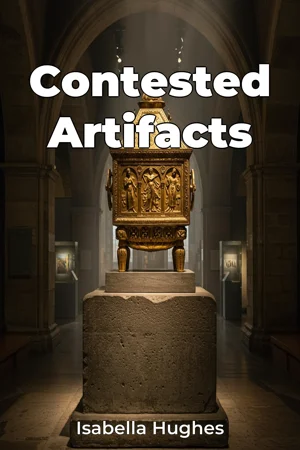
What happens when a nation's cultural heritage becomes entangled in the complexities of international law, politics, and ethics? *Contested Artifacts* delves into the multifaceted world of cultural property disputes, exploring the repatriation efforts surrounding artifacts claimed by multiple nations, each with their own historical narratives and legal justifications. This book examines the complex interplay between history, art, and world politics that fuels these conflicts. We analyze the key concepts of cultural heritage, national identity, and the legal frameworks governing the ownership and movement of artifacts. These concepts are crucial to understanding the emotional and political weight attached to these objects. The book provides the historical context necessary to grasp the roots of current disputes, tracing the lineage of artifact acquisition from colonial-era practices to modern-day looting and the burgeoning market for antiquities. We present the central argument that the resolution of artifact disputes requires a nuanced approach that moves beyond simple legal claims of ownership. It necessitates a consideration of historical context, cultural significance, and the ethical responsibilities of both source and possessor nations. *Contested Artifacts* begins by introducing the foundational concepts underpinning cultural property law and the moral arguments for repatriation. We then examine specific case studies, such as the Elgin Marbles dispute between Greece and the United Kingdom, the Benin Bronzes claimed by Nigeria from various European museums, and the Koh-i-Noor diamond, subject to claims from India, Pakistan, and Afghanistan. Each case study elucidates the unique circumstances, historical narratives, and legal arguments involved. The analysis considers the perspectives of museums, governments, indigenous communities, and international organizations. The culmination of these case studies leads to proposed frameworks for resolving these disputes, emphasizing collaboration, shared stewardship, and the potential for cultural exchange as alternatives to outright repatriation. The evidence presented within the book is drawn from a variety of sources, including international treaties, legal documents, museum archives, archaeological reports, and ethnographic studies. First-hand accounts from museum curators, legal experts, and representatives of claimant nations are incorporated to provide a comprehensive and balanced perspective. This study connects to the fields of international law, museum studies, and postcolonial studies. By examining the legal frameworks governing cultural property, the ethical considerations of museum display, and the lingering impact of colonialism on cultural heritage, we provide a holistic understanding of these complex disputes. *Contested Artifacts* offers a fresh perspective by moving beyond a purely legalistic approach to repatriation. It focuses on the ethical dimensions of cultural ownership and the potential for collaborative solutions that benefit all parties involved. The book adopts a balanced and objective tone, presenting multiple perspectives and avoiding partisan stances. The intended audience includes students and scholars of history, art history, international law, and museum studies, as well as museum professionals, policymakers, and anyone interested in the preservation and repatriation of cultural heritage. The book is particularly valuable to those seeking a comprehensive and accessible overview of the key issues and debates in this field. As a work of non-fiction, *Contested Artifacts* adheres to the principles of accuracy, objectivity, and thorough research. The book's scope is limited to artifacts that are the subject of active international disputes, excluding broader discussions of cultural heritage management or art market regulation. The information presented can inform policy decisions related to cultural heritage preservation and repatriation, providing practical guidance for museums and governments navigating these complex issues. The book addresses ongoing debates about the role of museums in preserving and displaying cultural artifacts, the rights of nations to reclaim their cultural heritage, and the ethical responsibilities of possessor nations.
What happens when a nation's cultural heritage becomes entangled in the complexities of international law, politics, and ethics? *Contested Artifacts* delves into the multifaceted world of cultural property disputes, exploring the repatriation efforts surrounding artifacts claimed by multiple nations, each with their own historical narratives and legal justifications. This book examines the complex interplay between history, art, and world politics that fuels these conflicts. We analyze the key concepts of cultural heritage, national identity, and the legal frameworks governing the ownership and movement of artifacts. These concepts are crucial to understanding the emotional and political weight attached to these objects. The book provides the historical context necessary to grasp the roots of current disputes, tracing the lineage of artifact acquisition from colonial-era practices to modern-day looting and the burgeoning market for antiquities. We present the central argument that the resolution of artifact disputes requires a nuanced approach that moves beyond simple legal claims of ownership. It necessitates a consideration of historical context, cultural significance, and the ethical responsibilities of both source and possessor nations. *Contested Artifacts* begins by introducing the foundational concepts underpinning cultural property law and the moral arguments for repatriation. We then examine specific case studies, such as the Elgin Marbles dispute between Greece and the United Kingdom, the Benin Bronzes claimed by Nigeria from various European museums, and the Koh-i-Noor diamond, subject to claims from India, Pakistan, and Afghanistan. Each case study elucidates the unique circumstances, historical narratives, and legal arguments involved. The analysis considers the perspectives of museums, governments, indigenous communities, and international organizations. The culmination of these case studies leads to proposed frameworks for resolving these disputes, emphasizing collaboration, shared stewardship, and the potential for cultural exchange as alternatives to outright repatriation. The evidence presented within the book is drawn from a variety of sources, including international treaties, legal documents, museum archives, archaeological reports, and ethnographic studies. First-hand accounts from museum curators, legal experts, and representatives of claimant nations are incorporated to provide a comprehensive and balanced perspective. This study connects to the fields of international law, museum studies, and postcolonial studies. By examining the legal frameworks governing cultural property, the ethical considerations of museum display, and the lingering impact of colonialism on cultural heritage, we provide a holistic understanding of these complex disputes. *Contested Artifacts* offers a fresh perspective by moving beyond a purely legalistic approach to repatriation. It focuses on the ethical dimensions of cultural ownership and the potential for collaborative solutions that benefit all parties involved. The book adopts a balanced and objective tone, presenting multiple perspectives and avoiding partisan stances. The intended audience includes students and scholars of history, art history, international law, and museum studies, as well as museum professionals, policymakers, and anyone interested in the preservation and repatriation of cultural heritage. The book is particularly valuable to those seeking a comprehensive and accessible overview of the key issues and debates in this field. As a work of non-fiction, *Contested Artifacts* adheres to the principles of accuracy, objectivity, and thorough research. The book's scope is limited to artifacts that are the subject of active international disputes, excluding broader discussions of cultural heritage management or art market regulation. The information presented can inform policy decisions related to cultural heritage preservation and repatriation, providing practical guidance for museums and governments navigating these complex issues. The book addresses ongoing debates about the role of museums in preserving and displaying cultural artifacts, the rights of nations to reclaim their cultural heritage, and the ethical responsibilities of possessor nations.
"Contested Artifacts" explores the complex world of cultural property disputes, where history, art, and world politics collide. The book delves into artifact repatriation, examining how international law, ethics, and national identity fuel conflicts over cultural heritage. Did you know that the Benin Bronzes, for example, are claimed by Nigeria from various European museums, highlighting the legacy of colonial-era acquisition? The study emphasizes that resolving these disputes requires a nuanced approach, considering historical context and ethical responsibilities beyond simple legal claims. The book uniquely balances legal and ethical dimensions, analyzing cases like the Elgin Marbles and the Koh-i-Noor diamond to illustrate the multifaceted nature of these disputes. It progresses by first introducing foundational concepts, and then moves on to specific case studies, incorporating perspectives from museums, governments, and indigenous communities. Ultimately, it proposes collaborative frameworks for resolving disputes, emphasizing shared stewardship and cultural exchange.
Book Details
ISBN
9788235214126
Publisher
Publifye AS
Your Licenses
You don't own any licenses for this book
Purchase a license below to unlock this book and download the EPUB.
Purchase License
Select a tier to unlock this book
Need bulk licensing?
Contact us for enterprise agreements.