
About This Book
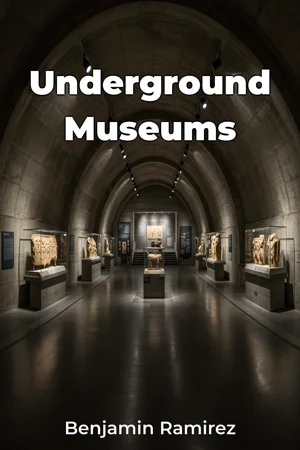
Have you ever considered what lies beneath our feet – not just the earth, but entire museums dedicated to preserving history, art, and secrets, all hidden from plain sight? "Underground Museums" delves into the fascinating world of subterranean cultural institutions, exploring the architectural ingenuity and historical significance of museums built beneath the surface. This book addresses not only the practical reasons for constructing museums underground – such as protection from the elements, preservation of delicate artifacts, and discreet storage of sensitive collections – but also the profound impact these hidden spaces have on our understanding of history and culture. The book primarily examines three key aspects of underground museums. First, it investigates the architectural designs employed in their construction, focusing on the innovative use of space, materials, and engineering techniques to create environments conducive to preservation and visitor experience. Second, it explores the historical contexts that led to the creation of these museums, examining the motivations of governments, private collectors, and institutions in choosing to house their collections underground. Finally, the book considers visitor experience, analyzing how the unique setting shapes perception and engagement with the artifacts and exhibits on display. These topics are important because they shed light on the intersection of architecture, history, and cultural preservation, revealing how subterranean spaces can serve as powerful tools for education and remembrance. To fully appreciate the design and purpose of underground museums, it is important to understand the historical pressures that have shaped their creation. The book provides an overview of significant historical events, such as wars, natural disasters, and political upheavals, that have necessitated the protection of cultural heritage. It also delves into the evolving techniques of artifact preservation, explaining how controlled underground environments can mitigate the damaging effects of light, temperature fluctuations, and humidity. The central argument of "Underground Museums" is that these subterranean spaces are not merely repositories of artifacts, but active agents in shaping our understanding of the past. By controlling access and environment, these museums offer unique curatorial opportunities and influence the visitor's experience in profound ways. This argument is important because it challenges the conventional notion of museums as passively displaying history, highlighting their role in interpreting and preserving cultural memory. The book begins with an introduction to the concept of underground museums and a discussion of their historical origins. It then develops its argument through three major sections. The first section focuses on the architectural and engineering challenges involved in building underground, examining case studies of museums around the world. The second explores the motivations behind creating underground museums, looking at examples that were built for preservation, security, or secrecy. The third analyzes the visitor experience, considering how the subterranean setting affects perception, emotion, and learning. The book culminates with a discussion of the future of underground museums, exploring the potential for new technologies and designs to create even more immersive and impactful cultural experiences. The book draws on a variety of evidence, including architectural plans and drawings, historical documents, museum records, and visitor surveys. It also incorporates original photography and interviews with architects, curators, and museum directors. "Underground Museums" also connects to several other fields, including archaeology, environmental science, and psychology. By considering the archaeological context of buried artifacts, the environmental conditions necessary for preservation, and the psychological impact of underground spaces on visitors, the book offers a multidisciplinary perspective on the subject. A unique aspect of this book is its focus on the sensory experience of being in an underground museum. It does not just present information, but also considers the atmosphere and ambiance of these spaces, exploring the influence of lighting, acoustics, and spatial design on visitor perception. The tone of the book is informative and engaging, aiming to be accessible to a broad audience while maintaining scholarly rigor. The target audience includes architecture enthusiasts, history buffs, museum professionals, and anyone interested in the intersection of culture and design. It would be valuable to those seeking a deeper understanding of how museums function as cultural institutions and how architectural design can shape the experience of history. As a work of architectural and historical non-fiction, this book adheres to the conventions of accuracy, objectivity, and thorough research. The scope of the book is global, examining underground museums from various regions and historical periods. However, it is limited to museums that are primarily located underground, intentionally excluding those that have only partial subterranean components. The information in the book can be applied practically by architects and museum designers seeking to create innovative and impactful cultural spaces. It can also inform museum visitors, encouraging them to think critically about the spaces in which they encounter history. While the concept of preserving artifacts underground is generally well-regarded, there are ongoing debates about the ethics of concealing certain historical collections from public view. "Underground Museums" addresses these controversies by presenting different perspectives on the issue.
Have you ever considered what lies beneath our feet – not just the earth, but entire museums dedicated to preserving history, art, and secrets, all hidden from plain sight? "Underground Museums" delves into the fascinating world of subterranean cultural institutions, exploring the architectural ingenuity and historical significance of museums built beneath the surface. This book addresses not only the practical reasons for constructing museums underground – such as protection from the elements, preservation of delicate artifacts, and discreet storage of sensitive collections – but also the profound impact these hidden spaces have on our understanding of history and culture. The book primarily examines three key aspects of underground museums. First, it investigates the architectural designs employed in their construction, focusing on the innovative use of space, materials, and engineering techniques to create environments conducive to preservation and visitor experience. Second, it explores the historical contexts that led to the creation of these museums, examining the motivations of governments, private collectors, and institutions in choosing to house their collections underground. Finally, the book considers visitor experience, analyzing how the unique setting shapes perception and engagement with the artifacts and exhibits on display. These topics are important because they shed light on the intersection of architecture, history, and cultural preservation, revealing how subterranean spaces can serve as powerful tools for education and remembrance. To fully appreciate the design and purpose of underground museums, it is important to understand the historical pressures that have shaped their creation. The book provides an overview of significant historical events, such as wars, natural disasters, and political upheavals, that have necessitated the protection of cultural heritage. It also delves into the evolving techniques of artifact preservation, explaining how controlled underground environments can mitigate the damaging effects of light, temperature fluctuations, and humidity. The central argument of "Underground Museums" is that these subterranean spaces are not merely repositories of artifacts, but active agents in shaping our understanding of the past. By controlling access and environment, these museums offer unique curatorial opportunities and influence the visitor's experience in profound ways. This argument is important because it challenges the conventional notion of museums as passively displaying history, highlighting their role in interpreting and preserving cultural memory. The book begins with an introduction to the concept of underground museums and a discussion of their historical origins. It then develops its argument through three major sections. The first section focuses on the architectural and engineering challenges involved in building underground, examining case studies of museums around the world. The second explores the motivations behind creating underground museums, looking at examples that were built for preservation, security, or secrecy. The third analyzes the visitor experience, considering how the subterranean setting affects perception, emotion, and learning. The book culminates with a discussion of the future of underground museums, exploring the potential for new technologies and designs to create even more immersive and impactful cultural experiences. The book draws on a variety of evidence, including architectural plans and drawings, historical documents, museum records, and visitor surveys. It also incorporates original photography and interviews with architects, curators, and museum directors. "Underground Museums" also connects to several other fields, including archaeology, environmental science, and psychology. By considering the archaeological context of buried artifacts, the environmental conditions necessary for preservation, and the psychological impact of underground spaces on visitors, the book offers a multidisciplinary perspective on the subject. A unique aspect of this book is its focus on the sensory experience of being in an underground museum. It does not just present information, but also considers the atmosphere and ambiance of these spaces, exploring the influence of lighting, acoustics, and spatial design on visitor perception. The tone of the book is informative and engaging, aiming to be accessible to a broad audience while maintaining scholarly rigor. The target audience includes architecture enthusiasts, history buffs, museum professionals, and anyone interested in the intersection of culture and design. It would be valuable to those seeking a deeper understanding of how museums function as cultural institutions and how architectural design can shape the experience of history. As a work of architectural and historical non-fiction, this book adheres to the conventions of accuracy, objectivity, and thorough research. The scope of the book is global, examining underground museums from various regions and historical periods. However, it is limited to museums that are primarily located underground, intentionally excluding those that have only partial subterranean components. The information in the book can be applied practically by architects and museum designers seeking to create innovative and impactful cultural spaces. It can also inform museum visitors, encouraging them to think critically about the spaces in which they encounter history. While the concept of preserving artifacts underground is generally well-regarded, there are ongoing debates about the ethics of concealing certain historical collections from public view. "Underground Museums" addresses these controversies by presenting different perspectives on the issue.
"Underground Museums" explores the captivating world of subterranean cultural institutions, revealing the architectural ingenuity and historical significance of museums built beneath the surface. These hidden spaces serve vital roles, from protecting delicate artifacts from environmental damage to discreetly storing sensitive collections. The book examines how innovative designs, employing unique space utilization and engineering, create environments that enhance both preservation and visitor experience. The book delves into the historical contexts that prompted the creation of these museums. For example, many were constructed in response to wars, natural disasters, or political upheavals, highlighting the critical need to safeguard cultural heritage. It also analyzes how the unique setting of underground museums shapes visitor perception and engagement with exhibits, offering distinct curatorial opportunities. The book progresses by examining architectural challenges, motivations for building underground, and the overall visitor experience. By focusing on the sensory experience and atmosphere of subterranean spaces, this book uniquely considers the impact of lighting, acoustics, and spatial design on visitor perception. This approach enriches our understanding of how these museums function as cultural institutions. Ultimately, the book challenges conventional notions of museums, positioning them as active agents in interpreting and preserving cultural memory.
Book Details
ISBN
9788235214065
Publisher
Publifye AS
Your Licenses
You don't own any licenses for this book
Purchase a license below to unlock this book and download the EPUB.
Purchase License
Select a tier to unlock this book
Need bulk licensing?
Contact us for enterprise agreements.