
About This Book
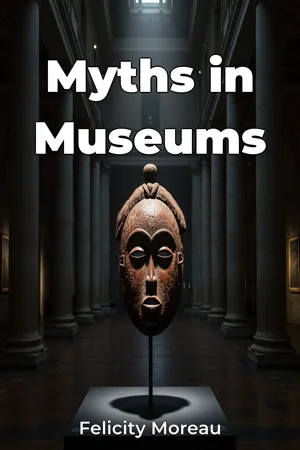
Have museums, institutions ostensibly dedicated to preserving and presenting truth, inadvertently become purveyors of misleading narratives? "Myths in Museums" delves into this critical question, examining how museums, despite their noble intentions, have often misrepresented history, culture, and scientific discoveries. This book argues that these misrepresentations, whether intentional or unintentional, stem from a complex interplay of factors, including institutional biases, incomplete research, and the pressure to create engaging and marketable exhibits. Understanding these factors is vital for both museum professionals and the public, empowering them to critically evaluate the stories museums tell and advocate for more accurate and inclusive representations. The core of "Myths in Museums" revolves around three key themes. First, it examines how historical events have been selectively presented or reinterpreted to align with nationalistic agendas or dominant cultural narratives. Second, it analyzes the perpetuation of stereotypes and the appropriation of cultural artifacts, particularly concerning indigenous populations and marginalized communities. Third, the book explores the ways in which scientific discoveries have been oversimplified or sensationalized, leading to public misconceptions. Each of these themes is significant because it impacts our understanding of the past, our perceptions of diverse cultures, and our comprehension of the scientific world. To provide context, the book draws on historical case studies spanning several centuries and continents, analyzing the evolution of museum practices in relation to broader social and political movements. It also considers the influence of funding sources, curatorial decisions, and audience expectations on the presentation of museum content. This historical context provides a crucial foundation for understanding the contemporary challenges facing museums as they strive to become more transparent and accountable institutions. The central argument is that museums, as influential cultural institutions, bear a significant responsibility to critically examine their own biases and actively work to deconstruct misleading narratives. This requires a commitment to rigorous historical research, collaboration with affected communities, and a willingness to challenge conventional wisdom. The book underscores that failure to address these issues undermines the credibility of museums and perpetuates harmful stereotypes. The book is structured to methodically unpack this complex issue. It begins by introducing the theoretical framework, defining key concepts such as "historical accuracy," "cultural sensitivity," and "scientific integrity" within the museum context. The subsequent sections delve into specific case studies, such as the misrepresentation of colonial history in European museums, the problematic display of indigenous artifacts in North American institutions, and the sensationalized presentation of evolutionary science. Each case study analyzes the underlying factors contributing to the misrepresentation and explores potential solutions. The culmination of the argument lies in a call for a more critical and reflexive approach to museum practice, accompanied by practical guidelines for creating more inclusive and accurate exhibits. The evidence presented in "Myths in Museums" draws from a diverse range of sources, including museum archives, academic publications, firsthand accounts from indigenous communities, and critical analyses of museum exhibits. The research methodology involves a combination of historical analysis, cultural studies, and scientific critique. The book also connects to other fields of study, including sociology, anthropology, and communication studies. By engaging with these disciplines, the book offers a multidisciplinary perspective on the role of museums in shaping public understanding. This interdisciplinary approach enriches the analysis and provides a more nuanced understanding of the complex issues at play. A defining feature of "Myths in Museums" is its emphasis on deconstructing the power dynamics that shape museum narratives. By examining the perspectives of marginalized communities and challenging dominant viewpoints, the book offers a fresh and critical perspective on the role of museums in society. Written in a accessible style that bridges scholarly rigor and reader engagement, "Myths in Museums" is aimed at museum professionals, students, educators, and anyone interested in the role of museums in shaping public discourse. It offers valuable insights for those seeking to critically evaluate the messages conveyed by these institutions and advocate for more accurate and inclusive representations. In terms of scope, the book focuses primarily on museums in Western countries, acknowledging that museums in other regions face distinct challenges and complexities. It also recognizes that the task of achieving complete accuracy in historical, cultural, and scientific representation is a continuous and evolving process. The information presented can be applied to inform museum visitors, educate future museum staff, and, ultimately, improve museums. While striving for objectivity, the book acknowledges the ongoing debates surrounding issues of cultural appropriation, historical interpretation, and scientific communication. It encourages readers to engage critically with these debates and form their own informed opinions.
Have museums, institutions ostensibly dedicated to preserving and presenting truth, inadvertently become purveyors of misleading narratives? "Myths in Museums" delves into this critical question, examining how museums, despite their noble intentions, have often misrepresented history, culture, and scientific discoveries. This book argues that these misrepresentations, whether intentional or unintentional, stem from a complex interplay of factors, including institutional biases, incomplete research, and the pressure to create engaging and marketable exhibits. Understanding these factors is vital for both museum professionals and the public, empowering them to critically evaluate the stories museums tell and advocate for more accurate and inclusive representations. The core of "Myths in Museums" revolves around three key themes. First, it examines how historical events have been selectively presented or reinterpreted to align with nationalistic agendas or dominant cultural narratives. Second, it analyzes the perpetuation of stereotypes and the appropriation of cultural artifacts, particularly concerning indigenous populations and marginalized communities. Third, the book explores the ways in which scientific discoveries have been oversimplified or sensationalized, leading to public misconceptions. Each of these themes is significant because it impacts our understanding of the past, our perceptions of diverse cultures, and our comprehension of the scientific world. To provide context, the book draws on historical case studies spanning several centuries and continents, analyzing the evolution of museum practices in relation to broader social and political movements. It also considers the influence of funding sources, curatorial decisions, and audience expectations on the presentation of museum content. This historical context provides a crucial foundation for understanding the contemporary challenges facing museums as they strive to become more transparent and accountable institutions. The central argument is that museums, as influential cultural institutions, bear a significant responsibility to critically examine their own biases and actively work to deconstruct misleading narratives. This requires a commitment to rigorous historical research, collaboration with affected communities, and a willingness to challenge conventional wisdom. The book underscores that failure to address these issues undermines the credibility of museums and perpetuates harmful stereotypes. The book is structured to methodically unpack this complex issue. It begins by introducing the theoretical framework, defining key concepts such as "historical accuracy," "cultural sensitivity," and "scientific integrity" within the museum context. The subsequent sections delve into specific case studies, such as the misrepresentation of colonial history in European museums, the problematic display of indigenous artifacts in North American institutions, and the sensationalized presentation of evolutionary science. Each case study analyzes the underlying factors contributing to the misrepresentation and explores potential solutions. The culmination of the argument lies in a call for a more critical and reflexive approach to museum practice, accompanied by practical guidelines for creating more inclusive and accurate exhibits. The evidence presented in "Myths in Museums" draws from a diverse range of sources, including museum archives, academic publications, firsthand accounts from indigenous communities, and critical analyses of museum exhibits. The research methodology involves a combination of historical analysis, cultural studies, and scientific critique. The book also connects to other fields of study, including sociology, anthropology, and communication studies. By engaging with these disciplines, the book offers a multidisciplinary perspective on the role of museums in shaping public understanding. This interdisciplinary approach enriches the analysis and provides a more nuanced understanding of the complex issues at play. A defining feature of "Myths in Museums" is its emphasis on deconstructing the power dynamics that shape museum narratives. By examining the perspectives of marginalized communities and challenging dominant viewpoints, the book offers a fresh and critical perspective on the role of museums in society. Written in a accessible style that bridges scholarly rigor and reader engagement, "Myths in Museums" is aimed at museum professionals, students, educators, and anyone interested in the role of museums in shaping public discourse. It offers valuable insights for those seeking to critically evaluate the messages conveyed by these institutions and advocate for more accurate and inclusive representations. In terms of scope, the book focuses primarily on museums in Western countries, acknowledging that museums in other regions face distinct challenges and complexities. It also recognizes that the task of achieving complete accuracy in historical, cultural, and scientific representation is a continuous and evolving process. The information presented can be applied to inform museum visitors, educate future museum staff, and, ultimately, improve museums. While striving for objectivity, the book acknowledges the ongoing debates surrounding issues of cultural appropriation, historical interpretation, and scientific communication. It encourages readers to engage critically with these debates and form their own informed opinions.
"Myths in Museums" explores how museums, intended to be bastions of truth, can inadvertently perpetuate misleading narratives in History and Art. The book examines the complex reasons behind these misrepresentations, from institutional biases to the pressure to create engaging exhibits. Museums play a significant role in shaping our understanding of the world, and this book argues that they must critically examine their own biases to ensure accurate and inclusive representations. Did you know that historical events are sometimes selectively presented to align with nationalistic agendas? Or that stereotypes can be perpetuated through the problematic display of cultural artifacts? The book approaches this topic through case studies spanning centuries and continents, analyzing the evolution of museum practices. It delves into how museums have misrepresented colonial history, displayed indigenous artifacts problematically, and sensationalized scientific discoveries. Structured methodically, "Myths in Museums" begins by establishing a theoretical framework, then moves into specific examples, and culminates with practical guidelines for creating more inclusive and accurate exhibits. The book highlights the importance of cultural sensitivity and scientific integrity in museum narratives.
Book Details
ISBN
9788235214041
Publisher
Publifye AS
Your Licenses
You don't own any licenses for this book
Purchase a license below to unlock this book and download the EPUB.
Purchase License
Select a tier to unlock this book
Need bulk licensing?
Contact us for enterprise agreements.