
About This Book
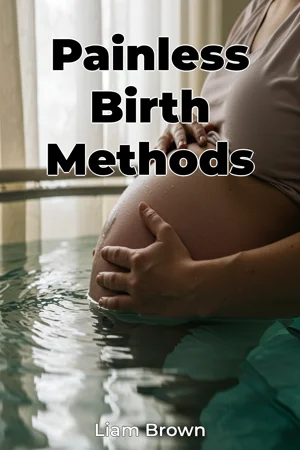
Are you approaching childbirth and seeking a comprehensive guide to managing labor pain? "Painless Birth Methods" offers an in-depth exploration of techniques, ranging from medical interventions like epidurals to natural and holistic approaches, empowering expectant parents to make informed choices for their birthing experience. This book addresses the critical need for accessible and evidence-based information, allowing you to navigate the complex landscape of pain management during labor. We delve into two core areas: pharmacological pain relief, primarily focusing on epidural anesthesia, and non-pharmacological methods, which encompass techniques such as breathing exercises, massage, hydrotherapy, and mindfulness. Understanding the benefits, risks, and proper administration of epidurals is paramount, as is mastering the art of natural pain management to promote a sense of control and well-being. The book provides historical context by tracing the evolution of childbirth practices and the development of pain relief methods. This includes examining the shift from home births to hospital settings and the subsequent rise in medical interventions. Further, it discusses the social and cultural influences that shape perceptions and expectations surrounding childbirth pain. No prior medical knowledge is required, as we explain complex concepts in clear and straightforward language. Our central argument emphasizes that achieving a "painless" birth, while the ideal implied by the title, is less about the complete absence of pain and more about the proactive and educated management of discomfort to create a more positive and empowering experience. The importance of this lies in promoting maternal agency, reducing birth-related anxiety and trauma, and potentially improving overall maternal and infant health outcomes. The book begins with an introduction to the physiology of labor pain and an overview of various pain management philosophies. Then, separate sections thoroughly explore both pharmacological and non-pharmacological methods. For pharmacological methods, we discuss epidurals, spinals, and systemic analgesics, detailing their mechanisms of action, benefits, risks, and proper administration. For non-pharmacological methods, we cover breathing techniques, massage, hydrotherapy, acupuncture, aromatherapy, and mindfulness practices, providing step-by-step instructions and evidence-based research. We conclude by integrating these techniques into personalized birth plans, offering guidance on communicating preferences to healthcare providers, and addressing potential challenges that may arise during labor. The recommendations presented are supported by rigorous scientific evidence, including anesthesia studies and obstetrics research. We critically evaluate the available data, addressing both the strengths and limitations of existing research. The book also refers to guidelines and recommendations from leading medical organizations, such as the American College of Obstetricians and Gynecologists (ACOG). "Painless Birth Methods" also connects across several disciplines. Firstly, it integrates aspects of psychology, exploring the psychological impact of pain and the role of mindset in coping with labor. Secondly, it draws from sociology, examining cultural and societal influences on birthing practices. Thirdly, it uses principles of adult learning theory to improve information retention and practical application. A unique aspect of is the holistic approach, combining medical knowledge with natural and mind-body techniques. We empower readers to develop personalized strategies that align with their values and preferences. The tone is informative, supportive, and empowering. The writing style is clear, concise, and accessible, avoiding technical jargon and using real-life examples to illustrate key concepts. The target audience includes expectant parents, particularly those in their second or third trimester, as well as childbirth educators, doulas, and other birth professionals. This book offers valuable information and practical tools to help both parents and professionals confidently navigate the complexities of labor pain management. In line with the conventions of the health and fitness genre, the book provides clear, actionable advice supported by scientific evidence. It prioritizes readability and accessibility, ensuring that complex information is presented in a user-friendly manner. Regarding the parenting classification, it offers tools for facilitating a healthy and positive experience while focusing on parental empowerment and proactive decision-making. The book's scope is limited to pain management techniques during labor. It does not delve into preconception care, prenatal nutrition, or postpartum recovery extensively, as these topics fall outside the central focus. Readers can apply the knowledge gained from this book to develop personalized birth plans, make informed decisions about pain relief options, and practice non-pharmacological techniques for coping with labor. The book also features checklists, worksheets, and guided exercises. While the book presents a range of options, it also addresses controversies, such as the potential risks and benefits of epidurals, the role of natural childbirth in modern obstetrics, and the debate between interventionist and non-interventionist approaches to labor. We present both sides of these debates, encouraging readers to critically evaluate the evidence and make choices that align with their personal values and circumstances.
Are you approaching childbirth and seeking a comprehensive guide to managing labor pain? "Painless Birth Methods" offers an in-depth exploration of techniques, ranging from medical interventions like epidurals to natural and holistic approaches, empowering expectant parents to make informed choices for their birthing experience. This book addresses the critical need for accessible and evidence-based information, allowing you to navigate the complex landscape of pain management during labor. We delve into two core areas: pharmacological pain relief, primarily focusing on epidural anesthesia, and non-pharmacological methods, which encompass techniques such as breathing exercises, massage, hydrotherapy, and mindfulness. Understanding the benefits, risks, and proper administration of epidurals is paramount, as is mastering the art of natural pain management to promote a sense of control and well-being. The book provides historical context by tracing the evolution of childbirth practices and the development of pain relief methods. This includes examining the shift from home births to hospital settings and the subsequent rise in medical interventions. Further, it discusses the social and cultural influences that shape perceptions and expectations surrounding childbirth pain. No prior medical knowledge is required, as we explain complex concepts in clear and straightforward language. Our central argument emphasizes that achieving a "painless" birth, while the ideal implied by the title, is less about the complete absence of pain and more about the proactive and educated management of discomfort to create a more positive and empowering experience. The importance of this lies in promoting maternal agency, reducing birth-related anxiety and trauma, and potentially improving overall maternal and infant health outcomes. The book begins with an introduction to the physiology of labor pain and an overview of various pain management philosophies. Then, separate sections thoroughly explore both pharmacological and non-pharmacological methods. For pharmacological methods, we discuss epidurals, spinals, and systemic analgesics, detailing their mechanisms of action, benefits, risks, and proper administration. For non-pharmacological methods, we cover breathing techniques, massage, hydrotherapy, acupuncture, aromatherapy, and mindfulness practices, providing step-by-step instructions and evidence-based research. We conclude by integrating these techniques into personalized birth plans, offering guidance on communicating preferences to healthcare providers, and addressing potential challenges that may arise during labor. The recommendations presented are supported by rigorous scientific evidence, including anesthesia studies and obstetrics research. We critically evaluate the available data, addressing both the strengths and limitations of existing research. The book also refers to guidelines and recommendations from leading medical organizations, such as the American College of Obstetricians and Gynecologists (ACOG). "Painless Birth Methods" also connects across several disciplines. Firstly, it integrates aspects of psychology, exploring the psychological impact of pain and the role of mindset in coping with labor. Secondly, it draws from sociology, examining cultural and societal influences on birthing practices. Thirdly, it uses principles of adult learning theory to improve information retention and practical application. A unique aspect of is the holistic approach, combining medical knowledge with natural and mind-body techniques. We empower readers to develop personalized strategies that align with their values and preferences. The tone is informative, supportive, and empowering. The writing style is clear, concise, and accessible, avoiding technical jargon and using real-life examples to illustrate key concepts. The target audience includes expectant parents, particularly those in their second or third trimester, as well as childbirth educators, doulas, and other birth professionals. This book offers valuable information and practical tools to help both parents and professionals confidently navigate the complexities of labor pain management. In line with the conventions of the health and fitness genre, the book provides clear, actionable advice supported by scientific evidence. It prioritizes readability and accessibility, ensuring that complex information is presented in a user-friendly manner. Regarding the parenting classification, it offers tools for facilitating a healthy and positive experience while focusing on parental empowerment and proactive decision-making. The book's scope is limited to pain management techniques during labor. It does not delve into preconception care, prenatal nutrition, or postpartum recovery extensively, as these topics fall outside the central focus. Readers can apply the knowledge gained from this book to develop personalized birth plans, make informed decisions about pain relief options, and practice non-pharmacological techniques for coping with labor. The book also features checklists, worksheets, and guided exercises. While the book presents a range of options, it also addresses controversies, such as the potential risks and benefits of epidurals, the role of natural childbirth in modern obstetrics, and the debate between interventionist and non-interventionist approaches to labor. We present both sides of these debates, encouraging readers to critically evaluate the evidence and make choices that align with their personal values and circumstances.
"Painless Birth Methods" offers expectant parents a comprehensive guide to labor pain management, exploring both pharmacological and non-pharmacological options. The book addresses the common desire for a painless childbirth experience, reframing it as proactive and educated management of discomfort. It presents techniques ranging from epidural anesthesia to natural pain relief methods like breathing exercises, massage therapy, and mindfulness, emphasizing the importance of informed choices. Interestingly, the book traces the evolution of childbirth practices, from historical home births to modern hospital settings, highlighting the increasing role of medical interventions. It emphasizes that while complete absence of pain may be the ideal, maternal agency in managing discomfort is key to a positive birth experience. The book progresses by first introducing the physiology of labor pain and then delving into both medical and natural methods, providing step-by-step instructions and evidence-based research. A unique aspect of this resource is its holistic approach, combining medical knowledge with mind-body techniques to empower readers in creating personalized birth plans. It includes guidance on communicating preferences to healthcare providers and addresses potential challenges. By blending scientific evidence with practical advice, "Painless Birth Methods" equips expectant parents and birth professionals with the tools needed to confidently navigate labor pain management.
Book Details
ISBN
9788235213655
Publisher
Publifye AS
Your Licenses
You don't own any licenses for this book
Purchase a license below to unlock this book and download the EPUB.
Purchase License
Select a tier to unlock this book
Need bulk licensing?
Contact us for enterprise agreements.