
About This Book
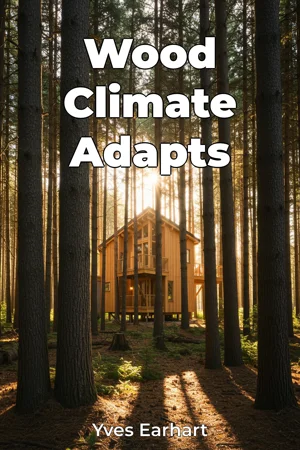
Can wood, humanity’s oldest building material, offer new solutions in an era defined by climate change? This book, "Wood Climate Adapts," investigates the surprising versatility of wood as a building material across diverse climates and its potential role in sustainable development. We delve into two core concepts: the environmental lifecycle of wood products and the adaptive capacity of wood construction in the face of changing weather patterns. These topics are crucial because the construction industry is a major contributor to global carbon emissions, and finding sustainable alternatives is paramount. Furthermore, understanding how building materials perform under increasingly extreme weather conditions is vital for ensuring the safety and longevity of infrastructure. Building upon decades of research in forestry, material science, and climate modeling, this book argues that wood, when sourced and processed sustainably, presents a compelling alternative to carbon-intensive materials like concrete and steel. We present a comprehensive analysis demonstrating that wood not only sequesters carbon during its growth but can also outperform conventional materials in terms of embodied energy and overall environmental impact. The argument's significance lies in its potential to reshape the construction industry, promoting a shift toward more sustainable and resilient building practices. The book unfolds in three major parts. First, we introduce the fundamental properties of wood, exploring its carbon sequestration potential, thermal performance, and structural characteristics. We then delve into the climate-specific applications of wood construction, examining case studies from diverse regions, including the tropics, arid zones, and cold climates. These chapters highlight successful examples of wood-based buildings that demonstrate both environmental benefits and resilience to local climate challenges. Finally, we analyze the lifecycle assessments of various wood products and compare them to alternative materials, culminating in a framework for evaluating the sustainability of wood construction projects. The evidence presented is drawn from a wide range of sources, including peer-reviewed scientific publications, industry reports, and government data on forestry and building practices. We also incorporate original data from climate studies and material testing to support our arguments. Of particular note is our analysis of long-term performance data from wood buildings in different climate zones, which provides valuable insights into the material's durability and adaptability. "Wood Climate Adapts" sits at the intersection of environmental science, engineering, and architecture. Its exploration of sustainable materials connects to discussions of green building practices and circular economy models. Its analysis of climate resilience contributes to broader conversations about urban planning and infrastructure adaptation. The book also touches upon economic considerations related to the forestry industry and the market for sustainable building materials. By integrating these perspectives, we offer a holistic understanding of wood's potential in a changing world. This book distinguishes itself through its focus on the practical applications of wood in diverse climates. While existing literature often concentrates on the environmental benefits of wood in general, we provide a nuanced analysis of how wood can be adapted to specific regional contexts. The book is written in an accessible yet informative style, suitable for a broad audience of professionals, academics, and anyone interested in sustainable building practices. The intended readership includes architects, engineers, urban planners, policymakers, environmental scientists, and students in related fields. It also appeals to homeowners and developers seeking sustainable building solutions. The book's value lies in its ability to provide a comprehensive and evidence-based assessment of wood's potential to contribute to a more sustainable and resilient built environment. In line with the conventions of environmental science and science non-fiction, the book emphasizes empirical data, rigorous analysis, and clear communication of complex information. The scope of the book is limited to the environmental and climate-related aspects of wood construction, with less emphasis on aesthetic or design considerations. The book does not offer an exhaustive overview of all wood building techniques, but instead focuses on those that demonstrate significant environmental benefits and climate resilience. The information can inform decisions about material selection in building projects, guide the development of sustainable building codes, and inspire innovative approaches to wood construction. The book acknowledges the ongoing debate surrounding sustainable forestry practices and addresses concerns about deforestation and responsible sourcing of wood. While promoting the use of wood as a sustainable material, the book also emphasizes the importance of responsible forest management and the need for continued research into the environmental impacts of wood production.
Can wood, humanity’s oldest building material, offer new solutions in an era defined by climate change? This book, "Wood Climate Adapts," investigates the surprising versatility of wood as a building material across diverse climates and its potential role in sustainable development. We delve into two core concepts: the environmental lifecycle of wood products and the adaptive capacity of wood construction in the face of changing weather patterns. These topics are crucial because the construction industry is a major contributor to global carbon emissions, and finding sustainable alternatives is paramount. Furthermore, understanding how building materials perform under increasingly extreme weather conditions is vital for ensuring the safety and longevity of infrastructure. Building upon decades of research in forestry, material science, and climate modeling, this book argues that wood, when sourced and processed sustainably, presents a compelling alternative to carbon-intensive materials like concrete and steel. We present a comprehensive analysis demonstrating that wood not only sequesters carbon during its growth but can also outperform conventional materials in terms of embodied energy and overall environmental impact. The argument's significance lies in its potential to reshape the construction industry, promoting a shift toward more sustainable and resilient building practices. The book unfolds in three major parts. First, we introduce the fundamental properties of wood, exploring its carbon sequestration potential, thermal performance, and structural characteristics. We then delve into the climate-specific applications of wood construction, examining case studies from diverse regions, including the tropics, arid zones, and cold climates. These chapters highlight successful examples of wood-based buildings that demonstrate both environmental benefits and resilience to local climate challenges. Finally, we analyze the lifecycle assessments of various wood products and compare them to alternative materials, culminating in a framework for evaluating the sustainability of wood construction projects. The evidence presented is drawn from a wide range of sources, including peer-reviewed scientific publications, industry reports, and government data on forestry and building practices. We also incorporate original data from climate studies and material testing to support our arguments. Of particular note is our analysis of long-term performance data from wood buildings in different climate zones, which provides valuable insights into the material's durability and adaptability. "Wood Climate Adapts" sits at the intersection of environmental science, engineering, and architecture. Its exploration of sustainable materials connects to discussions of green building practices and circular economy models. Its analysis of climate resilience contributes to broader conversations about urban planning and infrastructure adaptation. The book also touches upon economic considerations related to the forestry industry and the market for sustainable building materials. By integrating these perspectives, we offer a holistic understanding of wood's potential in a changing world. This book distinguishes itself through its focus on the practical applications of wood in diverse climates. While existing literature often concentrates on the environmental benefits of wood in general, we provide a nuanced analysis of how wood can be adapted to specific regional contexts. The book is written in an accessible yet informative style, suitable for a broad audience of professionals, academics, and anyone interested in sustainable building practices. The intended readership includes architects, engineers, urban planners, policymakers, environmental scientists, and students in related fields. It also appeals to homeowners and developers seeking sustainable building solutions. The book's value lies in its ability to provide a comprehensive and evidence-based assessment of wood's potential to contribute to a more sustainable and resilient built environment. In line with the conventions of environmental science and science non-fiction, the book emphasizes empirical data, rigorous analysis, and clear communication of complex information. The scope of the book is limited to the environmental and climate-related aspects of wood construction, with less emphasis on aesthetic or design considerations. The book does not offer an exhaustive overview of all wood building techniques, but instead focuses on those that demonstrate significant environmental benefits and climate resilience. The information can inform decisions about material selection in building projects, guide the development of sustainable building codes, and inspire innovative approaches to wood construction. The book acknowledges the ongoing debate surrounding sustainable forestry practices and addresses concerns about deforestation and responsible sourcing of wood. While promoting the use of wood as a sustainable material, the book also emphasizes the importance of responsible forest management and the need for continued research into the environmental impacts of wood production.
"Wood Climate Adapts" explores the potential of wood as a sustainable building material in the face of climate change. It examines the environmental lifecycle of wood, from carbon sequestration in forests to its performance as a green building material, highlighting its adaptive capacity across diverse climates. The book argues that sustainably sourced and processed wood offers a compelling alternative to carbon-intensive materials. Did you know that wood can outperform conventional materials in terms of embodied energy? Or that long-term performance data shows wood buildings demonstrate durability and adaptability across climate zones? The book progresses in three parts, starting with wood's fundamental properties, then climate-specific applications, and finally lifecycle assessments. Case studies showcase the successful use of wood in various regions, illustrating climate resilience and environmental benefits. By integrating perspectives from environmental science, engineering, and architecture, "Wood Climate Adapts" offers a holistic understanding of wood's potential. This book is unique because of its focus on practical applications of wood in diverse climates, offering a nuanced analysis that considers specific regional contexts.
Book Details
ISBN
9788235213464
Publisher
Publifye AS
Your Licenses
You don't own any licenses for this book
Purchase a license below to unlock this book and download the EPUB.
Purchase License
Select a tier to unlock this book
Need bulk licensing?
Contact us for enterprise agreements.